UN Security Council: Algeria Calls for a Credible Political Process in Syria

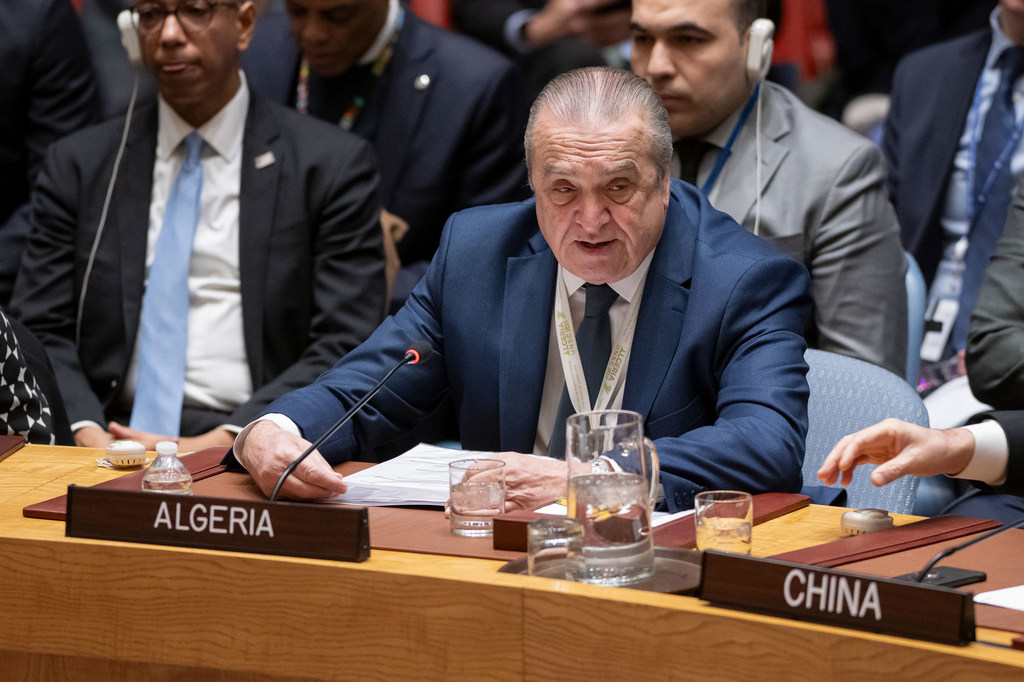
The Permanent Representative of Algeria to the United Nations, Ambassador Amar Bendjama, emphasized today in New York the urgent need for all parties involved in Syria to redirect their efforts toward a credible political process and to engage constructively with the UN Special Envoy for Syria, Geir Pedersen.
In his statement during a Security Council meeting addressing the situation in the Middle East, Bendjama remarked, “we gather today amidst a perfect storm that threatens to further destabilize the Middle East, a region already fraught with instability. Recent developments will only exacerbate the situation. The A3+ Group warns against further escalation and urges all parties to exercise maximum restraint, avoiding any actions that might intensify the crisis in Syria.” He highlighted that ongoing violations of Syria’s sovereignty jeopardize the country’s fragile stability and risk plunging it back into a “dark period of violence.”
He added, “the A3+ Group is also deeply concerned about the resurgence of violence in certain areas of Syria and reiterate its call for a nationwide ceasefire.”
Ambassador Bendjama continued, noting that ” The precarious security situation in Syria, exacerbated by political stalemate and economic hardship, has plunged the Syrian people into profound despair,” underscoring “the urgent necessity for all parties involved in Syria to concentrate on a viable political process and to engage constructively with the special envoy in support of his efforts.”
The Algerian representative reaffirmed “Algeria’s unwavering commitment to Syria’s sovereignty, unity, territorial integrity, and political independence,” urging all Syrians to ” transcend their differences and recommit to a Syrian-owned, Syrian-led political process aimed at resolving the crisis that has beset their country for more than 13 years.”
He also emphasized the “importance of the full and meaningful participation of all Syrians, particularly women and youth, in shaping the future of their country.”
Bendjama stated that “Syrian people are quietly enduring one of the most severe humanitarian crises of our time,” highlighting that “The statistics are staggering: 13 million individuals face food insecurity, with 3 million of them experiencing extreme levels of food deprivation. The number of malnourished individuals has tripled in the past three years, with 7.5 million children in need. Among these, 2.5 million are internally displaced, and one million of them are living in camps. Additionally, 2.4 million children are out of school.”
He noted that “the lack of funding results in efforts being concentrated primarily on emergency aid, often at the expense of investing in early recovery projects,” calling on donors to “honor their commitments and ensure adequate funding for both the humanitarian response plan and recovery initiatives in Syria.”
Bendjama pointed out that “Failing to address this issue will have lasting intergenerational consequences. While children around the world are returning to school this month, millions of children in Syria remain out of school. Furthermore, an additional 1.6 million are at risk of permanently leaving the education system.” He called for “a comprehensive early recovery strategy aimed at improving the livelihoods of Syrians and facilitating the safe, dignified, and voluntary return of displaced individuals to their homes.”
In conclusion, Ambassador Bendjama affirmed that the international community has a responsibility to foster a conducive environment for resolving the Syrian crisis.