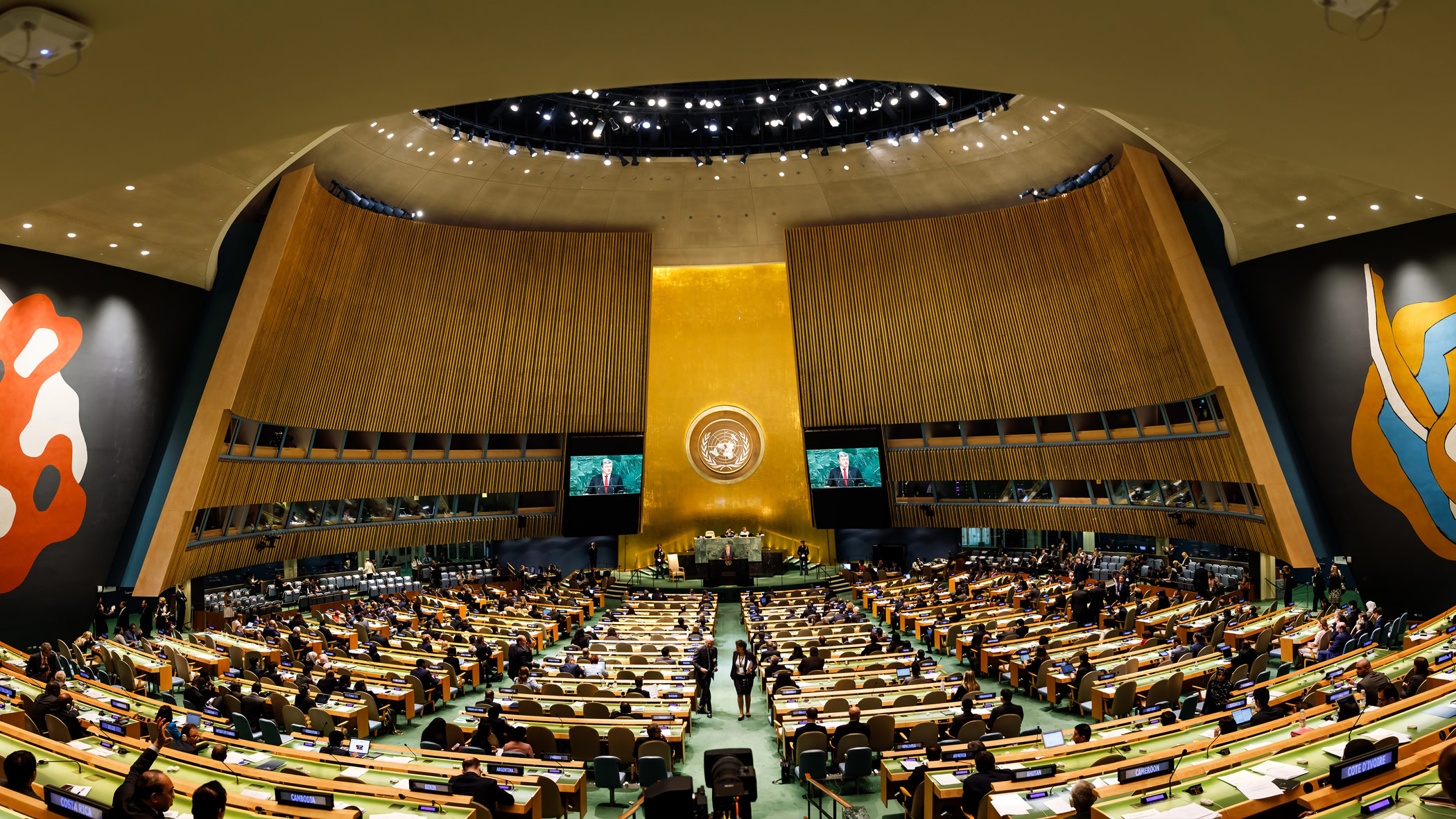
The United Nations Special Political and Decolonization Committee (Fourth Committee) adopted a decision, reaffirming the legal framework surrounding the Western Sahara issue and the United Nations’ responsibility toward the Sahrawi people. This decision was made during the 78th session of the General Assembly, addressing the implementation of the Declaration on the Granting of Independence to Colonial Countries and Peoples.
The Fourth Committee acknowledged the Secretary-General’s report dated July 24, 2024, which emphasized the committee’s role in addressing the Western Sahara issue as a matter of decolonization. It also referenced all relevant resolutions from the General Assembly and the Security Council regarding Western Sahara, including Security Council Resolution 690 (1991), which established the United Nations Mission for the Referendum in Western Sahara (MINURSO).
Through this decision, the committee reiterated the inalienable right of all peoples to self-determination and independence, in line with the principles outlined in the UN Charter and General Assembly Resolution 1514 (XV) from December 14, 1960, which proclaims the granting of independence to colonized countries and peoples.
Additionally, the committee reaffirmed the UN’s responsibility toward the Sahrawi people and urged the Special Committee on Decolonization to continue examining the situation in Western Sahara, considering it a territory subject to decolonization. It also called for the Secretary-General to present a report on the implementation of this decision during the upcoming General Assembly session.
In a statement to the media, Dr. Sidi Mohamed Omar, member of the National Secretariat, Representative of the Polisario Front to the United Nations, and Coordinator with MINURSO emphasized that the decision confirms the Sahrawi people’s right to self-determination and independence. He asserted that the Fourth Committee’s reaffirmation of the legal framework for the Western Sahara issue serves as a strong response to Morocco’s attempts to distort the legal nature of the Sahrawi cause through repeated false claims.
Moreover, he stated that this decision counters the positions of certain parties supporting Moroccan colonialism and expansionist policies, affirming the Sahrawi people’s inalienable right to self-determination and permanent sovereignty over their natural resources, as well as respect for their territorial integrity.
As in previous years, the Western Sahara issue was prominently featured in the high-level general debates of the General Assembly, where several heads of state expressed their countries’ clear support for the Sahrawi people’s right to self-determination, calling for a referendum and an end to colonialism in the last remaining colony in Africa. Many nations and petitioners reiterated similar positions during the Fourth Committee sessions, which commenced on October 3.