Two Cities… One World: From the Thought of Augustine to the Words of Pope Leo XIV

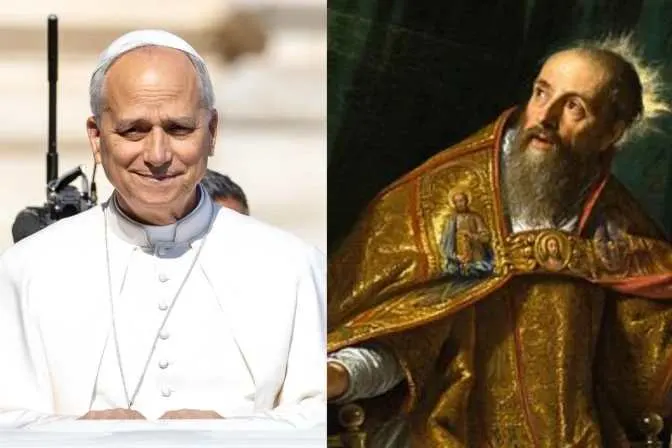
In a world shaken by war, where leaders invoke God while unleashing destruction, an ancient question returns with urgent relevance: can faith coexist with bloodshed? That question resurfaced powerfully when Pope Leo XIV condemned world leaders who wage war, declaring that God does not hear the prayers of those whose hands are stained with blood. His remarks, delivered during recent addresses at the Vatican, underscored a broader moral stance rejecting the use of religion to justify violence.
Yet the Pope’s words are not merely a contemporary appeal for peace—they echo a deeper philosophical tradition rooted in the thought of Augustine of Hippo, one of the greatest figures in Christian history. Born in Thagaste (modern-day Souk Ahras) and later bishop of Hippo Regius, Augustine developed a framework that continues to shape moral and political thought to this day.
To understand the philosophical depth behind the Pope’s statement, one must turn to Augustine’s seminal work, The City of God. Written during the decline of the Roman Empire, the book sought to explain why powerful civilizations collapse and what distinguishes a just society from a corrupt one. At its core lies a powerful metaphor: the existence of two cities.
As Augustine famously wrote:
“Two loves have made two cities: love of self, even to the contempt of God, made the earthly city; love of God, even to the contempt of self, made the heavenly city.”
These two cities are not physical places, but moral orders. The Earthly City is built on pride, self-interest, domination, and the pursuit of power—where leaders seek glory over justice and instrumentalize religion for political ends. The City of God, by contrast, is founded on humility, justice, and moral restraint, where power is subordinated to ethical principles.
Through this lens, Pope Leo XIV’s condemnation of war appears as a direct continuation of Augustinian thought. By asserting that God rejects the prayers of those who wage war, he reinforces Augustine’s central distinction: leaders who claim divine legitimacy while shedding innocent blood belong not to the City of God, but to the Earthly City.
This connection gives the Pope’s words significance beyond current events. It reflects a philosophical tradition that emerged not in Europe, but in Roman North Africa—on Algerian soil. For Algeria, this carries deep symbolic weight, as Augustine’s ideas, developed in Hippo over sixteen centuries ago, continue to influence global moral discourse at the highest levels.
Augustine argued that civilizations do not collapse solely because of external threats, but because of internal corruption—when pride replaces justice, power replaces virtue, and self-interest becomes the ultimate standard. In today’s world of persistent wars and moral uncertainty, his warning appears strikingly relevant.
From Annaba to the Vatican, Augustine’s legacy endures as a reminder that civilizations are defined not only by their strength, but by the values upon which they are built.
Two cities. One world. And humanity must decide which one it chooses to inhabit.
In a world shaken by war, where leaders invoke God while unleashing destruction, an ancient question returns with urgent relevance: can faith coexist with bloodshed? That question resurfaced powerfully when Pope Leo XIV condemned world leaders who wage war, declaring that God does not hear the prayers of those whose hands are stained with blood. His words were not merely a diplomatic appeal for peace, but a reflection of a deeper moral philosophy.
That philosophy finds its roots in the thought of Augustine of Hippo, one of the greatest thinkers in Christian history, born in Thagaste (modern Souk Ahras) and later bishop of Hippo Regius (now Annaba).
To understand the philosophical depth of the Pope’s statement, one must turn to Augustine’s most influential political work, The City of God. Written during the decline of the Roman Empire, the book sought to explain why powerful civilizations collapse and what truly distinguishes a just society from a corrupt one.
Augustine’s answer is structured around a powerful metaphor: the existence of two cities. As he famously wrote:
“Two loves have made two cities: love of self, even to the contempt of God, made the earthly city; love of God, even to the contempt of self, made the heavenly city.”
These two “cities” are not physical places but moral orders. The Earthly City is built on pride, self-interest, domination, and the pursuit of power. It is the realm of rulers who seek glory over justice, who instrumentalize religion for political ends, and who place ambition above morality.
The City of God, by contrast, is founded upon humility, justice, moral restraint, and devotion to higher ethical principles. It represents a vision of society in which power is subordinated to virtue and political authority is judged by moral standards.
Through this lens, Pope Leo XIV’s condemnation of war appears as a direct continuation of Augustinian thought. By asserting that God rejects the prayers of those who wage war, the Pope reaffirms Augustine’s central moral distinction: that leaders who claim divine legitimacy while shedding innocent blood belong not to the City of God, but to the Earthly City.
This connection gives the Pope’s words a significance that goes beyond current events. It is part of a philosophical tradition that emerged in Roman North Africa—on Algerian soil. Augustine’s ideas, developed in Hippo more than sixteen centuries ago, continue to shape moral and political discourse at the highest levels.
Augustine argued that societies do not fall merely because they are attacked from outside; they collapse when they are corrupted from within—when pride replaces justice, when power replaces virtue, and when self-interest becomes the highest good.
In today’s world of ongoing wars, technological acceleration, and ethical uncertainty, Augustine’s warning remains strikingly relevant. Humanity has gained immense power, yet continues to face deep moral challenges.
And so his question still stands:
What kind of world are we building?
A world governed by ambition and domination?
Or one grounded in justice, humility, and moral responsibility?
From Annaba to the Vatican, Augustine’s legacy reminds us that civilizations are not defined by their strength alone, but by the values upon which they are built.
Two cities. One world. And humanity must decide which one it wishes to inhabit.