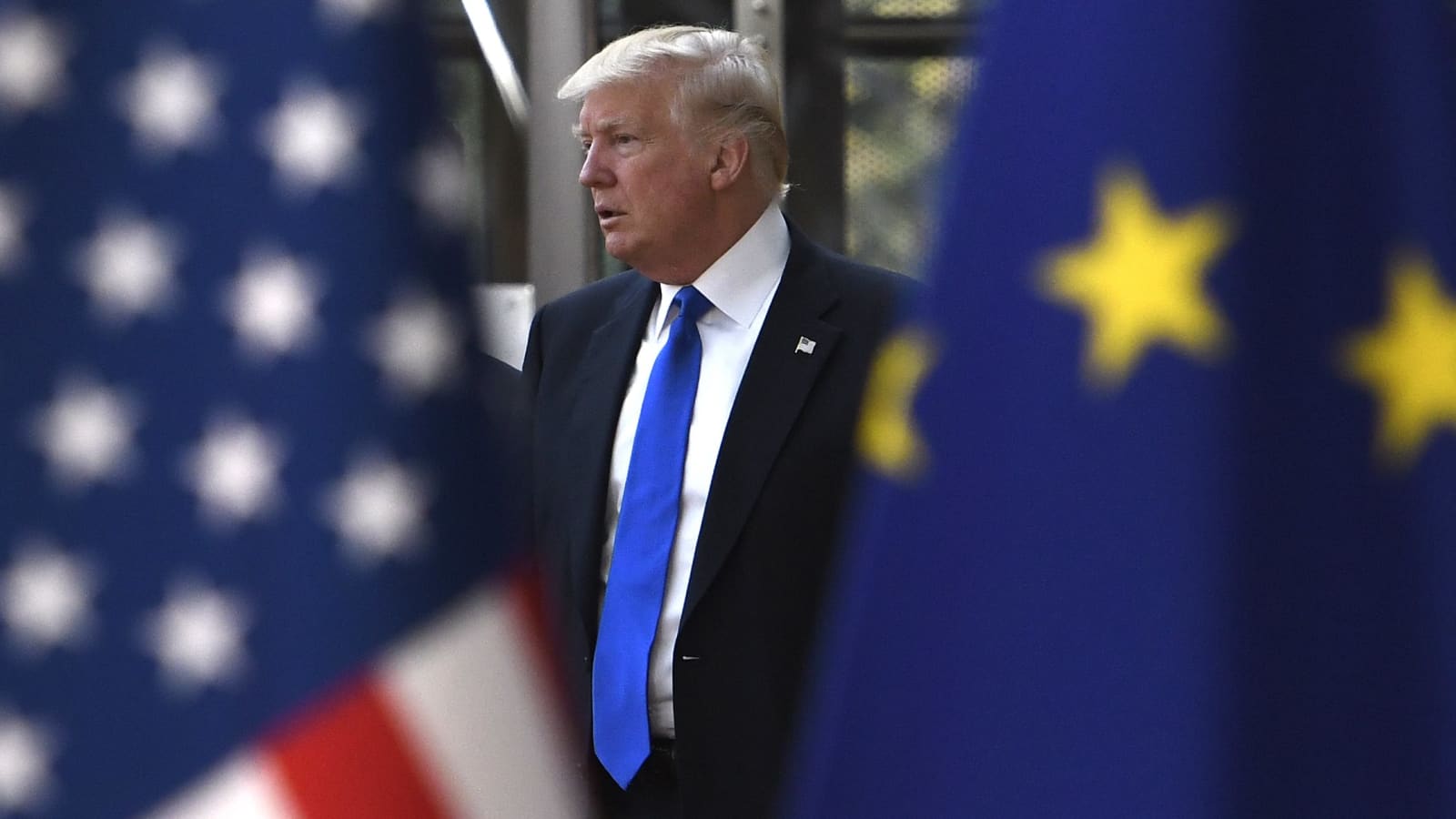
US President Donald Trump’s recent threats to impose tariffs on European products have caused significant concerns in the automotive industry, with European automakers feeling the impact. The Europe Stoxx 600 automobile and parts index dropped 4.1%, marking a two-week low, as major car manufacturers saw a sharp decline in their stock prices. Companies like Volkswagen, Volvo, Daimler Truck, Porsche, and BMW experienced a drop of over 5% in their shares, while French auto parts supplier Valeo saw its stock plummet nearly 8%.
Germany’s DAX 40 index also took a hit, falling 2% as the threat of trade wars escalated. Trump, during his presidential campaign, had pledged to impose additional tariffs on countries like Canada, Mexico, and China, and though these measures weren’t immediately enacted, he signed an executive order on Saturday to impose a 25% tariff on Mexican and Canadian imports, along with a 10% tariff on Chinese goods. The new tariffs come after Trump expressed concerns over the trade deficit with the European Union, making it clear that the EU could be the next target of such measures.
Experts predict that these tariffs could have a significant financial impact on European automakers. For instance, Volkswagen’s revenues are expected to be hit by approximately $8.2 billion, while Stellantis could see around $16.4 billion in losses. Given that both Canada and Mexico are major players in North America’s automotive production, with around 70% of vehicles produced there sold in the US, the tariffs could drive up the cost of vehicles in the US, especially since most vehicles assembled in the country rely on parts from these two nations. The potential effects on large car manufacturers such as Ford and General Motors, who have long-established production facilities in both Mexico and Canada, are also a significant concern.
With the US importing 3.6 million light vehicles from Mexico and Canada in 2024 alone—accounting for 22% of all vehicles sold in the US—the impact of the tariffs is likely to ripple through the industry, affecting not just European but also global carmakers such as Nissan, Honda, Toyota, and Hyundai. As these tariffs threaten to disrupt global supply chains, the automotive sector braces for the financial fallout.