Trump demands high price to lift tariffs, while global markets plunge as recession fears mount

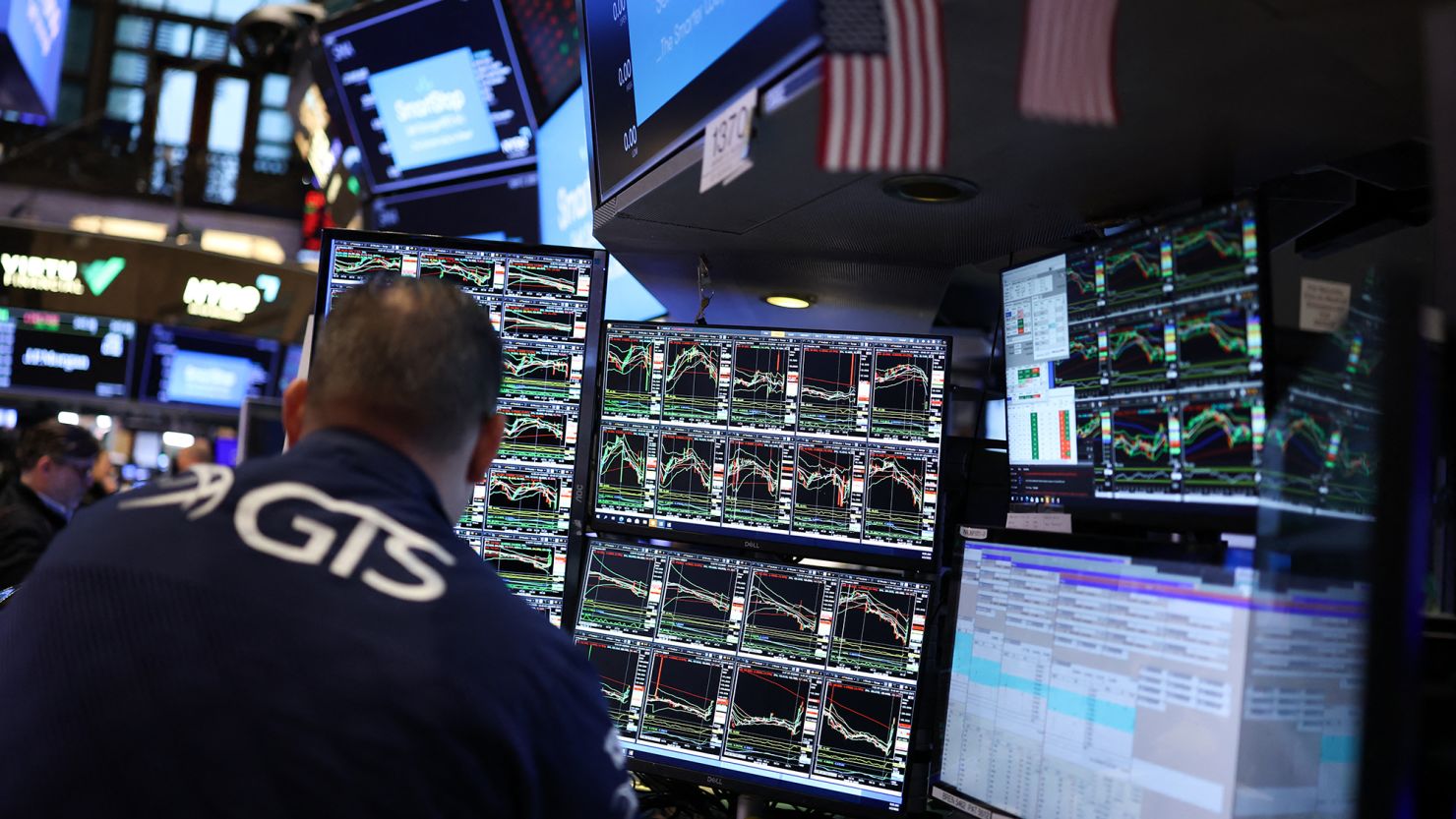
U.S. President Donald Trump’s sweeping tariff plans hammered global financial markets on Monday after he warned foreign governments they would have to pay “a lot of money” to lift the levies that he called “medicine”, according to Reuters news agency.
Asian equity markets sank, European shares crashed to a 16-month low and oil prices plummeted as investors feared the duties Trump announced last week could lead to higher prices, weaker demand and potentially a global recession, Reuters reported.
After stocks in China and Hong Kong cratered on Monday, China’s sovereign fund stepped in to try to stabilise the market.
Ministers in the European Union, which has been divided on how strongly to punch back against Trump without risking more pain for their own companies and consumers, are meeting on Monday as they seek to form a united front.
Goldman Sachs raised the odds of a U.S. recession to 45% in the next 12 months, joining other investment banks in revising their forecast. JPMorgan economists now estimate the tariffs pushing the U.S. economy into a 0.3% contraction, down from an earlier estimate of 1.3% growth of gross domestic product, the news agency said.
Speaking to reporters aboard Air Force One on Sunday, however, Trump indicated he was not concerned about losses that have wiped out trillions of dollars in value from world stock markets.
“I don’t want anything to go down. But sometimes you have to take medicine to fix something,” he said as he returned from a weekend of golf in Florida.
Trump said he had spoken to leaders from Europe and Asia over the weekend, who hope to convince him to lower tariffs as high as 50% due to take effect this week.
“They want to talk, but there’s no talk unless they pay us a lot of money on a yearly basis,” Trump said.
His tariff announcement has met with bewildered condemnation from other leaders and triggered retaliatory levies from China, the world’s No.2 economy.
“The situation on the international equity and bond markets is dramatic and threatens to deteriorate further. It is therefore more urgent than ever for Germany to restore its international competitiveness as quickly as possible,” German chancellor-in-waiting Friedrich Merz said on Monday in an emailed statement to Reuters.
As for now, the next steps from the European Union and China are especially in focus.
Eyes on EU and China’s Next Moves
From China, which on Friday slapped extra tariffs of 34% on all U.S. goods, to Canada, which has taken limited retaliation, nations are tipped to come to the negotiating table sooner or later, given U.S. consumption is so important globally – two-thirds bigger than EU consumption, according to World Bank data.
Economists expect Beijing to unleash more fiscal stimulus to support its economy, which sells goods worth more than $400 billion a year to the United States. It will also try to develop other export markets, according to Chinese policy advisers.
“We need to strengthen our coordination with ASEAN, Japan, South Korea, EU and UK,” said one Chinese adviser, speaking on condition of anonymity because of the issue’s sensitivity.
It is important to note that the United States and China are the world’s two largest economies, and therefore there is growing concern that their trade war could trigger a global recession. If that happens, stock prices could fall even further. As of Friday, the S&P 500 was down 17.4% from its February record.
The European Union, already feeling abandoned by the Trump administration over security, is likely approving a first set of targeted countermeasures on up to $28 billion of U.S. imports, from dental floss to diamonds.
“It’s a difficult balance. Measures cannot be too soft to bring the United States to the table, but not too tough to lead to escalation,” an EU diplomat said.
U.S. tech-billionaire, and Trump’s adviser Elon Musk said on Saturday he hoped in future to see complete freedom of trade between the United States and Europe by moving to a “zero tariff situation”, a stance that seems to contradict the U.S. president’s position.
Dollar’s Decline Looms
The dollar, for decades a safe haven, on Thursday fell about 1.7% in its biggest daily drop since November 2022 .DXY, prompting investors to run away from it, saying it’s a sign that the greenback’s global standing may be eroding.
“What we’re seeing today is a further indication that the structure and nature of the U.S. dollar’s relationship to global markets has changed,” said Thierry Wizman, global foreign exchange and rates strategist at Macquarie in New York.
“There’s an underlying basis for this, which is the changing role of the U.S. in the world.”
Outrage Grows Across the U.S.
On Saturday, crowds of people angry about the way President Donald Trump is running the country marched and rallied in scores of American cities in the biggest day of demonstrations yet by an opposition movement, the Associated Press reported.
So-called Hands Off! demonstrations were organized for more than 1,200 locations by more than 150 groups, including civil rights organizations, labour unions, veterans, and election activists. The rallies appeared peaceful, with no immediate reports of arrests.
Protests were planned in all 50 states plus Canada and Mexico.
More than 400 demonstrators gathered some four miles (6 km) from Mar-a-Lago in West Palm Beach, while the US president was playing a round of golf at his club in Jupiter.
With Trump’s blessing, Musk’s Department of Government Efficiency team has scythed through the U.S. government, eliminating more than 200,000 jobs from the 2.3 million federal workforces. At times, the effort has been haphazard and forced the recall of needed specialists.
On Friday, the Internal Revenue Service began laying off more than 20,000 workers, as much as 25% of its ranks.
Several hundred people gathered outside the headquarters of the Social Security Administration, a top DOGE target, near Baltimore to protest against cuts to the agency which delivers benefits to the elderly and disabled.
In Europe, hundreds of anti-Trump Americans gathered in Berlin, Frankfurt, Paris and London to voice opposition to Trump’s sweeping makeover of U.S. foreign and domestic policies.