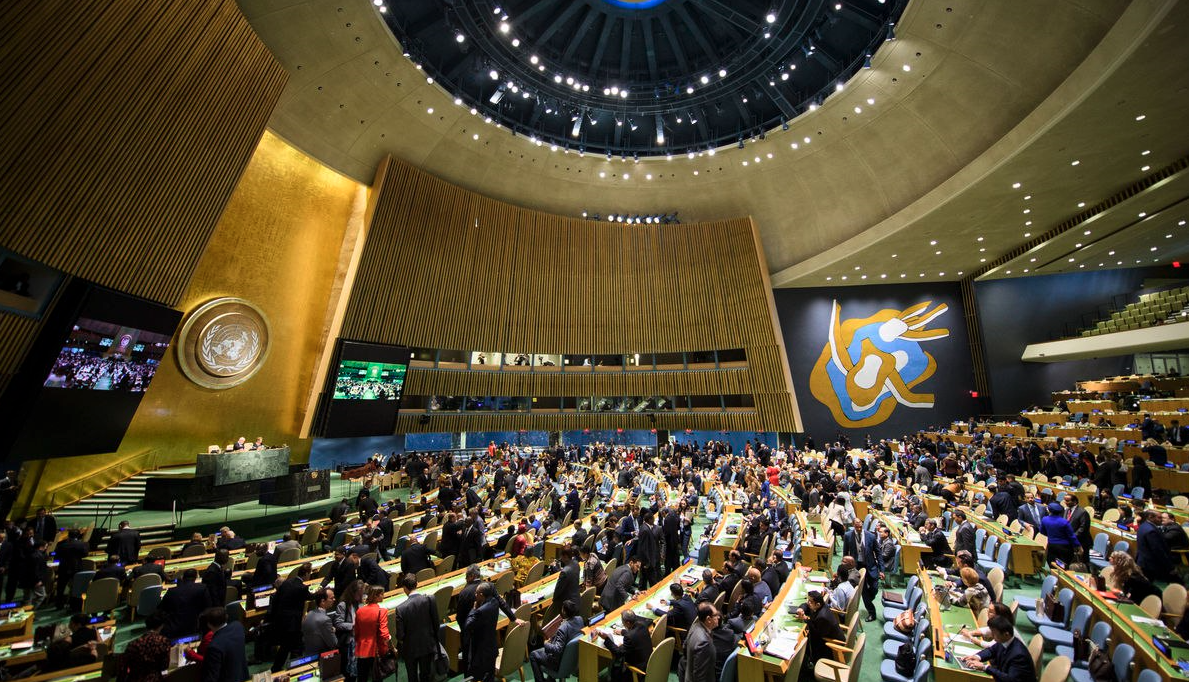
The Sahrawi cause received robust backing during the discussions of the Special Political and Decolonization Committee (Fourth Committee) of the United Nations General Assembly. Several countries called for the Sahrawi people to be granted their right to self-determination, as outlined in General Assembly Resolution 1514 (XV) on the Declaration on the Granting of Independence to Colonial Countries and Peoples.
The representative of Mexico reiterated her government’s commitment to negotiations aimed at achieving a fair, enduring, and mutually acceptable solution to the Western Sahara issue that allows the Sahrawi people to determine their future in accordance with relevant Security Council and General Assembly resolutions.
She also acknowledged the efforts of the UN Secretary-General and his personal envoy for Western Sahara in working towards this goal, welcoming the envoy’s inaugural visit to Laayoune and Dakhla in Western Sahara. Additionally, she underscored the importance of the United Nations Mission for the Referendum in Western Sahara (MINURSO) and called for enhanced cooperation with the mission.
The representative of Iran reaffirmed the UN’s responsibility toward the people of Western Sahara and their inalienable rights, as articulated in relevant resolutions. She urged for a serious commitment to UN-mediated negotiations in good faith and without preconditions, in line with the UN Charter, to ensure the success of the ongoing negotiation process and achieve a just, lasting, and comprehensive political solution.
Speaking on behalf of the “Group of Friends of the UN Charter,” the representative of Venezuela emphasized the group’s responsibility as members of the international community toward the peoples of Western Sahara, Puerto Rico, and Palestine, among others, in their rightful quest to exercise their inalienable rights as specified in the UN Charter and General Assembly Resolution 1514 (XV).
In addressing his country, the Venezuelan representative reiterated his nation’s unwavering support and strong solidarity with the just cause of the Sahrawi people. He called for a peaceful, fair, and enduring solution to the Western Sahara issue, grounded in relevant General Assembly and Security Council resolutions, as well as the African Union’s decisions.
He expressed hope for the personal envoy of the Secretary-General to successfully revive the political process and facilitate direct negotiations between the parties. He also raised concerns about unilateral proposals that could undermine the Sahrawi people’s right to self-determination and their legitimate national aspirations.
The representative of Cuba asserted his country’s commitment to advocating for the Sahrawi people’s right to self-determination based on the principles and purposes of the UN Charter, international law, and pertinent UN resolutions. He noted that the Special Committee on Decolonization has recognized Western Sahara as a non-self-governing territory for 61 years.
He stressed that Cuba supports a mutually agreeable political solution that ensures the Sahrawi people can exercise their right to self-determination in line with UN Resolution 1514 (XV). He expressed disapproval of unilateral decisions that overlook the interests and rights of the Sahrawi people, emphasizing the need for international community support, which will always be bolstered by Cuban solidarity.
The representative of Peru highlighted that the Western Sahara issue has remained unresolved on the agenda of the Special Committee on Decolonization since 1963, reiterating the importance of a peaceful resolution in accordance with international law to achieve a fair, sustainable, and mutually acceptable solution.
He reaffirmed his country’s support for the Secretary-General’s efforts and the actions taken by his special representative for Western Sahara, Mr. Staffan de Mistura, in accordance with General Assembly Resolution 77/133, which aims to initiate dialogue and negotiations between the parties.
The representative of Colombia voiced concerns regarding the worsening situation in Western Sahara and underscored the need for a fair, lasting, and mutually acceptable political solution that guarantees the Sahrawi people’s right to self-determination. He reaffirmed Colombia’s support for the work of MINURSO and called for bolstering the mission to effectively fulfill its mandate, including the incorporation of human rights oversight, as there is no justification for MINURSO to be the only UN peacekeeping mission lacking a human rights component in its mandate.
The representative of Bolivia expressed solidarity with the Sahrawi people and voiced hope for a just, lasting, and mutually acceptable political solution based on relevant General Assembly and Security Council resolutions that uphold the Sahrawi people’s right to self-determination.
Meanwhile, the representative of Syria reminded attendees that the Western Sahara issue was included in the list of non-self-governing territories in 1963 and remains a subject of extensive discussion in this committee and other international forums.
He advocated for dialogue and negotiations between the directly concerned parties and the building of trust to reach a just and lasting political solution to the issue, in line with relevant UN resolutions, including General Assembly Resolutions 1514 and 1541 from 1960 and the principles and purposes of the UN Charter.