Spain: Complaint Over Mislabeling of Tomatoes from Occupied Western Sahara

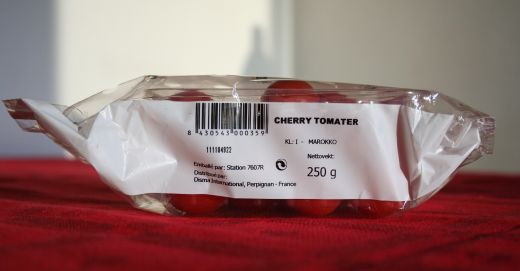
Spanish consumer rights, agricultural, and livestock organizations have jointly lodged a complaint against a Franco-Moroccan company, accusing it of marketing tomatoes within the European Union (EU) with misleading labels that claim they are sourced from Morocco while, in fact, they are harvested in occupied Western Sahara, according to a report by Spanish media.
The Confederation of Consumers and Users (CECU) and the Spanish coordinator of farmers and livestock breeders (COAG) have formally submitted this complaint to the Directorate General for Consumer Affairs, part of the Ministry of Social Rights, Consumer Affairs, and 2030 Agenda. They allege violations of labeling regulations concerning cherry tomatoes sold in Spanish supermarkets.
The organizations are demanding “an immediate investigation and, if necessary, sanctions against the responsible companies,” asserting that this misleading labeling is a “deceptive practice that infringes upon consumers’ right to truthful information.”
For these groups, such practices represent a form of “unfair competition” against Spanish farmers. Eduardo Montero, spokesperson for CECU, stated, “As consumers, we have the right to know where the food we purchase actually comes from, particularly when it originates from an occupied territory like Western Sahara.”
Andrés Gongora from COAG emphasized that “this situation is detrimental to both consumers and local producers and can no longer be tolerated.”
In an October 2024 ruling, the European Court of Justice (ECJ) determined that melons and tomatoes imported into the EU must clearly indicate Western Sahara as their country of origin. The court explained, “As imported products within the European Union, melons and tomatoes harvested in Western Sahara must specify their country of origin in accordance with EU regulations,” highlighting that “this indication must necessarily appear on the products and should not be misleading; thus, their labeling must state Western Sahara as the country of origin.”
According to this ruling, “referring to Morocco instead of Western Sahara to identify the origin of melons and tomatoes harvested from the latter territory would mislead consumers regarding their actual origins.”
The court reiterated that, under international law, Western Sahara “has its own distinct and separate status.”
In this context, CECU and COAG urge Spanish and European authorities to “ensure strict compliance with regulations and judicial decisions,” as well as to “terminate business practices that contribute to legitimizing the illegal occupation of Western Sahara and deliberately deceive European consumers.”
In response to this issue, Abdellah El-Arabi, the representative of the Polisario Front in Spain, highlighted that the importation of products with misleading labels claiming they originate from Morocco while being harvested in occupied Western Sahara has long plagued farmers in Europe, particularly in Spain. He underscored that these cherry tomatoes come from Western Sahara, specifically from the occupied territories.