Spain: Activists, Intellectuals Spotlight Decolonization Issue in Western Sahara

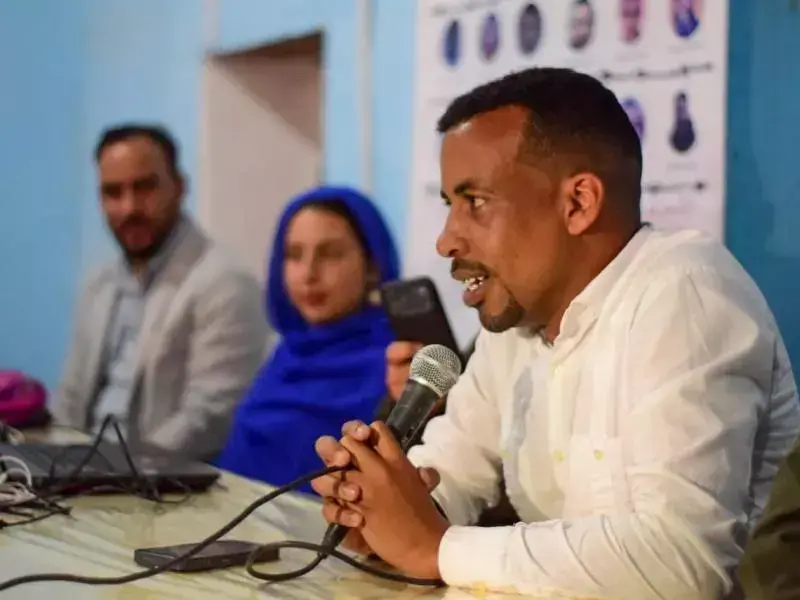
Cultural and human rights events continue to be held across Spain, drawing attention to the suffering of the Sahrawi people and the decolonization process in Western Sahara, against the backdrop of the ongoing Moroccan occupation and its accompanying human rights abuses.
Voices from various fields have come forward to affirm that the issue remains very much alive. Among them is Sahrawi artist and activist Aziza Brahim, who emphasized in an interview with Spanish journalist and writer Gorka Andraka, published on his official social media page, that the Sahrawi cause has not lost its momentum, and that the Sahrawi people remain steadfast in defending their rights and their land, despite the ongoing occupation and its repressive measures.
In the interview, the artist said that the struggle goes on despite the occupation’s attempts to impose facts on the ground that contradict international law, adding that the persistence of the conflict reflects the occupation’s policies rooted in control and expansion, policies that block the return of civilians, obstruct development, and restrict freedom of movement, while the occupation’s impact and violations continue to leave their mark on Sahrawi society.
She further stressed that the daily suffering of Sahrawis goes beyond direct threats to their lives, extending to restrictions on their economic, social, and cultural rights, leaving efforts in development and education constantly vulnerable to obstruction.
She affirmed that Sahrawi cultural and artistic work, including film production and screenings at international forums, serves as a vital tool for exposing these violations and shedding light on an occupation built on repression and the denial of fundamental rights.
Alongside these personal testimonies, activists and organizations continue to draw attention to realities on the ground.
The platform “Don’t Forget Western Sahara” published a report titled “Sahrawi Women Who Demine: From Cultural Recognition to Political Debate,” highlighting how the nomination of the short film “Disonancia” for the Premios Goya awards has reignited interest in the issue of Sahrawi women engaged in demining work, a humanitarian undertaking that also lays bare the lasting consequences of the conflict, as the occupying power continues to violate the land, suppress civilians, and impose a coercive reality on the Sahrawi people.
The report noted that members of the demining team operate near the “military wall” erected by Morocco in the 1980s, which remains surrounded by minefields to this day, posing a constant threat to civilians and standing in the way of freedom of movement, development and the return of displaced residents to their communities.