Sahrawi Human Rights Defenders Denounce Moroccan Occupation at UN Session

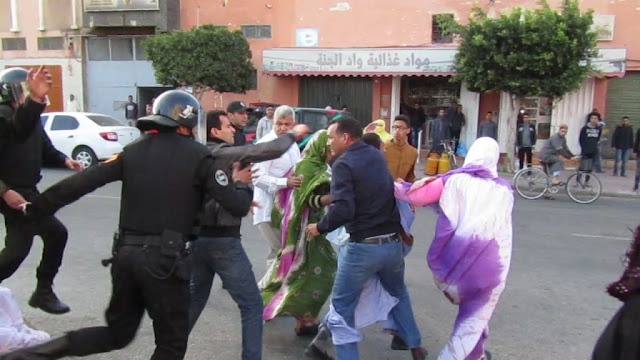
Sahrawi human rights defenders delivered live testimonies before the United Nations Special Committee on Decolonization (Committee of 24), documenting what they described as “grave violations” committed by Moroccan occupation forces against Sahrawi civilians and activists in the occupied territories of Western Sahara — violations they said amount to war crimes and crimes against humanity.
In his intervention, human rights activist and First Vice President of the Collective of Sahrawi Human Rights Defenders (CODESA), Hibatu Taleb Amar, presented a detailed overview of the Moroccan occupation of Western Sahara and the “systematic” abuses it carries out against Sahrawi civilians. He highlighted the ongoing absence of a UN mechanism for their protection and the delay in implementing the Sahrawi people’s right to self-determination in accordance with the UN Charter.
He emphasized that members of CODESA are subject to continuous repression, siege, economic and social marginalization, and smear campaigns. They are also denied the right to assembly and peaceful protest due to their documentation of serious human rights violations in the region.
The activist pointed out that this grave situation has recently been highlighted by various UN human rights mechanisms and international reports issued by organizations such as Amnesty International, the World Organization Against Torture, the International Federation for Human Rights, and Front Line Defenders, among others.
He also exposed the Moroccan occupation’s demolition of Sahrawi homes and agricultural property, especially in rural areas and along the coastline, using excessive force against peaceful protesters. These lands are then handed over to foreign companies as part of illegal economic projects aimed at “legitimizing” the occupation and enforcing a colonial reality.
Taleb Amar expressed deep concern over the continued imprisonment of Sahrawi political detainees in Moroccan prisons for more than 15 years — most notably the “Gdeim Izik” group and a number of student activists, some of whom are serving life sentences, including human rights defenders. This is despite repeated calls from UN mechanisms and international rights organizations for their release.
He urged immediate action to implement and enforce international humanitarian law, the urgent establishment of an International Committee of the Red Cross mission in Western Sahara, and the provision of a UN mechanism to monitor, report on, and protect human rights in the region, while ensuring the Sahrawi people’s inalienable right to self-determination.
Sahrawi human rights activist El-Faida Khaya, from the occupied city of Boujdour, also testified before the Committee, describing the severe human rights abuses taking place in Africa’s last colony. She stressed that the Sahrawi people have endured over 52 years of suffering under Moroccan occupation.
She noted that the Sahrawi people are divided into two parts, separated by a long military wall planted with landmines — a symbol of apartheid. One part lives under occupation, while the other has been forced into the bitterness of exile.
In a powerful testimony, El-Faida Khaya recounted the ongoing repression her family — the Khaya family — has endured in occupied Boujdour since November 19, 2020, particularly her aunt, activist Sultana Khaya, who has been injected multiple times with unknown substances.
She added that her family is living under extremely harsh humanitarian conditions. Her grandmother, Metou Mbarek Ennajem, and aunt, El-Waara Khaya, are prevented from returning to and residing in their home in occupied Boujdour. She affirmed that their suffering is due to their peaceful struggle for the Sahrawi people’s right to self-determination.
In conclusion, the activist called on the international community to act immediately to end these violations and to enable the Sahrawi people to exercise their legitimate rights — foremost among them, the right to self-determination.