Paris Olympic organizers assured that France’s famed gastronomy would shine in the village, but many athletes have expressed dissatisfaction with the catering, especially due to the lack of meat on the eco-friendly menus.
Pre-Games Trial and Expectations
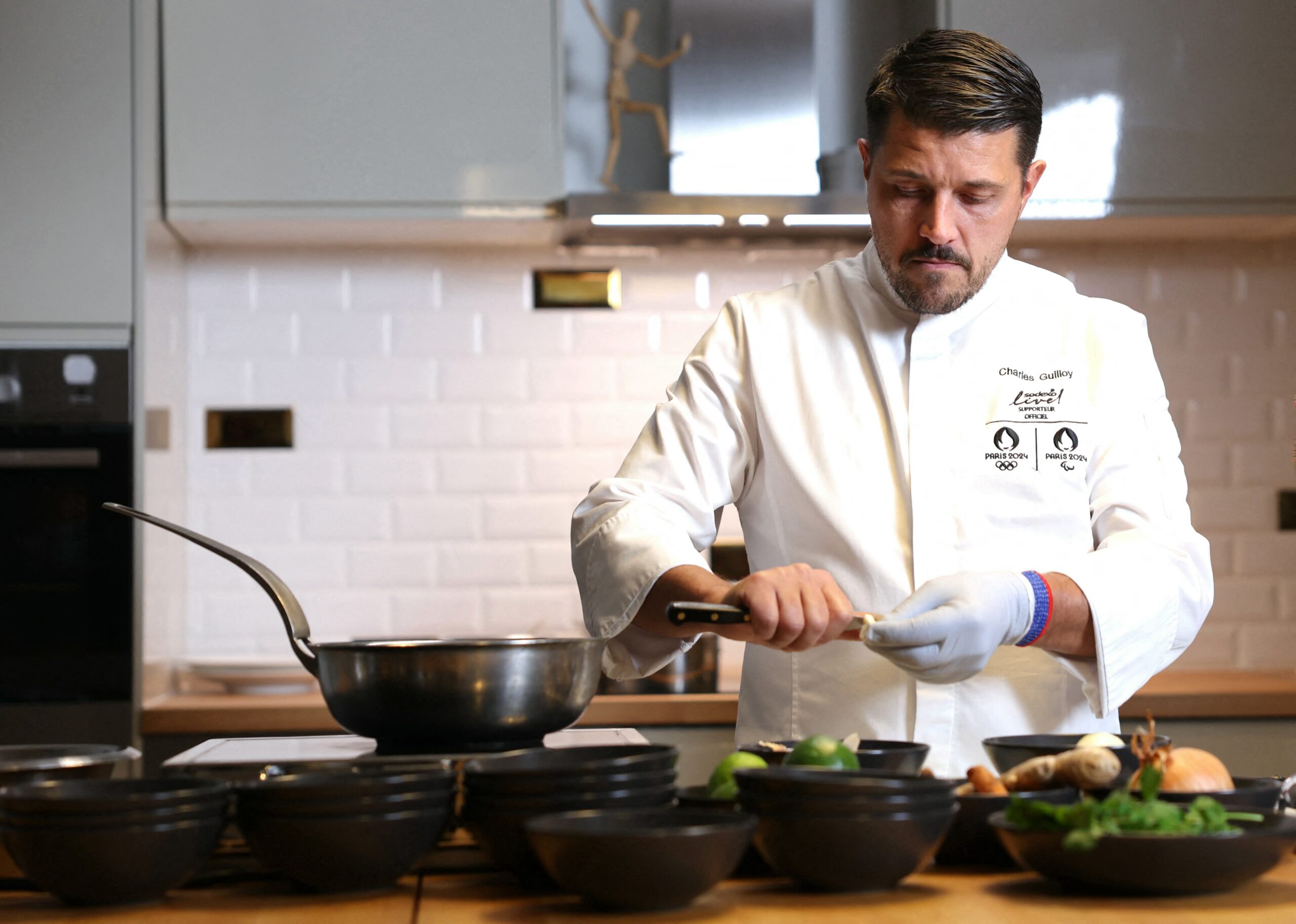
At a pre-Games trial run in June, Paris 2024 chief Tony Estanguet emphasized the goal to cut carbon emissions per meal in half compared to past Olympics by offering more vegetarian options. The organizing committee enlisted several Michelin-starred chefs as advisors alongside its food contractor, French multinational Sodexo, aiming to meet high gastronomic expectations.
Initial Complaints from Athletes
However, in the initial days of the Games, held in a deprived suburb north of Paris, athletes clamored for more steak, eggs, and larger portions to refuel after intense competitions or workouts.
American gymnastics star Simone Biles voiced her disappointment with the 3,300-seat food court. It features six dining areas offering global cuisine. “It’s not proper French cuisine, like you guys might be eating because you’re outside the village,” she remarked.
Gold medalist Hezly Rivera stated, “I think French food is good, but what we are having in there isn’t the best. But it gets the job done.”
Olympic 100m champion Marcell Jacobs from Italy labeled the village as “nice, the food not,” a sentiment shared by Jamaica’s two-time 200m world champion Shericka Jackson.
Adjustments and Reactions
Other athletes mentioned initial struggles with the menu, with half of the 50 daily dishes being entirely vegetarian. Romanian rower Iulian Chelaru noted an initial shortage of meat, which has since been addressed. German swimmer Lucas Matzerath, 24, observed that portion sizes were initially insufficient but have improved.
Sodexo confirmed making adjustments, and the Paris 2024 organizing committee stated that all menus had been approved by national Olympic delegations. A Sodexo spokeswoman said, “Eggs and grilled meat dishes have been in high demand, so volumes have been increased significantly.”
Organizing committee spokeswoman Anne Descamps added, “We’ve seen a lot of comments. Most of them are positive.”
Other Changes in the Village
The vegetarian-heavy menu isn’t the only notable change in the Paris village compared to previous editions. The housing complex, set to convert into apartments post-Games, was built without air-conditioning, relying instead on a renewable underfloor geo-thermal cooling and heating system.
Some teams, like those from the US, Great Britain, the Netherlands, and France, have installed portable coolers for their athletes. Others cope without, facing temperatures above 30 degrees Celsius (95 F) with high humidity.
Italian beach volleyball player Marta Menegatti commented, “I suffer in the hot weather, but up until now I’ve slept well with just a fan. AC would be better for recovery though.”
Challenges with Innovative Beds
Additionally, the innovative Japanese-made beds, with bases crafted from cardboard and mattresses from recycled plastic, have proven challenging for some athletes. Spanish handballer Lysa Tchaptchet described her bed as too hard and uncomfortable.
source: AFP