North Korea’s Kim Vows to Prepare Nuclear Force for Combat Against “grave threat”

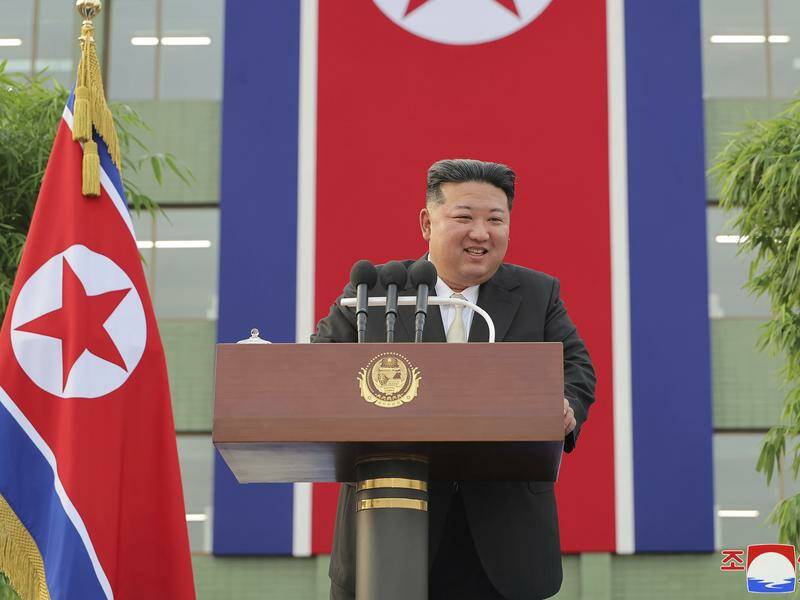
North Korean leader Kim Jong Un has vowed to intensify efforts to make his nuclear force fully prepared for combat with the United States and its allies, according to state media reports on Tuesday. This pledge follows the disclosure of a new missile platform likely designed to enhance the range and power of North Korea’s intercontinental ballistic missiles, potentially targeting the U.S. mainland. Kim’s latest threat adds to his previous declarations but comes at a time when experts anticipate provocative weapons tests by North Korea ahead of the U.S. presidential election in November. Recently, North Korea has also resumed launching trash-carrying balloons toward South Korea.
In a speech marking the 76th founding anniversary of his government on Monday, Kim characterized the U.S.-led regional military bloc as a “grave threat” and accused it of “reckless expansion” into a nuclear-based alliance. According to the official Korean Central News Agency (KCNA), Kim stated that North Korea must enhance its military capabilities, including its nuclear force, to address this perceived threat. The North has protested the July signing of a new U.S.-South Korean defense guideline aimed at integrating U.S. nuclear weapons with South Korean conventional forces to counter North Korean nuclear threats. North Korea claimed the guideline indicated a plot to invade the country, though U.S. and South Korean officials have consistently denied any such intentions.
Since 2022, North Korea has ramped up its weapons testing to improve its capability to strike targets in the U.S. and South Korea. In response, the U.S. and South Korea have expanded their military drills, which North Korea denounces as invasion rehearsals. Analysts suggest that while North Korea may have some technological hurdles to overcome to achieve long-range nuclear missile capabilities, it likely already has missiles that can target key locations in South Korea and Japan. There is speculation that North Korea might conduct nuclear tests or test-launch intercontinental ballistic missiles (ICBMs) before the U.S. election to strengthen its negotiating position and seek concessions from the U.S., such as sanctions relief.
As of Tuesday morning, North Korea had not staged any major military demonstrations to commemorate this year’s anniversary. However, the North’s Rodong Sinmun newspaper recently published a photo of Kim inspecting what appeared to be a 12-axle missile launch vehicle, the largest the country has revealed so far. This has fueled speculation about the development of a new ICBM potentially larger than the existing Hwasong-17. Pentagon spokesperson Maj. Gen. Pat Ryder declined to comment specifically on North Korea’s missile capabilities but reaffirmed that Washington is working with Seoul, Tokyo, and other partners to maintain regional security. Additionally, North Korea’s balloon campaign, which involves flying hundreds of large balloons carrying waste toward South Korea, has further heightened tensions on the Korean Peninsula. This campaign appears to be a response to South Korean propaganda leaflets and anti-Pyongyang broadcasts, which North Korea views as a threat to its internal control.