North American Merger: Trump’s Bold Plan to Reshape the Region’s Power Dynamics

Incoming U.S. President Donald Trump has reignited controversy with bold expansionist plans aimed at merging the United States with Canada, Greenland, and Mexico. While critics decry the proposals as unrealistic or imperialistic, the strategy underscores a calculated bid to consolidate North American dominance and extend U.S. control over critical trade routes and geopolitical assets.
The Arctic Advantage: Securing the Northwest Passage
A key component of this merger is the Arctic’s Northwest Passage, a trade route poised to reshape global shipping as Arctic ice continues to melt. By integrating Greenland and Canada, the U.S. could gain unfettered access to this corridor, challenging Russia’s control over the Northern Sea Route and curbing China’s growing influence in the Arctic.
However, obstacles abound. Unlike Russia, which boasts a fleet of nuclear-powered icebreakers, the U.S. lacks the infrastructure necessary to fully exploit the passage in the short term. Yet, Greenland’s strategic position as a gateway to the Arctic and its vast mineral resources make it an attractive target for Washington’s ambitions.
Bridging Oceans: Pacific-Atlantic Connectivity
The merger would also fortify U.S. connectivity between the Atlantic and Pacific Oceans. By incorporating Mexico’s Pacific coastline, the U.S. would secure comprehensive access to Asia, Europe, and South America, creating a seamless trade network.
Critics argue, however, that such consolidation could exacerbate regional inequalities. The 2021 supply-chain crisis exposed vulnerabilities in U.S. trade infrastructure, raising concerns that the merger could further entrench inefficiencies rather than resolve them. Additionally, Mexican ports, vital for Pacific trade, may become tools for advancing U.S. interests at the expense of Mexico’s sovereignty.
Reinventing Hemispheric Control: The North-South Axis
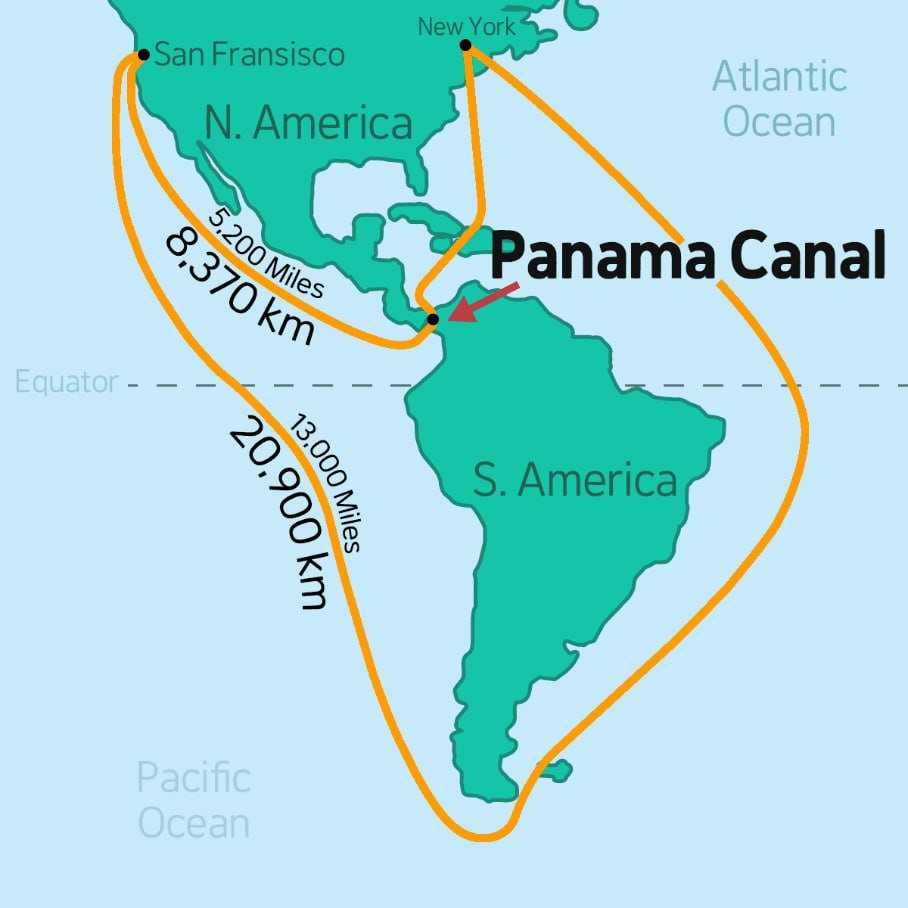
Under the merger, Washington could leverage its economic dominance to exert pressure on Central and South America, particularly targeting the Panama Canal. Mexico’s integration would provide a stepping stone for U.S. influence over Panama, aligning its trade policies with American interests.
This neocolonial approach echoes historical patterns of U.S. interference in Latin America. While advocates claim the merger would enhance economic stability, detractors warn that it risks reigniting tensions in a region already wary of U.S. hegemony.
A Controversial Vision
While the proposed merger promises to position the United States as a global economic and geopolitical powerhouse, the cost to regional sovereignty and cooperation could be immense. Critics fear that rather than fostering unity, the plan risks alienating neighboring countries and deepening global divisions.
As Donald Trump prepares to take office, the world watches closely to see whether his audacious vision for North American integration will materialize—or unravel in the face of domestic and international opposition.