Moroccan Front Holds Protests Against Normalization on Fourth Anniversary of Zionist Agreement

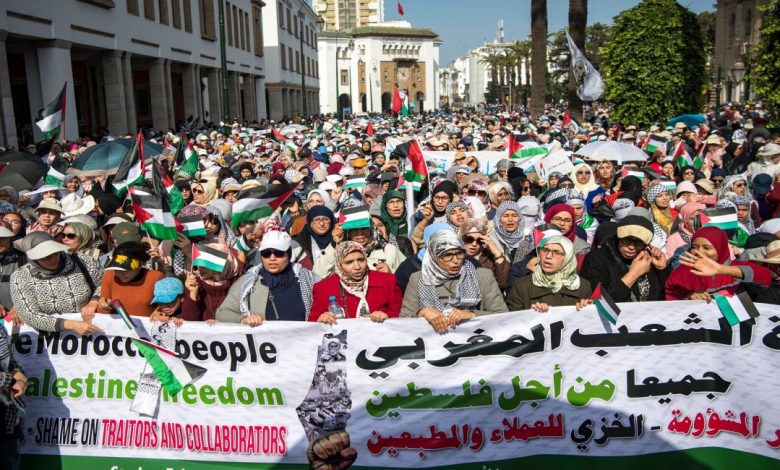
In a powerful show of defiance, the Moroccan Front for the Support of Palestine and Opposition to Normalization organized widespread protests across the country on Sunday, marking the fourth anniversary of Morocco’s controversial normalization agreements with the Zionist entity. These agreements, widely condemned by various sectors of Moroccan society, are seen as an affront to the long-standing solidarity the country has shown toward the Palestinian cause.
In its statement, the Front emphasized that the protests were not only a reflection of the deep rejection by the Moroccan people of the normalization process but also a clear statement against what it termed the imposition of policies that contradict the will of the citizens. The group denounced the government’s continued efforts to strengthen its ties with the Zionist entity, highlighting the stark contrast with the growing international outcry against Zionist actions in Palestine, particularly in Gaza.
“Despite the ongoing atrocities committed against the Palestinian people, the government’s deepening relationship with the Zionist entity is a blatant challenge to the will of the people,” the Front’s statement read. This protest aimed to counter the government’s pro-normalization stance, which has sparked widespread outrage among activists and citizens alike.
The statement further criticized the timing of the normalization anniversary, coinciding with the fifteenth month since the brutal Zionist assault on Gaza, which left thousands of Palestinians dead and wounded. It also condemned the harassment and prosecution of activists who continue to oppose the normalization of relations with the Zionist entity, accusing the state of stifling dissent and free expression.
Protests took place in major cities, including Casablanca, Marrakech, and Tangiers, where demonstrations featured marches and sit-ins under the slogan “The Struggle to End Normalization and Support Palestinian Resistance as One Movement.” These rallies were organized by local branches of the Moroccan Front, with additional support from various civil society groups and Palestinian solidarity organizations.
The Moroccan Committee for the Support of the Nation’s Issues also weighed in, denouncing “shameful concessions” in Morocco’s relationship with the Zionist entity. The Committee called on the Moroccan people to take to the streets, warning that normalization represents “a betrayal of the nation’s honor,” a sentiment echoed by the growing number of voices in the country who see the government’s actions as an abandonment of Morocco’s historical and moral standing in the Arab and Muslim world.
The committee’s call resonated with widespread anger at what critics viewed as the Moroccan government’s betrayal of its own people’s values and its failure to heed the popular demand for the severance of relations with the Zionist entity. “Normalization is treason, and its removal is a national duty,” they declared, urging citizens to stand united in opposition to the government’s policies.
This latest wave of protests followed months of calls from activists for a halt to the deepening political, economic, and security ties with the Zionist entity. The demonstrations were a crucial part of the ongoing struggle to end normalization and reaffirm Morocco’s commitment to the Palestinian cause. Supporters of the protests stressed that their resistance was not only about rejecting a political agreement but also about standing up for human rights and justice in the face of occupation and oppression.