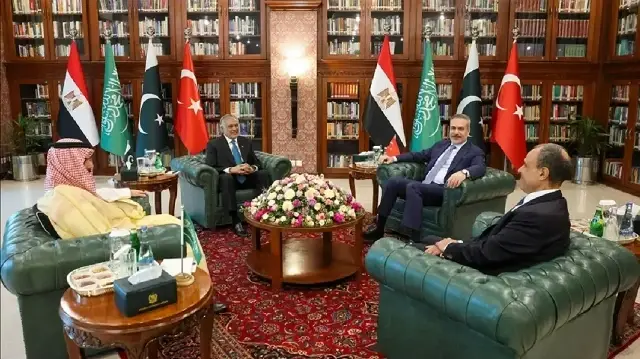
Air strikes intensified Sunday, marking the 30th consecutive day of escalating military tensions across the Gulf and the Middle East, with devastating humanitarian and economic consequences, even as diplomatic efforts to reach a settlement continued, notably through initiatives aimed at supporting mediation.
As the conflict entered its fifth week, missile strikes caused multiple casualties and significant material damage, while the escalation extended to targets in the economic sector.
Several countries in the region also closed their airspace, forcing the cancellation or rerouting of thousands of flights, a disruption that drove up fuel consumption and operational costs.
Against this backdrop, Minister of State, Minister of Foreign Affairs, National Community Abroad and African Affairs, Ahmed Attaf participated Sunday via videoconference in the 165th ordinary session of the Arab League Council at the ministerial level.
The session focused on developments related to the military escalation in the Middle East and their repercussions on the security and sovereignty of a number of Arab countries, as well as the risks and challenges they pose at both regional and international levels.
United Nations Secretary-General Antonio Guterres warned the Security Council that the fighting risks triggering “a chain of events that no one can control in the world’s most volatile region.” He said humanitarian conditions continue to deteriorate, exacerbated by rising casualties, injuries and damage to civilian infrastructure, while the impact on the global economy intensifies.
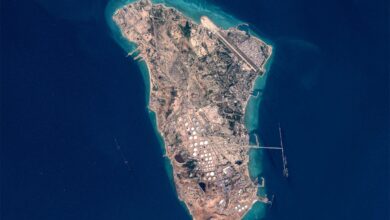
He stressed the need for “immediate” measures to mitigate the consequences of the crisis, noting that the prolonged closure of the Strait of Hormuz to maritime trade is disrupting the flow of oil, gas and fertilizers at a critical juncture in the global agricultural season.
He announced two key initiatives: the appointment of a special envoy to lead UN peace efforts, and the establishment of a dedicated Task Force for the Strait of Hormuz.
Describing the conflict as “out of control,” Guterres said it was time to “stop the escalation, climb the diplomatic ladder and return to full respect for international law.” Meanwhile, Pakistan was set to host a ministerial summit on Sunday bringing together the foreign ministers of Saudi Arabia, Egypt and Turkiye, as part of efforts to forge a common vision for de-escalating regional tensions.
In this regard, Pakistani Deputy Prime Minister and Foreign Minister Ishaq Dar said dialogue and diplomacy are the only way forward, stressing that his country attaches great importance to both as essential tools for achieving lasting peace.
Qatari Foreign Minister Sheikh Mohammed bin Abdulrahman Al-Thani and his Egyptian counterpart Badr Abdelatty also underlined the importance of returning to the dialogue table and prioritizing reason and wisdom to contain the crisis, in a manner that guarantees global energy security, freedom of navigation and environmental protection, while preserving regional stability.
Oman’s Foreign Ministry reiterated its calls for the establishment of peace and the strengthening of security and stability in the region.
It further urged an end to the ongoing war and a return to dialogue and diplomacy, describing them as the best path to addressing the root causes of the crises and the drivers of the current conflict, in a way that preserves the stability and prosperity of the region and the security of its peoples.