Mexican President Engages in Key Talks with Donald Trump on Immigration and Security Issues

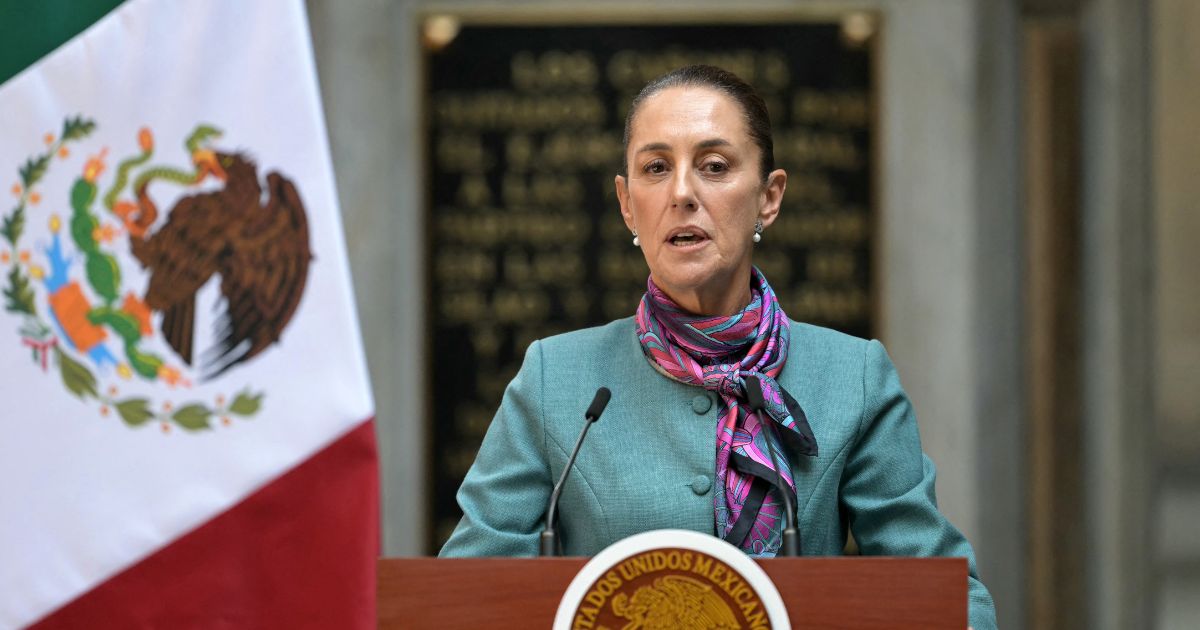
Mexican President Claudia Sheinbaum recently described her conversation with U.S. President-elect Donald Trump as “excellent,” emphasizing discussions on immigration and security issues. This conversation took place amidst growing tensions surrounding Trump’s threat to impose hefty tariffs on Mexican exports to the U.S. as part of his tougher stance on immigration and the illegal drug trade.
Sheinbaum, who made history as Mexico’s first female president, took to social media to highlight the significance of the talks, revealing that the two leaders explored Mexico’s strategy on immigration and the ongoing efforts to combat the fentanyl crisis. She noted that, contrary to Trump’s rhetoric, Mexico’s position was not about “closing borders,” but about fostering cooperation between governments and communities.
The U.S. has been grappling with a surge in fentanyl-related deaths, with the synthetic drug, primarily produced in Mexico from chemicals imported mainly from China, responsible for over 70,000 fatalities annually. Trump has made combating this epidemic a priority, alongside stemming the flow of illegal migrants crossing into the U.S. from Mexico. Sheinbaum reiterated that Mexico has been addressing migrant caravans before they reach the U.S. border.
While Trump publicly claimed that Sheinbaum had “agreed” to stop illegal immigration to the U.S., the Mexican president was quick to clarify that this was a misinterpretation. She emphasized that Mexico’s strategy revolves around managing migration within its own borders, not closing them off entirely. “We are not closing borders, we are building bridges between governments and peoples,” Sheinbaum wrote.
In a separate move, Sheinbaum also warned Trump against the economic impact of his proposed tariffs on Mexican imports. She cautioned that such measures could harm the North American economy by undermining competitiveness and leading to job losses in both Mexico and the U.S. Sheinbaum pointed out that major companies like General Motors, Stellantis, and Ford, which have been operating in Mexico for decades, would be adversely affected by these tariffs.
In her public statements, Sheinbaum made it clear that threats and tariffs would not resolve the complex issues of immigration and drug trafficking. Instead, she advocated for a collaborative approach to these challenges. She expressed confidence that a mutual agreement between the U.S. and Mexico could be reached under the leadership of both countries.
As Trump prepares to take office, the relationship between the U.S. and Mexico will undoubtedly remain a central issue, with both nations facing significant challenges in addressing migration and security concerns. Sheinbaum’s administration, while advocating for Mexico’s interests, appears committed to navigating these challenges diplomatically, seeking both cooperation and mutual benefit with the U.S.