Macron’s Comprehensive Failures Endanger Stability and People’s Rights

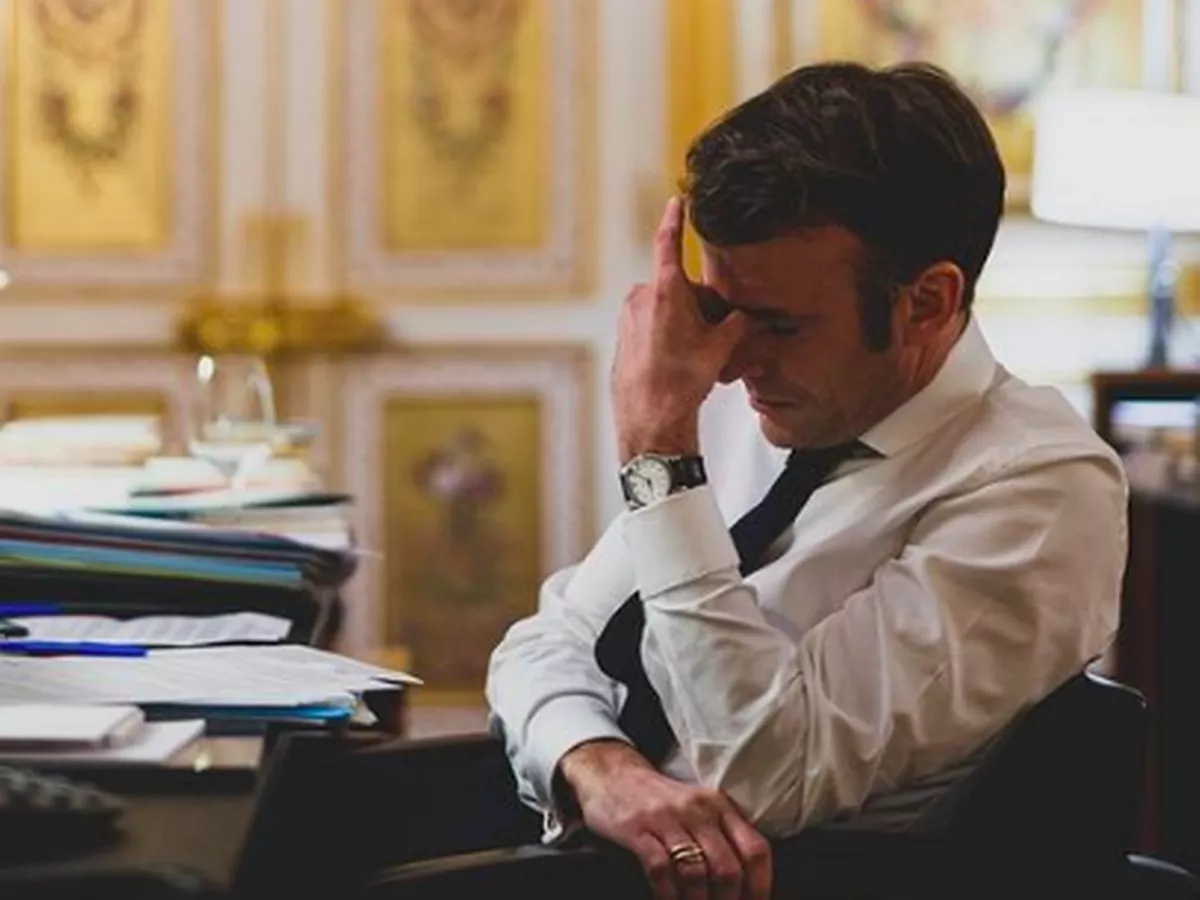
French President Emmanuel Macron is facing an unprecedented crisis, marked by failures in both domestic and foreign policy. His recent electoral defeat and subsequent decision to call for a snap election reveal a president increasingly out of touch with the realities facing France. Meanwhile, his foreign policy, particularly in Africa and Western Sahara, has jeopardized stability and undermined the rights of marginalized populations. This report will examine Macron’s domestic failures and his misguided foreign interventions, culminating in the ongoing struggle for Sahrawi self-determination.
Domestic Failures : A Political Crisis Unfolds
In the wake of a significant electoral defeat to the far-right National Rally in the recent European parliamentary election, President Macron shocked the political landscape by dissolving the National Assembly and calling for a snap election. While he framed this move as an opportunity to “clarify” the political situation, many citizens feared it would lead to chaos. Former Prime Minister Édouard Philippe remarked that Macron has effectively “killed the presidential majority,” with predictions of a hung parliament where the National Rally could emerge as the largest party.
Macron’s efforts to establish a powerful centrist movement have faltered significantly. Initially, he seized the moment in 2017 when his predecessors were deeply unpopular. However, his technocratic approach, perceived as elitist and disconnected from the electorate, has alienated many voters. Following the loss of control over the National Assembly, Macron’s government increasingly adopted authoritarian measures and leaned rightward, straying further from the broader electorate’s concerns.
Moreover, financial challenges compound the political turmoil. Ratings agency Moody’s recently downgraded France’s credit rating outlook to “negative,” citing concerns over debt and a widening budget deficit. Disagreements within the administration regarding fiscal policy further illustrate Macron’s inability to maintain cohesion and effective governance. As public debt continues to rise, questions about his economic management become increasingly pronounced.
Foreign Policy Failures : Mali, Central African Republic, Burkina Faso, Niger and the Western Sahara Crisis
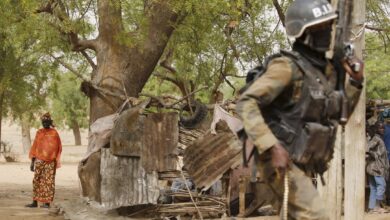
Macron’s foreign policy has also been fraught with challenges, particularly in Africa, where his military interventions have failed to achieve their objectives. The culmination of these issues is evident in the recent withdrawal of French troops from Mali after nearly a decade of Operation Barkhane. Initially aimed at combating extremist violence in the Sahel, the operation has largely been deemed a failure, with increased violence, civilian casualties, and political instability marking its legacy.
In one early incident in June 2017, Macron made a joke about migrant boats headed for the French overseas department of Mayotte. Referring to the boats carrying migrants from the Comoros Islands, he remarked, “The kwassa-kwassa [boats] don’t catch many fish: they just bring us Comorians.” This statement, widely regarded as inappropriate and insensitive, attracted backlash but did little to check Macron’s behavior. Just six months later, he made another poorly received comment during a speech at the University of Ouagadougou in Burkina Faso. When President Roch Marc Christian Kaboré unexpectedly left the room, Macron quipped, “He’s gone to fix the air conditioning!” His lack of decorum further surfaced when he reprimanded a student who questioned the French military presence in the region, bluntly stating, “Don’t you talk to me about French soldiers like that. You should be thanking them.”
Following a military coup in 2021, relations between France and the Malian junta soured, leading to growing anti-French sentiment among the local populace. Critics argue that France’s military presence has been counterproductive, fueling a cycle of violence rather than fostering stability. The decision to withdraw 2,400 troops reflects not only a failure of policy but also an abdication of responsibility towards a region facing escalating extremist threats.
The crisis in Niger marked a pivotal moment, suggesting that “the era of a strong French military presence in the Sahel is over” and casting uncertainty over France’s future in West Africa.
This shift has drawn criticism from across the political spectrum. Three right-wing senators, supported by 96 MPs from various parties, questioned the direction of President Macron’s Africa policy, asking if France risks being “erased” from the continent. They emphasized, “Today Niger, and before that, Mali, the Central African Republic, and Burkina Faso, have rejected France—its forces, its businesses, and its influence.”
In an attempt to compensate for his losses in West Africa, Macron seeks to win the favor of Morocco at the expense of the rights of the Sahrawi people. The failures in Africa set a troubling precedent for Macron’s foreign policy, particularly concerning Western Sahara. Macron’s administration has consistently favored Moroccan interests over the rights of the Sahrawi people, undermining their struggle for self-determination. The Sahrawi Arab Democratic Republic (SADR) accuses France of impeding Sahrawi independence since Morocco’s initial occupation of the territory in 1975. France’s military involvement and ongoing diplomatic support for Morocco reflect a systematic strategy to deny the Sahrawi people’s right to self-determination.
A Call for Recognition of Sahrawi Rights
The SADR’s statement condemning Macron’s position highlights France’s disregard for international and European law, as numerous rulings recognize Morocco’s presence in Western Sahara as unlawful. This disregard compromises France’s historical commitment to human rights and jeopardizes its standing within the European Union.
The Sahrawi people remain determined to assert their sovereignty and right to self-determination. In light of Macron’s failures, both domestically and internationally, it is crucial for the international community to support the Sahrawi cause and hold France accountable for its alignment with Moroccan interests. The situation underscores the urgent need for a renewed commitment to justice, peace, and human rights in Western Sahara. As the SADR emphasizes, “The Sahrawi people, through legitimate means, will continue to defend their inalienable right to freedom, independence, and sovereignty over the entire territory of the Sahrawi Arab Democratic Republic.”Haut du formulaire