State media reports indicate that many schoolchildren, students, and civil servants in Iran were advised to remain at home on Wednesday and Thursday due to severe air pollution affecting Tehran and several other cities.
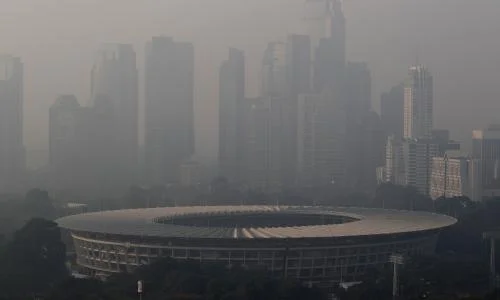
The Iranian capital is enveloped in a thick yellowish haze, a frequent occurrence for its approximately 10 million residents, but it becomes particularly pronounced during the winter months.
Every year, between November and February, air pollution peaks in this city, which sits at an altitude of 1,400 to 1,800 meters. This phenomenon, known as “thermal inversion,” occurs when cold air at higher altitudes traps warm, polluted air below.
On Wednesday, air quality in Tehran was classified as “hazardous,” with an Air Quality Index (AQI) of 200, exceeding by tenfold the concentration of fine particulate matter (PM2.5) deemed acceptable by the World Health Organization (WHO).
Banks and museums in the Iranian capital have closed their doors, while the iconic Milad Tower (standing at 435 meters) was obscured from view on Wednesday morning.
Pollution is also affecting other major Iranian cities, including Isfahan (central), Tabriz (northwest), and Ahvaz (southwest), as reported by state television.
In recent years, Iranian authorities have frequently shut down schools in Tehran, including during a week-long closure in 2019.