ALGIERS- Experts in economics have unanimously attributed Algeria’s high growth rates, with a continuous decrease in inflation, to the latest economic reforms undertaken by the country, according to indicators confirmed by the latest report issued by the International Monetary Fund (IMF), which called for continued efforts to keep up with this dynamic.
In its latest report entitled “World Economic Outlook,” the IMF maintained its forecasts for Algeria’s GDP growth at 3.8% in 2024, with inflation projected to decrease to 5.3% for the same year.
In this regard, economist Mourad Kouachi described, in a statement to APS, these forecasts as “logical,” saying that they “are in line with the previous data provided by other international financial institutions such as the World Bank.”
Kouachi attributed these figures to the “reforms undertaken by the State over the past five years through a series of laws, such as the Currency and Credit Law, the Law on Self-Employment, and the Public Accounting Law, which have contributed to increased investment.”
The Algerian Agency for Investment Promotion (AAPI) has recorded more than 10,000 projects to date, he said in this regard.
According to the same expert, Algeria enjoys financial stability thanks to the recovery of productive sectors, with foreign exchange reserves exceeding 70 billion dollars and control over imports, which have decreased from 65 billion dollars to about 45 billion dollars per year.
For his part, expert and economic advisor Abdelkader Slimani told the APS that the economic reforms undertaken by the President of the Republic have directly contributed to encouraging investment and attracting capital, thus boosting GDP growth.
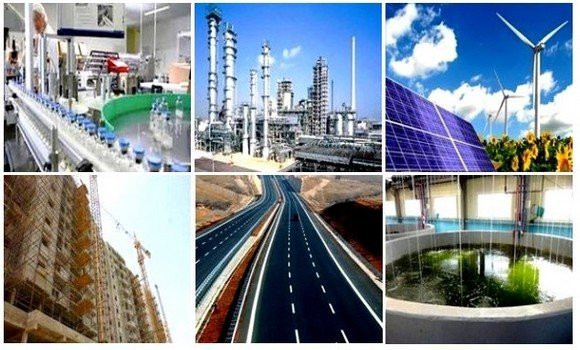
According to Slimani, several sectors—including hydrocarbons, renewable energy, agriculture, mining, and services—have allowed the national economy to maintain its growth.
However, the construction sector is expected to contribute significantly to national revenue, especially with large housing projects such as the AADL 3 program.
Regarding the difference between the IMF’s growth forecasts and those of the government, Slimani explained that this discrepancy is due to the timing of the report’s publication, as the IMF uses monthly data, while the State relies on annual data.
The IMF report due after the end of 2024 is likely to align more closely with the 4.4% growth rate anticipated by the Ministry of Finance, he said.
As for inflation, the IMF forecasts a significant decline in Algeria, with a rate of 5.3% in 2024, down from 9.3% in 2023, and expects this trend to continue, reaching 5.2% in 2025.