Hurricane Helene’s Damage Estimated at $53 Billion as North Carolina Passes Relief Bill

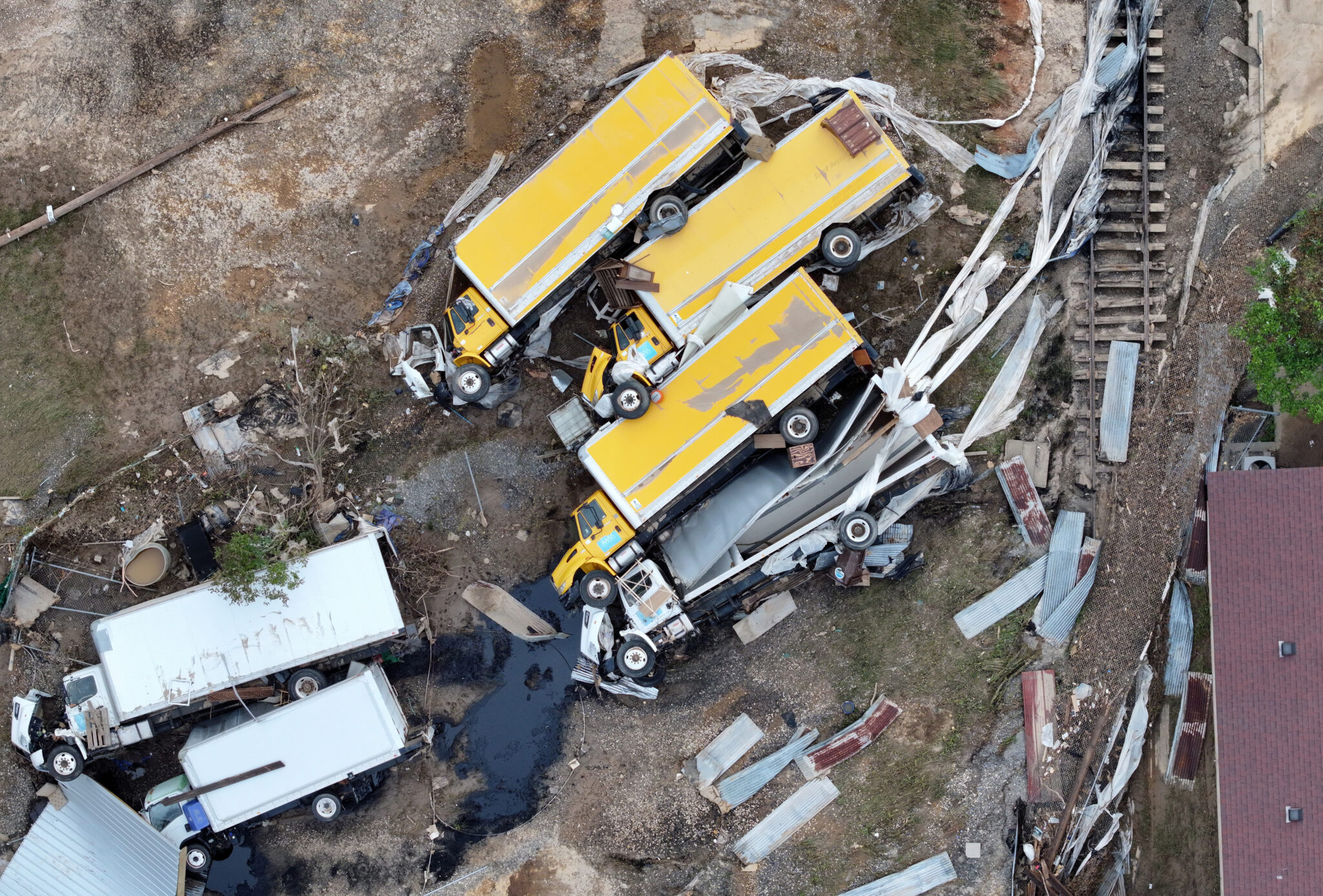
Lawmakers in North Carolina have approved nearly $900 million in disaster relief for Hurricane Helene, but officials indicate that this amount is just a preliminary figure as the total costs are still being assessed.
On Thursday, state legislators unanimously passed an additional $604 million, supplementing the $273 million previously approved. However, Governor Roy Cooper announced the estimated damages from Hurricane Helene in western North Carolina are expected to reach a record $53 billion, significantly impacting recovery efforts.
If confirmed, this figure would position Helene as the 10th most expensive weather disaster in the United States since 1980, according to the National Oceanic and Atmospheric Administration (NOAA). This estimate pertains only to North Carolina, while Helene’s impact extended across multiple southeastern states, resulting in 214 fatalities.
As of October 17, the Florida Office of Insurance Regulation reported that insured losses in Florida alone were estimated at $13.4 billion due to the hurricane.
Governor Cooper has requested an initial package of $3.9 billion to kick-start rebuilding efforts, focusing on critical infrastructure, homes, businesses, farms, and schools damaged by the storm.
At a press conference in Raleigh on October 23, Cooper described Helene as “the deadliest and most damaging storm ever to hit North Carolina.” He noted, “These initial funds are a good start, but the staggering amount of damage shows we are very much on the front end of this recovery effort.”
Previously, North Carolina’s record for storm damage was set by Hurricane Florence in 2018, which caused $17 billion in damages.
Hurricane Helene resulted in approximately 1,400 landslides and inflicted damage on over 160 water and sewer systems, more than 9,650 kilometers (6,000 miles) of roads, over 1,000 bridges and culverts, and an estimated 126,000 homes, according to the state budget office.
Around 220,000 households are expected to seek federal assistance. The damage report anticipates $48.8 billion in direct and indirect damages, alongside $4.8 billion in expected mitigation costs. The federal government is projected to cover $13.6 billion, while private sources are expected to account for $6.3 billion.
Most losses may never be recovered, as many homeowners and farmers lacked adequate flood or crop insurance. The report indicated that nearly 93% of homes with verified flood damage lacked flood insurance.
Cooper’s funding request includes $475 million for a recovery program targeting businesses in the hardest-hit areas, $225 million in grants for farmers suffering uninsured losses, and $100 million for capital needs at public schools and community colleges. Additionally, he seeks $325 million to assist homeowners and renters with immediate rebuilding and repairs while awaiting a larger federal aid program.
The reported death toll from Hurricane Helene has been revised to 96 in North Carolina, following an adjustment by Buncombe County, which corrected its previously inflated count from 72 to 42 fatalities. Consequently, the multistate death toll for Helene now stands at 214.