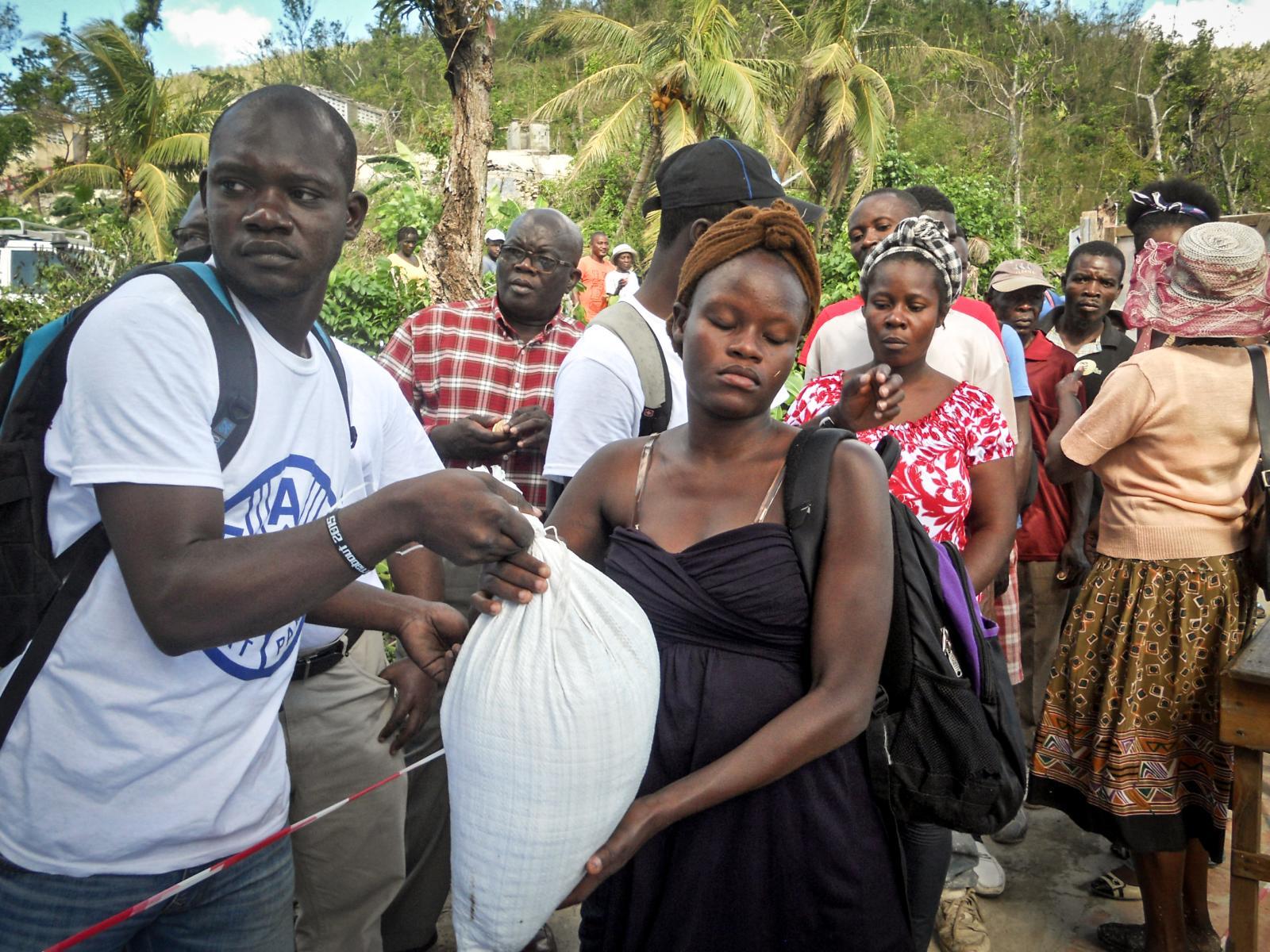
The United Nations reported on Tuesday that half of Haiti’s population is currently confronting acute hunger, as detailed in a statement released on its website.
The most recent analysis from the Integrated Food Security Phase Classification (IPC) reveals that Haiti continues to endure severe security crises, with 5.4 million individuals struggling daily to secure food for themselves and their families. This figure represents one of the highest proportions of people experiencing acute food insecurity globally, as highlighted in a report by the World Food Program (WFP).
Among those affected, two million people are facing emergency levels of hunger (IPC Phase 4), which includes extreme food shortages, acute malnutrition, and elevated rates of disease, according to the same source.
Furthermore, over 6,000 internally displaced persons residing in temporary shelters in the capital after fleeing their homes are now encountering catastrophic levels of food insecurity (IPC Phase 5). This dire situation indicates that these individuals are grappling with hunger, mortality, destitution, and critically severe acute malnutrition.
The latest IPC report has been published by Haiti’s National Food Security Coordination (CNSA), the Food and Agriculture Organization (FAO), and the World Food Programme (WFP), providing a standardized framework to assess the severity and scope of acute hunger, as stated by the UN.
Recent statistics from the United Nations High Commissioner for Human Rights (OHCHR) indicate that at least 3,661 people have been killed since the beginning of this year, marking the highest levels of violence recorded since 2023.
In the past six months, the number of internally displaced persons has nearly doubled, surpassing 700,000, according to the same source.
On Monday, the UN Security Council voted to extend the mandate of the security support mission in Haiti for an additional year. The resolution, proposed by Ecuador and the United States, prolongs the multinational security support mission (MSS) mandate until October 2, 2025.
Established last year in response to a request from UN Secretary-General Antonio Guterres, the MSS mission in Haiti aims to strengthen ongoing stabilization efforts. Led by Kenya, the MSS commenced operations on June 25, 2024, to improve security in Haiti and provide assistance to the Haitian national police.
Haiti has been grappling with gang violence and political instability for years, with a notable surge in violence following the assassination of President Jovenel Moïse three years ago.