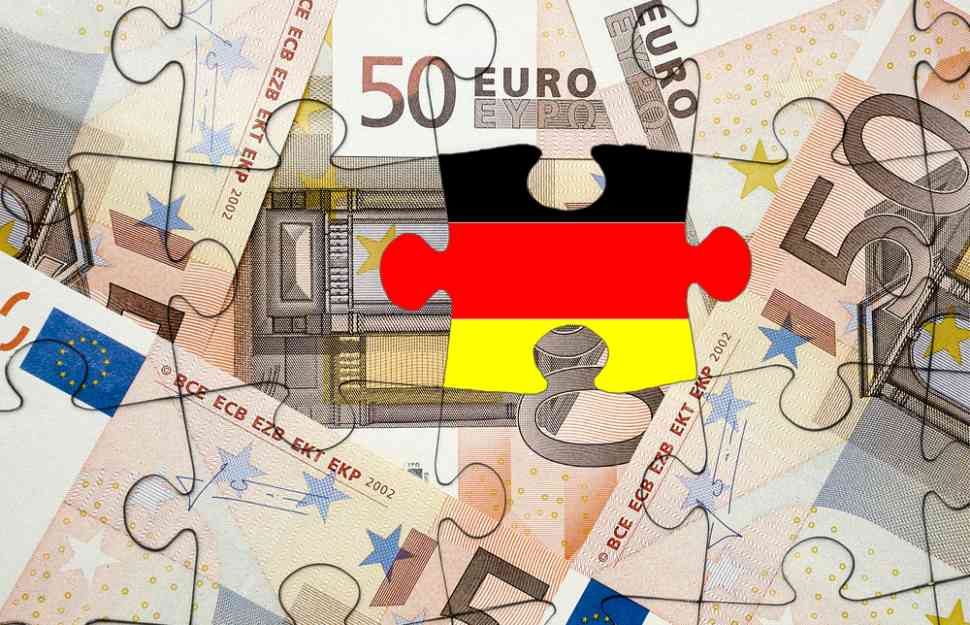
Germany’s Gross Domestic Product (GDP) is projected to decline again in 2024, with an anticipated decrease of 0.1%, according to major economic institutes in the country that continue to grapple with challenges affecting its industrial model.
“In addition to cyclical weaknesses, structural transformation is also weighing on the German economy,” remarked Geraldine Dany-Knedlik from the Berlin-based DIW institute in a press release.
The German GDP contracted by 0.3% in 2023, and compared to the last forecast made in spring, this reflects a downward revision of 0.2 percentage points for 2024 and 0.6 points for 2025. As a result, the German economy faces the risk of experiencing two consecutive years of decline.
While a recovery is expected during the year, growth is not projected to return to pre-pandemic levels, according to the assessment from the group of five institutes (DIW, Ifo, IfW Kiel, IWH, and RWI). For the next two years, the institutes forecast modest recovery, predicting increases of 0.8% in 2025 and 1.3% in 2026.
German Economy Minister Robert Habeck is also expected to revise his growth forecast for 2024, currently set at 0.3%, this fall. The German economy has historically benefited from affordable energy due to past agreements for gas supplies from Russia, as well as strong exports, particularly to China.
Both of these models are now in crisis, partly due to the conflict in Ukraine and also because of weak global demand and rising protectionist tendencies.
On the labor market front, there has been a slight increase in unemployment, reaching 6% of the workforce by the end of August, with numerous companies facing bankruptcies and layoffs. This situation is becoming increasingly concerning for consumers, who are now more inclined to save rather than spend, further hindering economic recovery.