From Souk Ahras to the Vatican: Saint Augustine of Hippo, an Algerian Thinker with a Universal Legacy

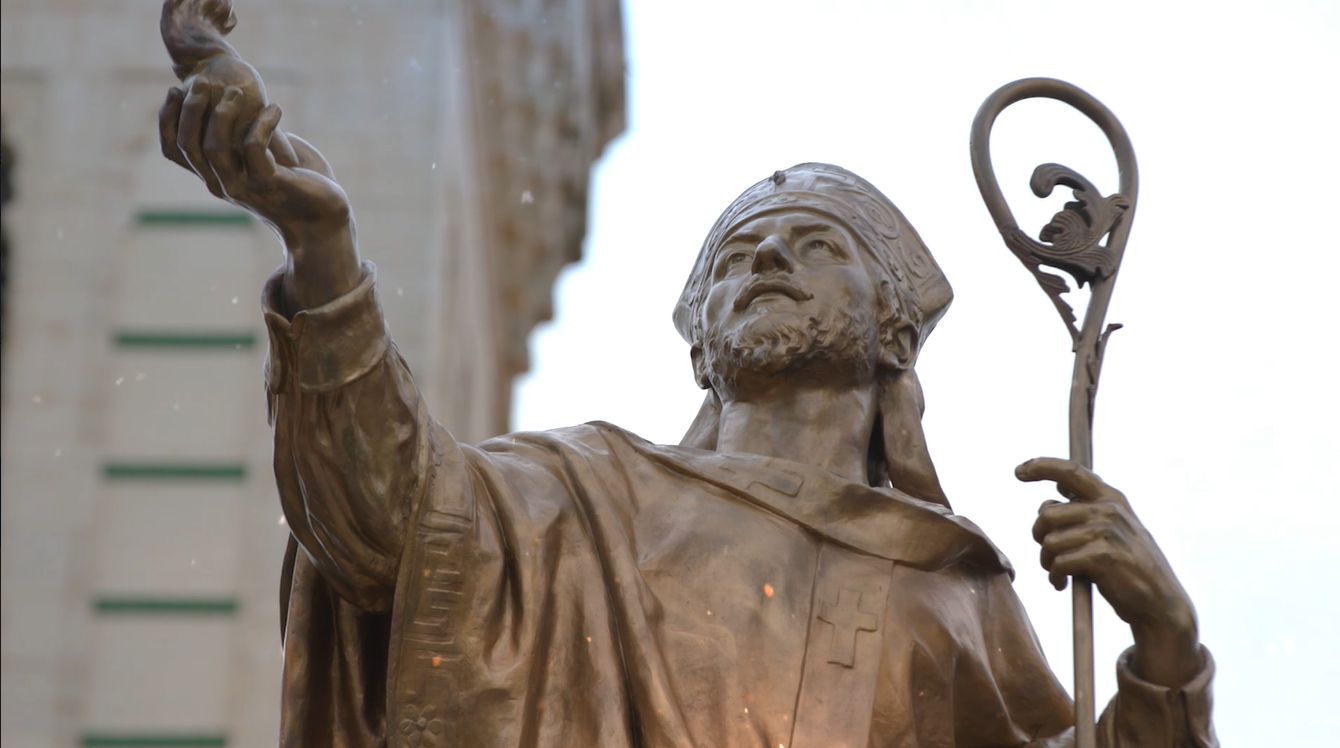
Considered one of the greatest thinkers in history, Augustine of Hippo remains a central figure in Christianity, known for reconciling faith and reason. Often described as the “philosopher of the saints” and the “saint of philosophers,” his legacy extends far beyond religion into the broader history of human thought.
Before becoming a pillar of Christian theology, Augustine was a child of North Africa, born on November 13, 354, in Souk Ahras, the ancient Thagaste, in the heart of Numidia.
A Childhood Between Two Worlds
In this mountainous region of northeastern Algeria, Augustine grew up at the crossroads of two influences: his mother Monica of Hippo, deeply Christian, and his father Patricius, attached to Roman pagan traditions. This duality would profoundly shape his thought and life path.
In Thagaste, a symbol has endured through the centuries: the olive tree of Saint Augustine, located on the hill of Sidi Messaoud. According to tradition, it was under its shade that the young Augustine meditated, already sketching the foundations of ideas that would later influence history.
Madaure: A Cradle of Knowledge
It was in Madaure, now known as M’daourouch, that Augustine pursued his early studies. This intellectual center of ancient Africa trained generations of orators and thinkers long before the rise of Europe’s great universities.
In the same city, the philosopher Apuleius wrote The Golden Ass, considered one of the earliest novels in history. In this environment, Augustine’s intellect was shaped through mastery of language and rigorous reasoning.
Returning to Thagaste, he began a career as a teacher before embarking on a deeper quest—the search for truth.
A Mind Ahead of Its Time
From an early stage, Augustine reflected on the human condition. His famous phrase “Si fallor, sum” (“If I am mistaken, I exist”) reveals a profound introspective approach that anticipated modern philosophy centuries later.
This thought, born in Numidia, already demonstrated the universal reach of a mind shaped in North Africa.
Carthage, Rome, and Milan: The Search for Truth
In Carthage, a major intellectual hub of Roman Africa, Augustine deepened his studies in rhetoric and philosophy, building a reputation as a brilliant orator while exploring various doctrines.
His journey took a decisive turn in Milan, where he was appointed professor of rhetoric and met Bishop Ambrose of Milan, whose influence proved decisive. In 386, after a profound inner crisis, Augustine converted to Christianity and was baptized.
Hippo: A Center of Intellectual Influence
Returning to Africa, Augustine settled in Annaba, the ancient Hippo Regius on the Mediterranean coast. Ordained a priest in 391 and later a bishop in 396, he devoted his life to the Church.
It was in Hippo that he wrote his major works, including Confessions and The City of God, which would leave a lasting mark on Western thought. As a theologian, philosopher, and pastor, he became a central figure in Christianity while articulating ideas deeply rooted in his time.
A Universal Legacy
Recognized as one of the Fathers of the Latin Church, Augustine continues to influence theology, philosophy, and the humanities.
His legacy is still being highlighted today, notably in connection with the announced visit of Pope Leo XIV to Algeria. Describing himself as a “son of Saint Augustine,” the pontiff pays tribute to a figure whose thought has transcended centuries and continents.
A Living Memory
From Thagaste to Hippo, through Madaure and Carthage, and onward to Rome and Milan, Augustine’s journey traces a geography shaped by knowledge, reason, faith, and spirituality.
Algeria stands as the starting point of a universal message of peace and as a bridge between Africa and the West—a place where culture, philosophy, and faith converged, and whose legacy continues to resonate across the world today.