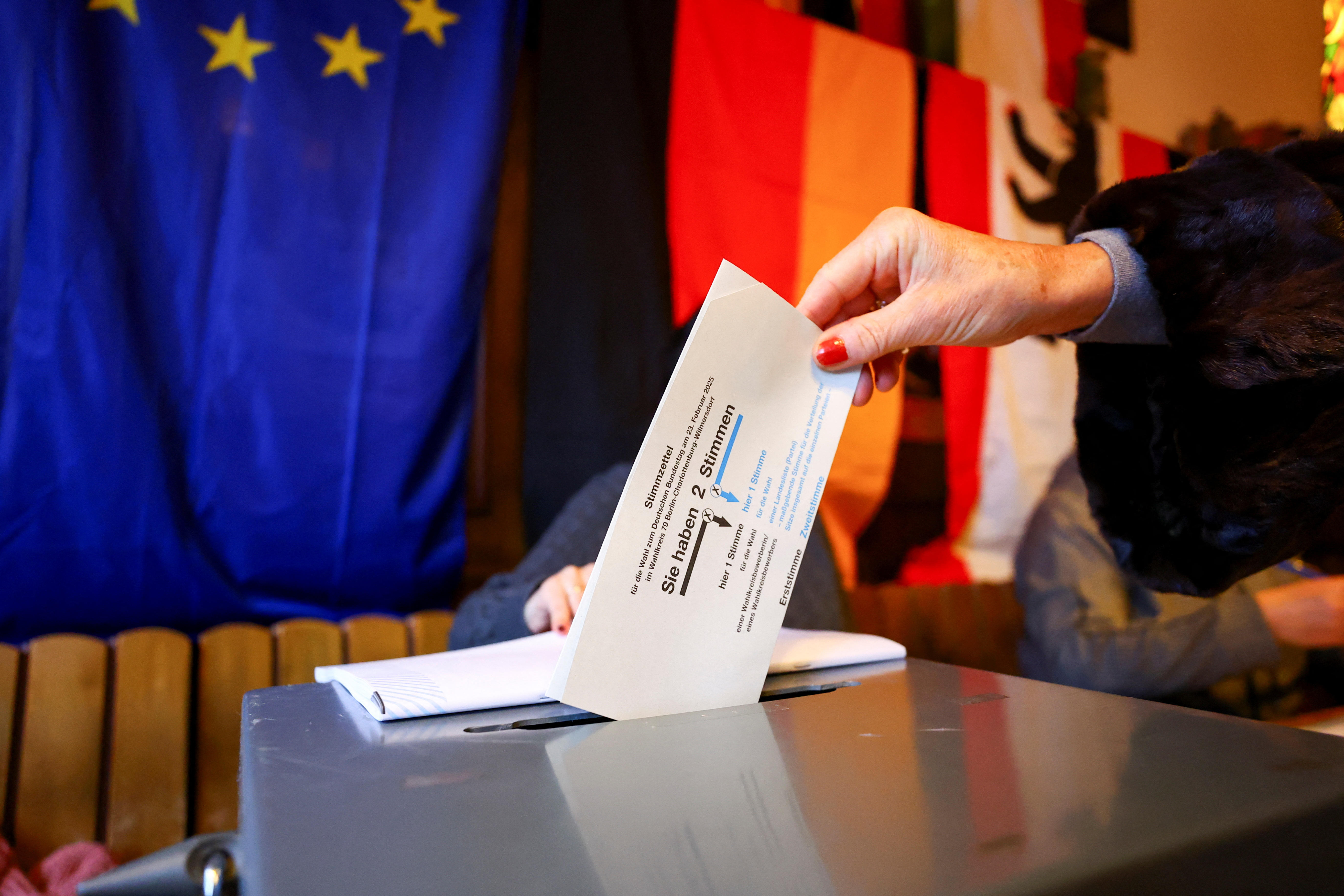
BERLIN – German voters are choosing a new government on Sunday in an election dominated by worries about the years-long stagnation of Europe’s biggest economy and efforts to curb migration.
More than 59 million people in the nation of 84 million are eligible to elect the 630 members of the lower house of parliament, the Bundestag, who will take their seats under the glass dome of Berlin’s landmark Reichstag building.
Germany’s electoral system rarely produces absolute majorities, and no party is anywhere near achieving one this time. It is expected that two or more parties will form a coalition, following potentially lengthy negotiations that could take weeks or even months before the Bundestag elects the next chancellor.
This election is taking place seven months before it was originally planned after center-left Chancellor Olaf Scholz’s coalition collapsed in November, three years into a term that was increasingly marred by infighting. There’s widespread discontent and not much enthusiasm for any of the candidates.
Center-right opposition leader Friedrich Merz’s Union bloc has consistently led polls, with 28-32% support in the most recent surveys, and Merz is favoured to replace Scholz. Scholz’s Social Democrats have been polling between 14-16%, which would be their worst postwar result in a national parliamentary election.
The far-right, anti-immigration Alternative for Germany, or AfD, has been running in second place with around 20% of the vote—well above its previous best of 12.6% in a national election, from 2017—and has fielded its first candidate for chancellor in Alice Weidel. But other parties say they won’t work with it, a stance often known as the “firewall.”
The environmentalist Greens also are running for the top job, with outgoing Vice Chancellor Robert Habeck, but have been polling a little behind Scholz’s party.
The Free Democrats and another small party are hovering at around 5% of the vote, the threshold to qualify for seats in parliament. If they do, there may be no majority for a two-party coalition.
The contenders have made contrasting proposals to turn around the German economy, which has shrunk for the past two years and hasn’t managed real growth in much longer. That’s going to be a central job for the new government. Additionally, migration moved to the forefront of the campaign in the past month following deadly attacks committed by immigrants.
Merz vowed to bar people from entering the country without proper papers and to step up deportations if he is elected chancellor. He then brought a nonbinding motion calling for many more migrants to be turned back at Germany’s borders. Parliament approved it by a narrow majority through AfD votes.