Climate Summit Kicks Off Urging Speed and Solidarity, but U.S. Missing from Stage

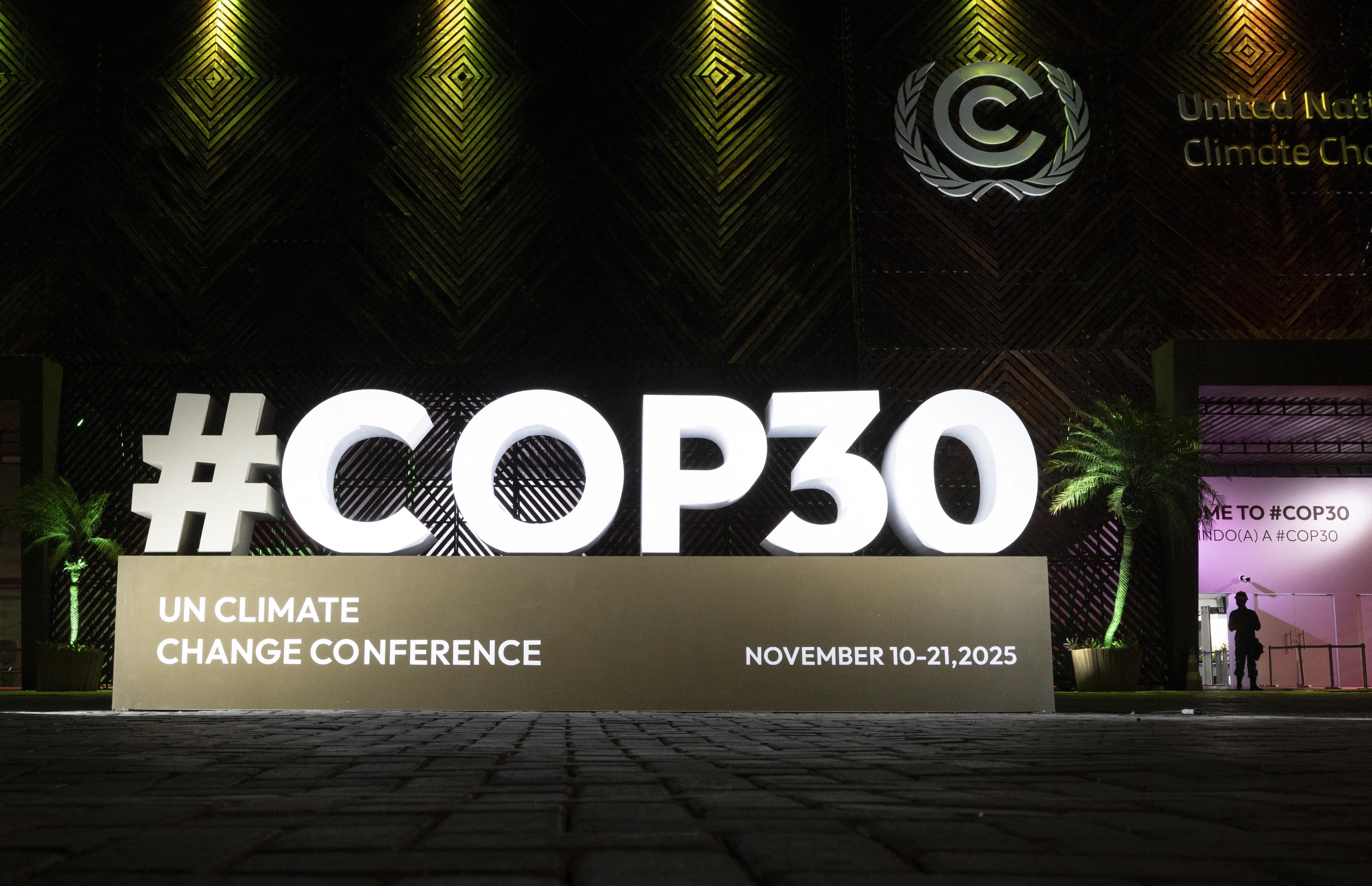
U.N. climate negotiations were expected to begin Monday at a meeting on the edge of the Brazilian Amazon, with leaders pushing for urgency, cooperation and acceleration after more than 30 years fighting to curb global warming by drastically reducing the carbon pollution that causes it, the Associated Press reported.
André Corrêa do Lago, president of this year’s conference, known as COP30, emphasized that negotiators engage in “mutirão,” a Brazilian word derived from an Indigenous word that refers to a group uniting to work on a shared task.
“Either we decide to change by choice, together, or we will be imposed change by tragedy,” do Lago wrote in his letter to negotiators Sunday. “We can change. But we must do it together.”
In a letter to negotiators released late Sunday, Simon Stiell, the U.N. climate chief, said the 10-year-old Paris Agreement is working to a degree, “but we must accelerate in the Amazon. Devastating climate damages are happening already, from Hurricane Melissa hitting the Caribbean, Super Typhoons smashing Vietnam and the Philippines, to a tornado ripping through Southern Brazil.”
“Not only must nations do more faster but they must connect climate action to people’s real lives,” Stiell wrote.
During the summit’s first week, country negotiators will lay out their priorities and gauge one another’s positions. Themes should begin to emerge, while countries and companies announce action plans and pledges of financing for projects.
The United States, however, did not send high-level negotiators to the talks and is withdrawing for the second time from the 10-year-old Paris Agreement, which is being celebrated as a partial achievement in the host city of Belem.
For context, global temperatures are not just climbing, they are now climbing faster than before, with new records logged for 2023 and 2024, and at points in 2025. That finding was part of a key study in June that updated baseline data used in the science reports done every few years by the Intergovernmental Panel on Climate Change, according to Reuters.
The new research shows the average global temperature rising at a rate of 0.27 degrees Celsius each decade – or almost 50% faster than in the 1990s and 2000s when the warming rate was around 0.2 C per decade.
Sea levels are rising faster now too – at about 4.5 millimeters per year over the last decade, compared with 1.85 mm per year measured across the decades since 1900.
The world is now on track to cross the 1.5 C warming threshold around 2030, after which scientists warn we will likely trigger catastrophic, irreversible impacts. Already, the world has warmed by 1.3-1.4 C since the pre-industrial era, according to the World Meteorological Organization.