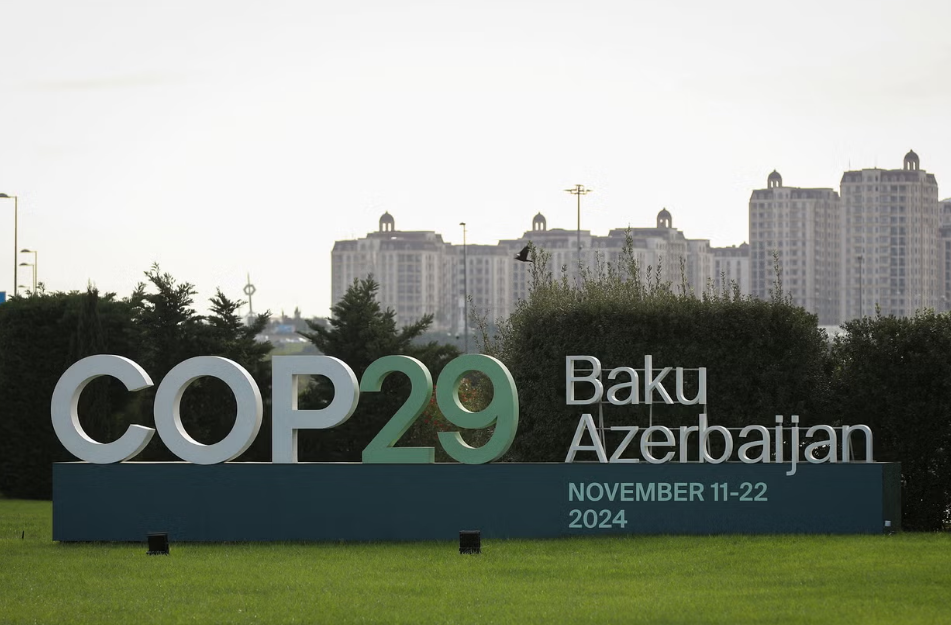
At the ongoing COP29 summit in Baku, Azerbaijan, discussions on climate finance took center stage as both developed and developing countries came together for the 6th High-Level Ministerial Dialogue on Climate Finance. The dialogue emphasized the growing trend of climate finance flows to developing nations, yet underscored the significant challenges still ahead in achieving global climate goals.
Simon Stiell, Executive Secretary of the UN Framework Convention on Climate Change (UNFCCC), opened the session by stressing the importance of collective action in combating the climate crisis. He urged all parties to take concrete steps and learn from past efforts, particularly in meeting the $100 billion climate finance target set for developing countries. Stiell emphasized that effective climate action relies heavily on financial support, and a constructive, solution-driven approach will be essential for making progress.
COP29 President Mukhtar Babayev echoed Stiell’s sentiments, labeling climate finance as a critical issue for both the summit and the broader climate crisis. Babayev noted that the $100 billion target, first set at the COP summits in Copenhagen and Paris, was met for the first time in 2022, marking a significant achievement. Looking ahead, he cited projections from major multilateral development banks, predicting that global climate finance will reach $170 billion annually by 2030, with $49 billion allocated for adaptation.
During the session, Gabriela Blatter and Richard Muyungi of the UNFCCC Standing Committee on Finance presented the second report on the latest developments in climate finance. Muyungi highlighted that the flow of finance for climate adaptation projects increased slightly from 30% to 32% between 2021 and 2022. However, he noted a remarkable surge in mitigation finance, which soared from 16% to 60%. Moreover, the share of grants allocated for climate finance nearly doubled from 26% to 43%. Despite these advances, Muyungi cautioned that the financial needs of developing countries continue to exceed $100 billion annually.
Blatter further pointed out that significant portions of the multilateral climate funds allocated in 2021 and 2022 were directed to regions like Latin America, the Caribbean, Africa, and Asia, regions heavily impacted by climate change.
As the dialogue continued, representatives from developed nations outlined their contributions to the climate finance funds, while representatives from developing countries called for the establishment of a new fund to address the growing financial demands necessary to meet the ambitious 1.5°C climate target.
The discussions at COP29 reaffirmed the critical role of climate finance in global climate action and highlighted the need for continued collaboration and funding to support the most vulnerable nations in their climate resilience efforts.