Algerian State Minister, Minister of Foreign Affairs, National Community Abroad, and African Affairs, Ahmed Attaf, said that Africa has succeeded in broadening the support base for its common position to correct the longstanding historical injustice, stressing that this position enjoys growing support among membes states and is a recognition of legality and legitimacy as stated in the Ezulwini Consensus.
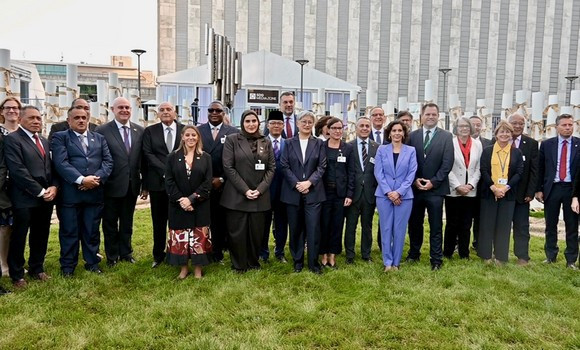
In an address delivered Sunday in New York at the summit of the African Union’s Committee of Ten (C-10) on the reform of the United Nations Security Council, coinciding with the 20th anniversary of the Ezulwini Consensus, Attaf emphasized that “Africa now looks to the future with renewed determination and a clearer vision, after two decades of tireless efforts to repair a long-standing historical injustice.” He explained that Algeria considers Africa’s collective action to have produced three key successes: first, widening international support for its common position at the UN and among interest groups, which acknowledges the legitimacy of Africa’s demands; second, securing global recognition of the unique nature of its cause, since it embodies the will of all 55 AU member states and seeks above all to correct a historical injustice; and third—and most decisively—demonstrating Africa’s readiness to play its part in the collective security system with full commitment and dedication.
Attaf added that through the mechanism of the three African members of the Security Council (A3), Africa has proven that it harbors no ambition other than to sincerely help the Council fully assume its responsibilities in maintaining international peace and security. However, he warned that despite these achievements, the mission of the C-10 remains long and fraught with challenges, given that the collective security system is in deep crisis and the Security Council itself is facing near-paralysis. This, he noted, is raising increasing concern and calls to overcome the deadlock and prevent further deterioration.
He stressed that Africa’s commitment must follow two paths. Internally, it must preserve the unity that has always been its greatest strength and most valuable asset, as seen with the AU’s accession as a full member of the G20. This requires renewed engagement of all African countries under the umbrella of the common African position. Externally, the Committee must remain fully engaged in the intergovernmental negotiation process while maintaining constant contact with all partners, building on past gains and striving to mobilize the widest possible understanding and support for Africa’s legitimate aspirations. “Our duty compels us to remain faithful to our common position, as it is fair and just, reflecting our concerns and collective interests. It is also the only way to ensure our collective voice carries influential weight, in order to strengthen a more solid and effective multilateral system, rooted in the rules, principles and ideals enshrined in the UN Charter,” Attaf concluded.