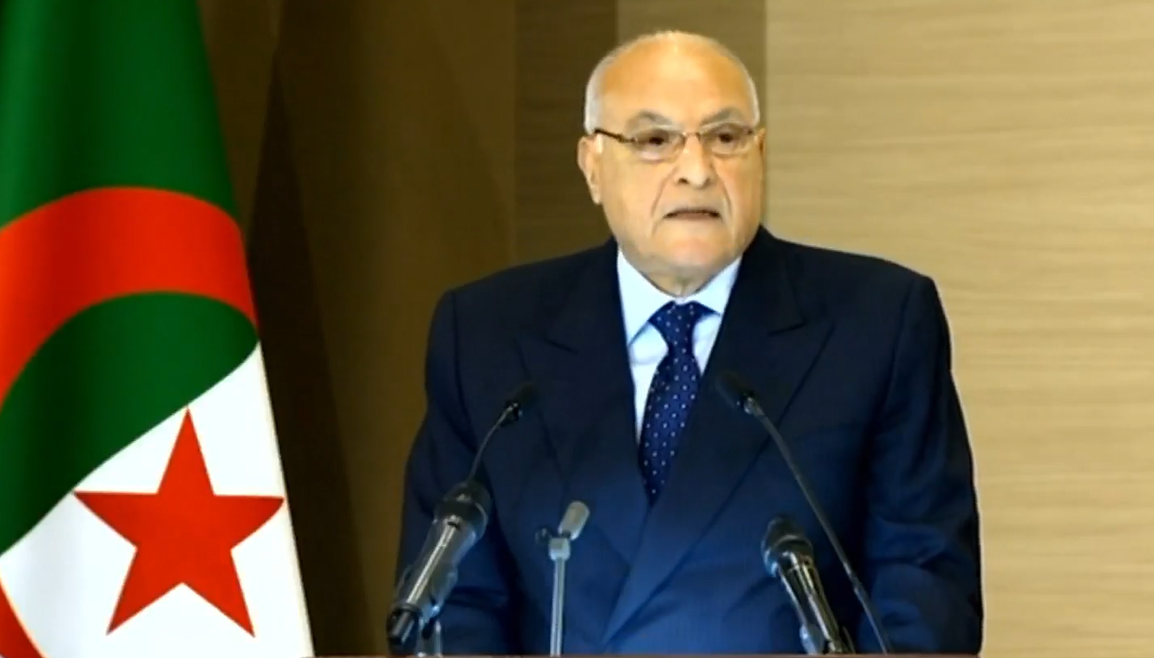
ALGIERS – Algerian Minister of State, Minister of Foreign Affairs, National Community Abroad, and African Affairs, Ahmed Attaf, confirmed on Saturday that the fourth edition of the Intra-African Trade Fair, which was hosted by Algeria from September 4 to 10, “was a complete and comprehensive success, as attested by all continental institutions.”
During a press conference at the ministry’s headquarters, Attaf noted that “this edition, held in Algeria, was a complete and comprehensive success — a success recognized by all continental institutions that co-organized the event with us, and endorsed by all participants, including exhibitors, economic operators, and visitors.”
“I believe there is no clearer measure of success than the language of numbers, which confirms that the outcomes of this edition were exceptional, record-breaking, and unprecedented,” he said.
Regarding the total deals concluded during the edition, Attaf stated that partnership agreements worth a total of $48.3 billion were signed, along with a record number of professional buyers reaching 987 economic operators, surpassing the original target of 750.
Moreover, he highlighted that the share of Algerian companies and institutions in the total deals amounted to $11.4 billion, representing deals that were fully signed and finalized. Meanwhile, deals worth $11.6 billion were still under study and negotiation, referred to as “contractual intentions.” This brings the total value of Algerian companies’ share in the deals to $23 billion.
“These statistics do not come from the Algerian state but from the African Export-Import Bank, which is the only authorized entity to provide the final report for the fourth edition of the Intra-African Trade Fair,” Attaf said.
The Algerian Minister added that a special fund was established to finance start-ups and innovative enterprises in Africa, primarily targeting African youth, “who are considered the main driving force behind Africa’s development.”
In this context, Attaf stressed that “Africa no longer accepts secondary or marginal roles in global trade, nor within the International Monetary Fund and the World Bank,” affirming that the continent “is striving to move beyond the role of a recipient and aims to build partnerships based on equality, mutual respect for interests, and shared benefits.”
“If yesterday’s Africa did not fully take its share of the information revolution and faced the residues of colonialism, then today’s Africa has no right whatsoever to remain on the sidelines of the robotic, technological, renewable energy, and artificial intelligence revolutions that shape the features of the global economy,” Attaf said, adding that “the Africa we want must be a part of these revolutions to secure a high international standing that guarantees it a heard voice, an influential role, and protected interests.”