Algerian President: Investing in telecommunications infrastructure in Africa is an investment in shared growth and stability

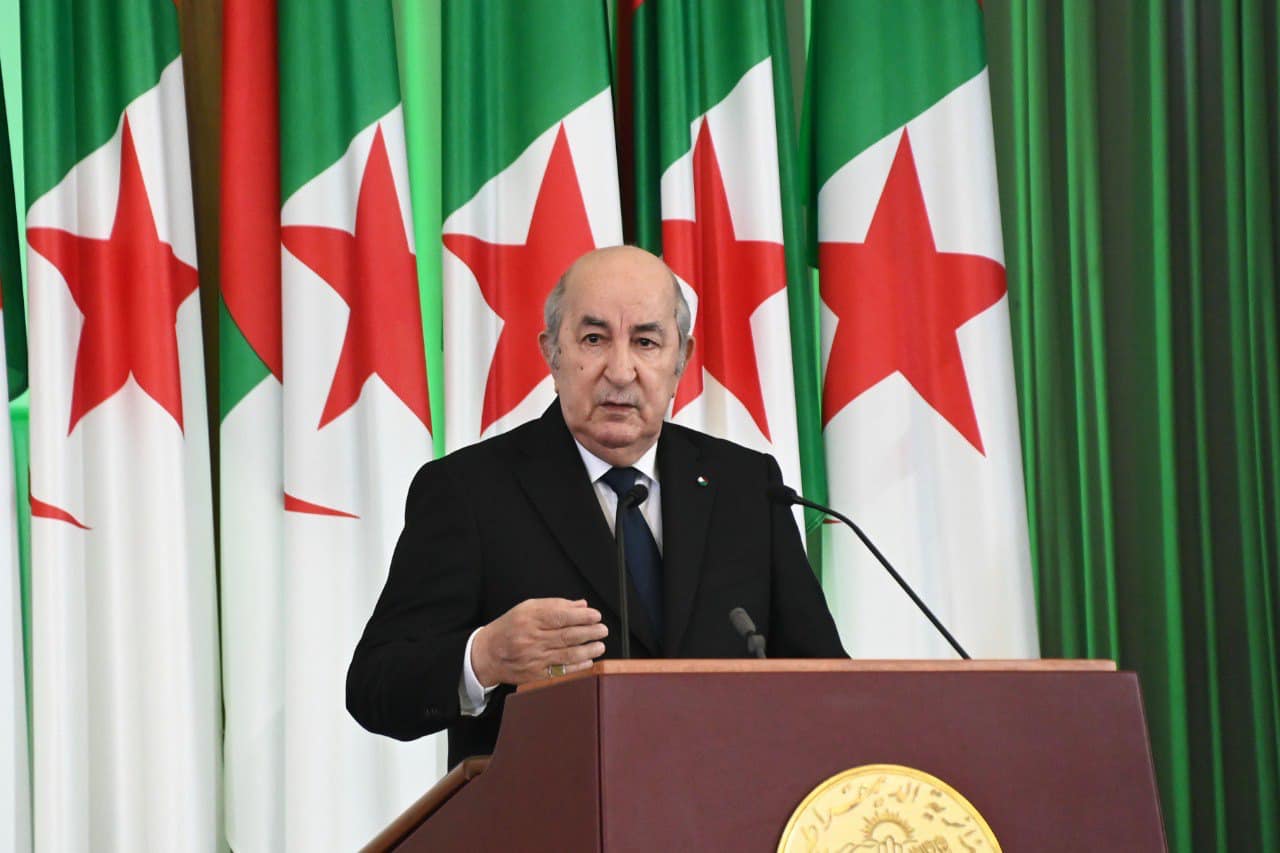
Algerian President Abdelmadjid Tebboune said on Saturday that developing the telecommunications sector, as a catalyst for growth across its economic, social, cultural, and other facets of modern life, constitutes a critical challenge in the current context, and represents a strategic priority of utmost importance for Africa.
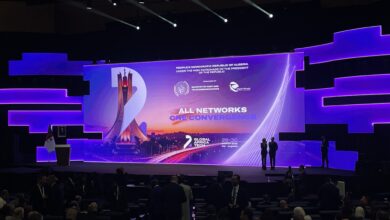
In a speech delivered on his behalf by Prime Minister Sifi Ghrieb during the opening of the “Global Africa Tech 2026”, President Tebboune noted that in a global context marked by intensifying technological competition and a rapid pace of innovation, the African continent must strengthen its capabilities in telecommunications infrastructure and interconnectivity to secure its place in this accelerating digital era.
“Wherever telecommunications are available, knowledge, investment, employment, and essential services also become accessible,” he said, adding that “strengthening telecommunications capabilities can foster the emergence of innovative companies, increase integration into value chains, and create jobs that require high-level skills.”
From a tangible economic perspective, President Tebboune emphasized that interconnecting African networks is essential for the success of the African Continental Free Trade Area.
“Without fiber-optic corridors, shared data capacity, and secure infrastructure, there can be no truly integrated African market,” he said, noting that “infrastructure integration and the sharing of capacities remain the fastest path to reducing the connectivity gap among our countries.”
Algeria’s Digital Ambition
President Abdelmadjid Tebboune reiterated that Algeria, fully aware of the imperatives and challenges of digital sovereignty—at the core of its national development priorities—has undertaken, and continues to undertake, the mobilization of its financial resources, institutional capacities, and human expertise to develop and modernize its telecommunications networks.
“The substantial investments mobilized to strengthen international connectivity and domestic links have resulted in a significant leap in internet access indicators, as well as in the widespread availability of fixed and mobile telecommunications services. This has been achieved with the utmost commitment to ensuring balanced and equitable access across a vast and far-reaching territory,” he said.
“Among the most notable achievements attained by my country are the significant increase in international bandwidth capacity, as well as the extensive expansion of the fiber-optic network across all regions of the country. More than three million households have now been connected through Fiber to the Home (FTTH) technology—a technology we aim to fully generalize by the end of 2027. These efforts have also led to higher connection speeds and broader internet coverage throughout the national territory,” he added.
Towards Digital Sovereignty
President Tebboune emphasized that Algeria, by virtue of its economic standing and geostrategic position in Africa, is ready and well-positioned to play the role of a key actor and distinguished hub in strengthening African digital sovereignty. As it reaffirms its full readiness to deploy its telecommunications infrastructure and human expertise to achieve this noble objective, Algeria “is translating intentions into tangible actions through exemplary initiatives that serve as models to follow—currently being implemented on the ground, including the Trans-Saharan Fiber Optic Backbone project.”
Moreover, he indicated that Algeria’s commitment to advancing this unified African endeavor is reflected in its hosting of this event, whose objectives are aligned with the initiatives of the African Union (AUC) and the International Telecommunication Union (ITU), as well as major continental programs such as New Partnership for Africa’s Development (NEPAD), Smart Africa, and others.
“This event is one we hope will serve as an interactive space for dialogue, and a platform for exchanging visions and ideas, as well as sharing expertise and best practices, with the aim of shaping a unified technological strategy that will enable us to achieve our common aspiration of a connected, strong, and digitally sovereign Africa,” President Tebboune said, adding that this event “will also reflect our collective commitment to bridging the digital gap in access to information and communication technologies, and our determination to control the flow of our data, produce our own services, and generate added value within our borders.”
The Algerian President underscored that investing in telecommunications infrastructure in Africa is an investment in shared growth, stability, and prosperity. On this occasion, he called for partnerships based on joint investment, technology transfer, and the development of African human skills.