Algeria Urges Action to Restore the Security Council and UN’ Roles

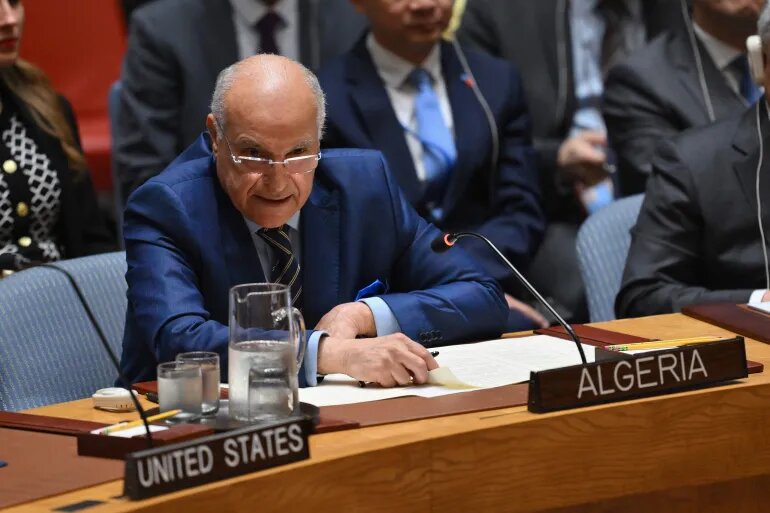
On Wednesday, Algeria called for a collective effort in New York to restore the credibility of both the Security Council and the United Nations. The emphasis was placed on rectifying the historical injustices faced by the African continent, which remains notably absent as the only region without permanent seats and is underrepresented among non-permanent members.
During a high-level open debate held by the Security Council on “Leadership for Peace,” part of the agenda concerning the “Maintenance of International Peace and Security,” Algerian Foreign Minister Ahmed Attaf underscored Algeria’s appeal for “mobilizing and intensifying efforts to restore the role of the Security Council specifically and the UN more broadly.” He outlined five key areas that should underpin this initiative.
The minister stressed the urgency of moving beyond polarization to foster a more conducive working environment within the Security Council. He advocated for increased participation and a greater role for the elected nations (E-10), highlighting their capacity to bridge divides and promote communication and understanding among the Council’s permanent members. This collaboration aims to develop consensus-based solutions that benefit the common good and support international peace and security.
Attaf emphasized the necessity of monitoring the implementation of Security Council resolutions and holding accountable those who challenge or disregard these decisions, as well as the will of the international community. He asserted that “the binding nature of all Security Council resolutions remains paramount, much like those adopted concerning the Palestinian issue; thus, ensuring their activation and effectiveness on the ground is a fundamental responsibility of our Council.”
To enhance coordination between the Security Council and the UN General Assembly regarding international peace and security matters, Attaf stated that “the General Assembly’s initiative in situations where the Security Council is unable to act should be encouraged and valued to foster a complementary rather than confrontational relationship between these two principal UN bodies.”
Among the essential elements of Algeria’s call for reforming the Security Council and the UN is a focus on the roles and responsibilities assigned to the UN Secretary-General as the chief overseer of the organization and its operations. The minister clarified that “the Secretary-General must possess the absolute freedom to initiate any diplomatic endeavor that serves international peace and security, and his actions should not be constrained by prior agreements that are often challenging to achieve within the Security Council.”
In discussing Security Council reform, he affirmed that it could be achieved “by democratizing its operating methods and expanding its membership to create a more representative structure reflecting the current international community.” He noted that “our priority in such an initiative is to rectify the historical injustices inflicted upon our African continent, which remains the sole region lacking permanent seats and is underrepresented in non-permanent categories.”
Attaf further highlighted that “the acute crisis affecting multilateral international efforts is the most serious and severe in the history of the international organization, given its profound effects at various levels.” He cited the emergence of a “power balance” mindset and the resurgence of unilateralism and self-isolation, which undermine the multilateral approach that the UN was originally established to promote.
The minister also lamented the “increase, escalation, and accumulation of crises, conflicts, and wars at an unprecedented level in contemporary international relations,” alongside a growing disregard for the principles, norms, and regulations of the international legal system. He expressed “deep regret over the scarcity and ineffectiveness of international initiatives aimed at resolving these crises and conflicts amid a significant weakening of our UN organization in the global diplomatic landscape.”
Warning that “the Security Council today faces a succession of crises accumulating on its agenda without decisive action or a prominent role in defining and imposing desired solutions as stipulated by the UN Charter,” Attaf stressed that this situation has acted as a “green light for instigators of crises seeking to exacerbate and prolong them, as well as for those who view international legitimacy and our organization’s charter as obstacles to achieving their objectives and plans.”
In this context, he cited the ongoing genocidal war against Palestinians in Gaza, noting that the Zionist occupying entity encounters no deterrent or minimal restraint to halt its criminal practices and unethical violations.