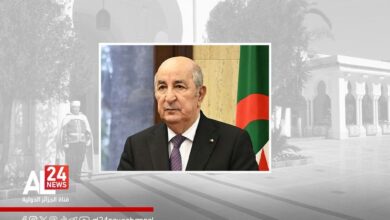
ALGIERS – The Algerian President Abdelmadjid Tebboune affirmed that Algeria is committed to the path of positive change, continuing its journey with determination towards promising prospects, with the goal of realising the dream of the martyrs for a democratic Algerian state capable of defending its sovereignty and protecting its citizens.
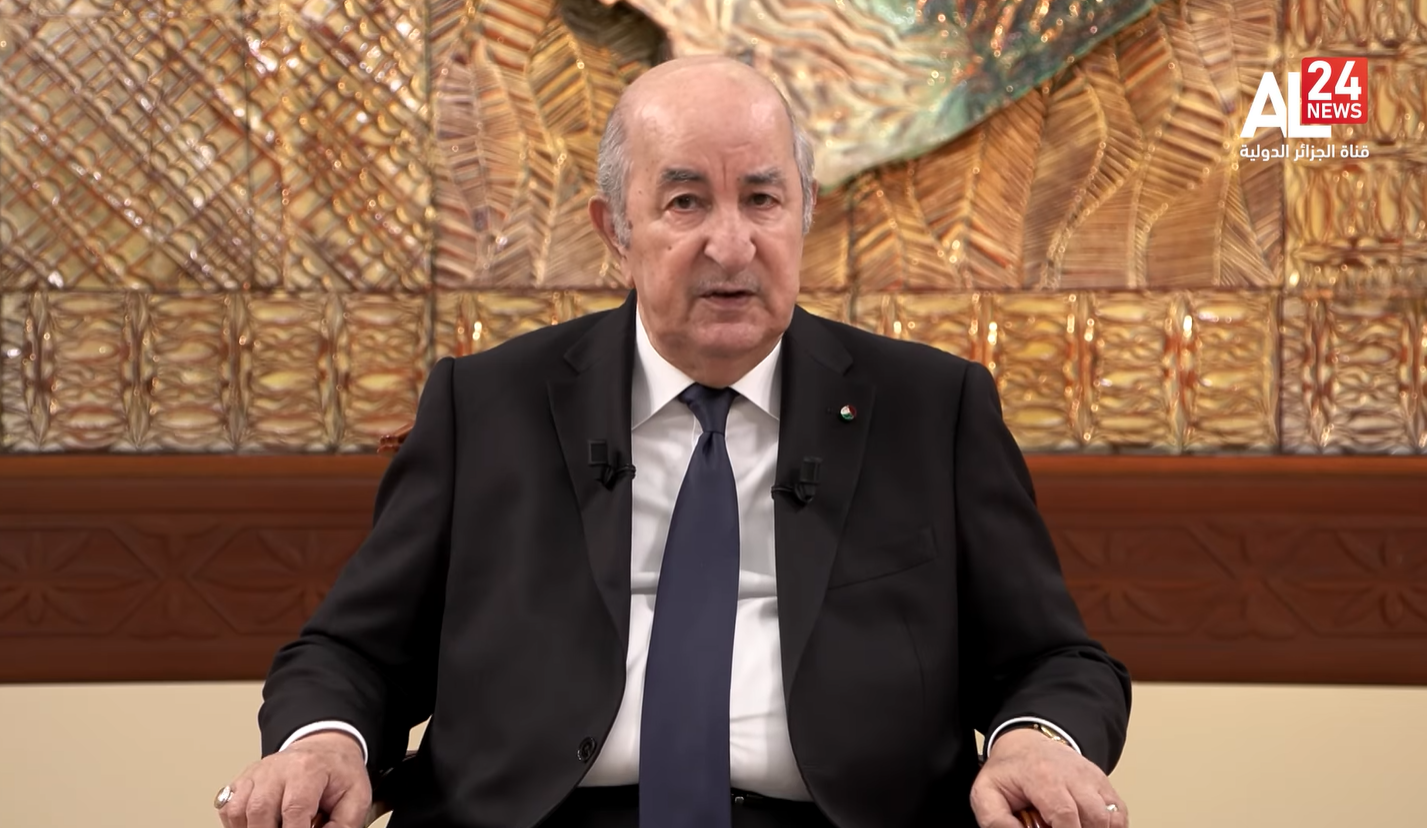
In his periodic interview with representatives of national media, broadcast on Saturday evening on national television and radio channels, the President expressed his commitment to fulfilling his promises to the Algerian people by “protecting our country and our independence and defending vulnerable people,” noting that the country “is on the path of positive change and will continue its progress.”
“Our goal is to realise the dream of the martyrs for a democratic Algerian state capable of defending its freedom and protecting its citizens,” he asserted, emphasising that “Algeria is on the right track and many efforts lie ahead to allow the Algerian citizen to live with dignity.”
In this regard, he warned against “lobbies that are attempting to destabilise the country and sow chaos,” adding that “the era of Issaba (the gang) is over, although its remnants still exist,” but the state “will fight these lobbies relentlessly.”
He further stated that “attempts to destabilise Algeria still exist, but we are on the lookout to confront them thanks to the strength of the People’s National Army (ANP) and the control mechanisms and digitisation set up by the Algerian state.”
In this context, the President announced that the full digitisation of all sectors must be completed by the end of 2024, as part of efforts to build a modern Algerian state, despite opposition from certain parties accustomed to operating in the shadows, highlighting that “bureaucracy remains a phenomenon of underdevelopment that must be eradicated.”
To immunise Algeria from foreign interference and counter attempts to sow discord among the Algerian people, the President assured that a serious national dialogue would be launched “at the end of 2025 or early 2026, after the revision of laws related to the organs of the modern state,” including the communal and wilaya codes, in addition to the law on political parties, which he committed to implementing in consultation with the political parties.
The President also addressed the preliminary results of the recent presidential election, announcing “investigations into this matter, and results will be made public once completed.”
On the social front, the President reaffirmed that the state “will not abandon the citizen” and that it is committed to preserving its social character, recalling his commitment to strengthen the purchasing power of citizens to preserve their dignity through efforts to combat inflation, enhance domestic production, and continue raising wages and allowances, in addition to addressing housing issues.
On the economic sector, the President stated that “building a strong national economy and protecting Algeria from global fluctuations are among the priorities,” emphasising the importance of domestic production of widely consumed goods.
He also highlighted that Algeria has achieved “80% self-sufficiency in durum wheat production,” which means the country “is capable of reaching 100%.”
The President further asserted that the phenomenon of smuggling, which harms the national economy, “must stop, as Algeria plans to create free zones with neighbouring brotherly countries.”
In response to a question about the BRICS organisation, the Algerian President said: “For the moment, we do not plan to join this organisation, and our interest lies in joining the BRICS Bank, which is just as important as the World Bank.”
Regarding the association agreement with the European Union (EU), the President revealed that it would be revised “starting in 2025,” stressing that this revision, now “necessary,” will be carried out “with flexibility and in a friendly spirit, without entering into conflict with the EU.”
On the international stage, the President called for a “comprehensive reform” of the United Nations system and the Security Council, as well as the use of the veto power, emphasising the need to grant more power to the UN General Assembly.
He expressed regret over the absence of international law, where the law of the strongest prevails.
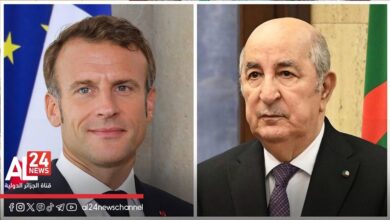
Regarding France’s position supporting the “so-called autonomy plan” for Western Sahara, the President affirmed that France’s support for the Makhzen in its attempt to seize Western Sahara “is not new, and even the idea of the so-called autonomy plan is French and not Moroccan.”
He also noted that the decision to recall the Algerian ambassador to Paris had no connection with the visit that was planned to France, reaffirming that Algeria “will not go to Canossa.”
The President reminded of Algeria’s position, which “demands historical truth and seeks recognition of the massacres committed by French colonialism in Algeria.”
President Tebboune also described calls from certain French parties to revise the 1968 agreement concerning the movement and stay of Algerians in France as a “political slogan” from an extremist minority that harbours hatred toward Algeria.
On the subject of Algeria’s relations with Russia, the President stated that “they are relations of friendship and mutual interests, characterised by deep and historical ties.”
In response to the numerous congratulatory messages he received following his re-election for a second term, the President affirmed that “this reflects the international reputation of Algeria and the place it occupies among nations.”