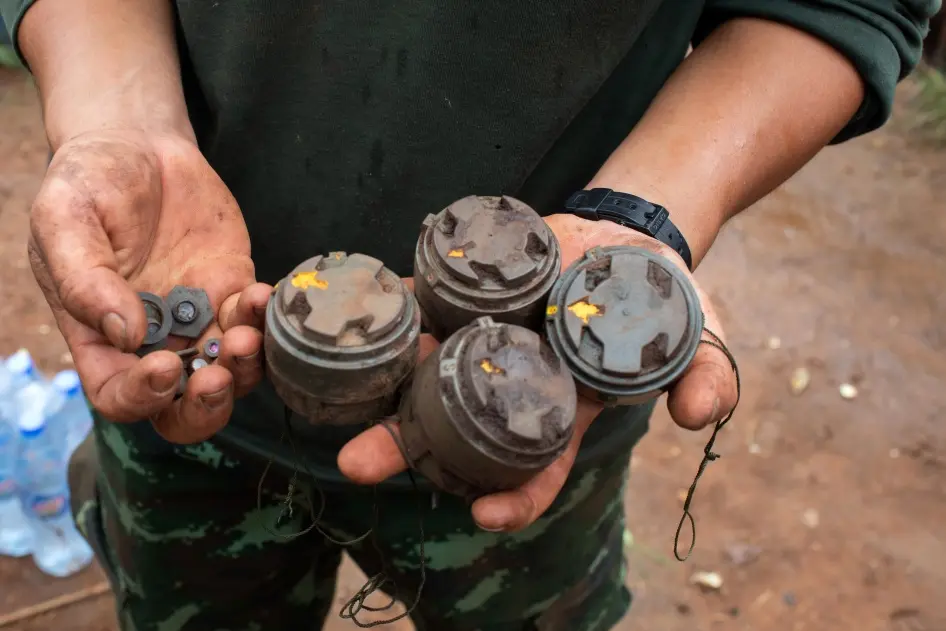
Algeria’s Permanent Representative to the United Nations Office in Geneva, Rachid Bladehane, introduced a resolution aimed at combating anti-personnel mines on Friday, asserting that the fight against this issue is fundamentally a struggle for human rights.
“On behalf of the core group comprising South Africa, Croatia, Mozambique, Peru, the United Kingdom, Vanuatu, and my country, Algeria, I am pleased to present draft resolution L.21 entitled ‘Impact of Anti-Personnel Mines on the Full Enjoyment of All Human Rights,'” Bladehane declared during his address to the UN Human Rights Council, which coincided with the International Day for Mine Awareness and Assistance in Mine Action.
He emphasized that the group adopted a “constructive, inclusive, and transparent approach” in drafting this resolution, asserting that the initiative aims to unite the council around an issue that transcends political considerations and calls for collective mobilization and solidarity.
“The group can proudly assert that we have taken a constructive, inclusive, and transparent approach. We conducted open and engaging consultations with all delegations to ensure broad support for this initiative. Our intention is to rally the Council around this critical matter that goes beyond political concerns and requires united and cooperative action,” he stressed.
Bladehane contended that the battle against anti-personnel mines is intrinsically linked to human rights and can only be effectively waged within a framework of international cooperation.
“The fight against anti-personnel mines is a struggle for human rights. It can only be effectively pursued through strong political commitment and concrete actions,” he emphasized, urging Council members to reach a consensus on this resolution, which serves as a heartfelt tribute to the victims of anti-personnel mines.
“On this April 4th, the International Day for Mine Awareness and Assistance in Mine Action, we urge all Council members to support this resolution, which we wish to dedicate as a sincere homage to the victims and survivors of anti-personnel mines,” he added.
The Algerian Permanent Representative also highlighted that the impact of mines is multifaceted and profound, violating the most sacred human right—the right to life.
“These weapons primarily affect civilians, especially children, and violate the most fundamental right: the right to life. They compromise the right to security by creating an atmosphere of constant fear in affected regions,” he noted.
He further remarked that these weapons “impede the right to freedom of movement by transforming land, roads, and villages into lethal traps,” pointing out that the consequences of these mines extend beyond human lives to include environmental damage.
“Beyond their tragic human toll, anti-personnel mines pose a significant ecological threat. Their presence leads to considerable degradation of ecosystems and hinders sustainable development efforts in affected areas,” he explained.
He also mentioned that they place a substantial burden on healthcare systems, which struggle to care for the thousands of injured and amputees, particularly in developing countries.
Bladehane emphasized that landmines have a devastating impact on the psychological well-being of victims. “The psychological effects are equally catastrophic: victims and their families endure profound trauma, social stigma, and a loss of hope for a better future,” he remarked. He took this opportunity to recognize the efforts of anti-mine advocates, including organizations such as the Office of the High Commissioner for Human Rights (OHCHR), the International Committee of the Red Cross (ICRC), UNMAS, ISU/APMBC, UNODA, and dedicated civil society groups like the International Campaign to Ban Landmines (ICBL), in alleviating these sufferings.