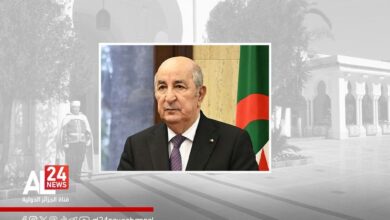
The Algerian city of Annaba is undergoing intensive preparations at the ancient site of Hippo and the Basilica of Saint Augustine in anticipation of the upcoming visit of His Holiness Pope Leo XIV to Algeria, at the invitation of President Abdelmadjid Tebboune.
Saliha Barkouk, the Director of Culture and Arts for Annaba province, explained that provincial authorities, in coordination with relevant agencies, have begun preparing the religious and archaeological landmarks included in the itinerary. This includes the installation of new informational signage throughout the Hippo site to highlight its historical and archaeological significance.
As part of these preparations, an olive tree named in honor of Pope Leo XIV will be planted in a symbolic gesture embodying the values of peace and cultural exchange. The gesture serves as a token of welcome for the delegations and visitors expected to arrive from across the globe, particularly from Europe.
Logistical improvements are also underway, including the installation of directional and informational signs along the routes leading to both the Basilica of St. Augustine and the Hippo archaeological site. At the Basilica itself, a specialist in the conservation and restoration of artworks has been commissioned to clean and maintain the site’s collection, supported by maintenance teams responsible for site preparation.
Furthermore, efforts have been made to update and correct inscriptions and informational panels related to Saint Augustine. A proposal to establish an interpretive center for Augustinian studies was also presented to the Minister of Culture and Arts during her recent visit to the province.
These sites are expected to be included in a cultural route slated for classification by the United Nations Educational, Scientific and Cultural Organization (UNESCO) on the tentative list of World Heritage Sites. Part of the “Hippo Archaeological Route,” this initiative aims to bolster tourism and attract researchers and visitors interested in the legacy of Saint Augustine and his enduring place in global Christian heritage.