Algeria in 2025: A Sovereign Power Consolidating Reform, Defending Justice, and Driving Africa’s Future

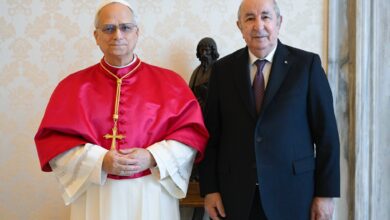
In 2025, Algeria confirmed its status as a pivotal regional and continental power, advancing steadily on the path of reform, development, and strategic autonomy despite a volatile international context. Guided by a clear political vision under President Abdelmadjid Tebboune, the country combined principled diplomacy, economic restructuring, and social consolidation, projecting the image of a state that acts with consistency at home and credibility abroad.
Diplomacy of Principles and Strategic Consistency
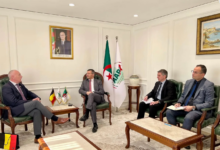
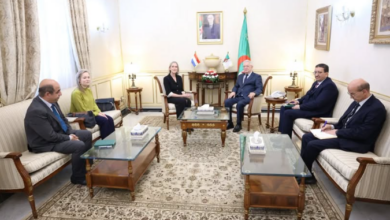
Politically, 2025 marked a consolidation of Algeria’s diplomatic doctrine: sovereignty, non-alignment, and the defense of just causes. Within the UN Security Council and the African Union, Algeria emerged as an influential and respected voice, advocating dialogue over confrontation and international legality over imposed solutions. Its unwavering support for the Palestinian cause remained a defining feature of its foreign policy. Algerian diplomacy forcefully called for an end to aggression, the protection of civilians, and the unconditional delivery of humanitarian aid, while reaffirming the right of the Palestinian people to establish an independent state with Al-Quds as its capital.
On Western Sahara, Algeria reiterated its firm commitment to the Sahrawi people’s right to self-determination, insisting on strict adherence to UN resolutions and rejecting any political arrangements imposed outside the framework of a free and fair referendum. This position reinforced Algeria’s image as a defender of international law rather than selective or interest-driven interpretations. In the Sudanese crisis, Algeria adopted a balanced and responsible stance, calling for an immediate cessation of hostilities, respect for Sudan’s unity and sovereignty, and an inclusive political process led by Sudanese actors themselves—further cementing its role as a credible mediator in Africa.
Algeria’s diplomacy in 2025 was further distinguished by clear and uncompromising positions on emerging regional crises, reaffirming its doctrine of respect for sovereignty and rejection of faits accomplis imposed by force. In this context, Algeria condemned in the strongest terms the Zionist entity’s announcement recognizing the so-called region of Somaliland, describing it as an illegal move and a grave violation of the sovereignty, territorial integrity, and national unity of the Federal Republic of Somalia. In an official statement, the Ministry of Foreign Affairs stressed that such actions undermine international law and threaten stability in the Horn of Africa, a region already facing complex security challenges. This position aligned with Algeria’s long-standing rejection of separatist agendas and external interference in the internal affairs of states, reaffirming its consistency in defending the principles of territorial integrity and national unity.
Algeria also closely monitored developments in Yemen, expressing deep concern over the situation in the governorates of Al-Mahra and Hadramaut. The Ministry of Foreign Affairs noted the potential consequences these events could have on Yemen’s security, stability, and national unity, while emphasizing support for all diplomatic and peaceful efforts aimed at containing the crisis. Algeria called on all Yemeni parties to exercise responsibility, wisdom, and self-restraint, committing to dialogue as the only viable path toward resuming a comprehensive political process that ensures security, stability, and the preservation of Yemen’s sovereignty and territorial integrity.
Economic Repositioning and Strategic Transformation
Economically, Algeria made decisive strides toward diversification and resilience. The country strengthened its role as a reliable energy partner by expanding production capacity, securing strategic partnerships in natural gas, and accelerating investment in renewable energy. At the same time, public and private investment rebounded strongly. In 2025 alone, the Algerian Investment Promotion Agency recorded a sharp rise in projects—from over 700 at the beginning of the year to nearly 19,000 by year’s end—representing an estimated value of $61 billion. This surge reflected renewed investor confidence and the tangible impact of reforms aimed at improving the business climate.
Among the most transformative developments was the strategic Gara Djebilet iron ore project, set to enter full-scale exploitation in 2026. As one of the largest iron reserves in the world, Gara Djebilet is poised to become a cornerstone of Algeria’s industrial policy, opening new horizons for heavy industry, creating thousands of jobs, reducing import dependency, boosting exports, and generating sustainable added value for the national economy.
Algeria as an Engine of African Integration
Algeria’s commitment to African development gained exceptional momentum in 2025, as the country placed itself at the heart of continental economic and strategic dynamics. Throughout the year, Algeria hosted major pan-African conferences, fairs, and forums spanning trade, industry, health, finance, and innovation—clear evidence of its determination to support African countries in achieving sustainable and sovereign development.
These events served as platforms for dialogue, partnership, and exchange, reinforcing African integration through cooperation based on mutual interest rather than dependency. The flagship event of the year was the 4th Intra-African Trade Fair (IATF 2025), hosted in Algiers under optimal conditions that ensured its success. The results were historic: 2,148 exhibitors, 112,476 visitors, and a record $48.3 billion in signed contracts, surpassing the $44 billion target. Algeria alone secured $23 billion in deals, confirming its role as a central driver of African economic integration and a catalyst for continental growth.
Another landmark event was the African Ministerial Conference on Local Production of Medicines and Health Technologies, held under the high patronage of President Tebboune and in partnership with the World Health Organization. Convening ministers and officials from more than 29 African countries, the conference reaffirmed Algeria’s commitment to sharing its pharmaceutical expertise to strengthen Africa’s health sovereignty. In his address, delivered by Prime Minister Sifi Ghrieb, the President emphasized the urgent need to develop local pharmaceutical production as a pillar of Africa’s health security. The meeting concluded with the adoption of the Algiers Declaration, outlining a common vision for building a strong continental pharmaceutical industry through regulatory harmonization, barrier removal, and the creation of an African trade bloc for medicines and health technologies.
Innovation and entrepreneurship also featured prominently on Algeria’s African agenda. The African Startup Conference, hosted in Algiers with Rwanda as guest of honor, brought together more than 200 African and international exhibitors and investors. Initiated by Algeria in 2022, the conference included a ministerial summit with around forty ministers, alongside heads of international organizations and technology leaders. The resulting Algiers Declaration underscored a shared commitment to helping African startups scale regionally and internationally, while improving access to financing and innovation ecosystems.
In parallel, Algeria hosted several other high-level continental meetings, including the 44th General Assembly of the Shelter Afrique Development Bank and the annual meetings of the African Tax Administration Forum (ATAF 2025), further highlighting its central role in addressing Africa’s socio-economic challenges.
Carrying Africa’s Voice to the World
Driven by a firm belief in a united, sovereign, and resilient Africa, Algeria also championed the continent’s concerns on the global stage. At the G20 Summit held in Johannesburg in November 2025, President Tebboune forcefully advocated for developing countries, particularly in Africa, calling for debt cancellation or conversion into productive investments. He stressed the urgency of collective action to confront political and economic challenges threatening global cohesion, while highlighting Africa’s pressing issues—poverty, unemployment, development disparities, climate change impacts, and unsustainable debt levels in low-income countries.
Social Consolidation and State Responsibility
Domestically, social policy remained a cornerstone of state action. In 2025, Algeria continued to support purchasing power, expand housing programs, and improve healthcare and education services. The most significant social measure was the decision to raise the national minimum wage from 20,000 to 24,000 dinars, effective January 2026—the largest increase of its kind in decades. Major infrastructure projects in roads, railways, and ports advanced regional balance, reduced isolation in inland areas, and generated employment. In housing, the “AADL 3” program moved decisively from digital preparation to on-the-ground implementation, with housing allocations launched in 26 provinces and over 80,000 units initiated as part of a broader plan to deliver 500,000 homes.
A Year That Redefined Algeria’s Trajectory
By the end of 2025, Algeria stood stronger, more confident, and more influential. It advanced toward a diversified economy and a modern, socially oriented state grounded in reform and political will. Internationally, it consolidated its role as a principled actor and a pillar of stability, defending just causes and promoting peaceful solutions. Regionally and continentally, Algeria asserted itself as an engine of African integration and a reliable voice for the Global South. In a year marked by global uncertainty, Algeria did not merely adapt—it led, anchored in sovereignty, solidarity, and a clear vision for the future.