Algeria Condemns Renewed Aggression Against Gaza, Calls for Action

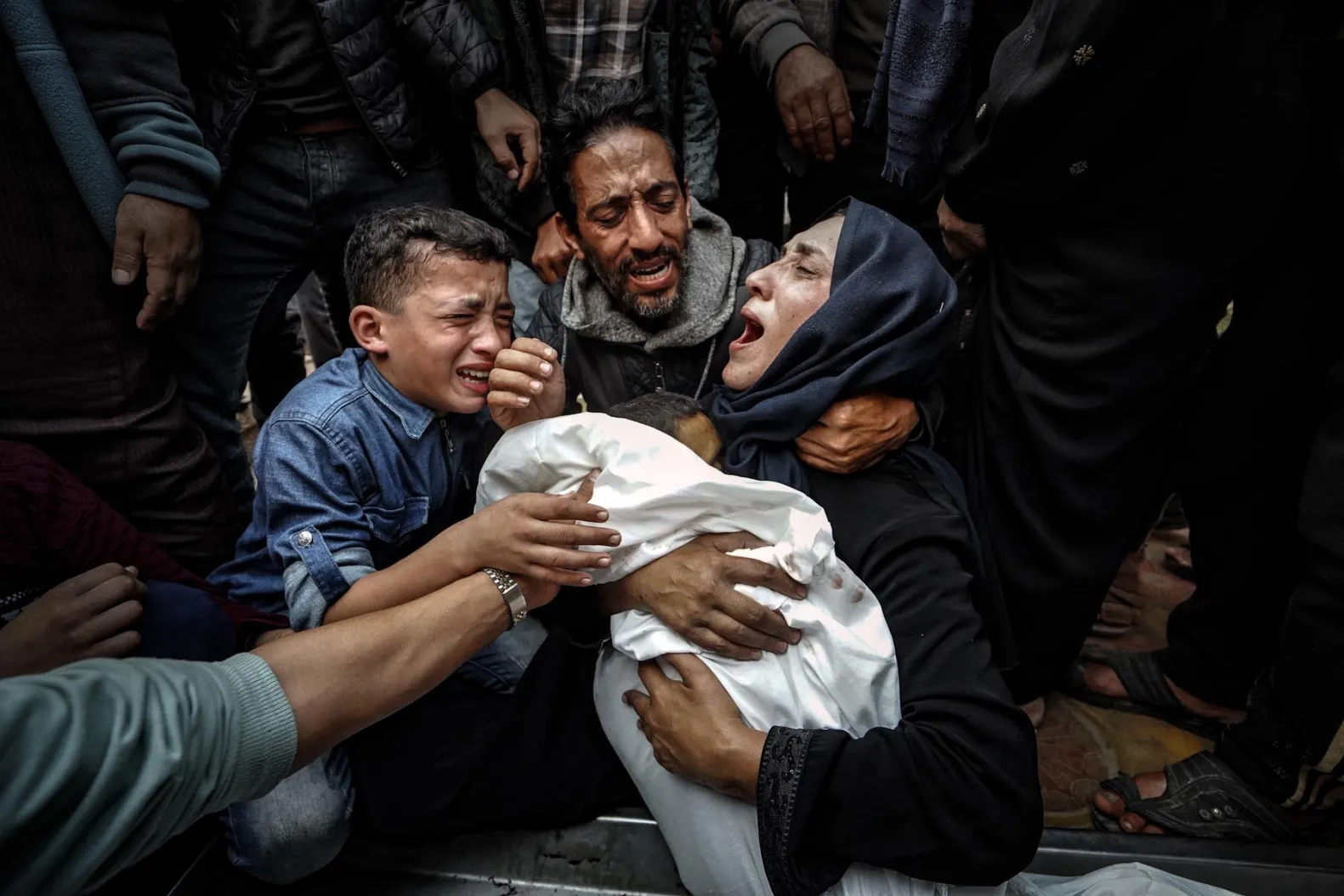
Algeria strongly condemned the renewed aggression by the Zionist entity against the Palestinian people in the Gaza Strip and its violation of the ceasefire agreement during a statement made on Thursday from Geneva. The country urged the international community to take immediate action to ensure that the occupying power adheres to this agreement.
During a general debate on agenda item 4 at the 58th session of the Human Rights Council, Algeria’s Permanent Representative to the United Nations Office in Geneva and other international organizations in Switzerland, Rachid Bladehane, declared, “Algeria condemns in the strongest terms the resumption of Zionist entity’s abhorrent aggression against the Palestinian people in the Gaza Strip, which constitutes a flagrant violation of the ceasefire agreement signed last January and shows blatant disregard for international charters and norms.”
“While the international community was hopeful about consolidating the ceasefire in Gaza, alleviating the suffering of the Palestinian people, and initiating reconstruction efforts in this territory, the renewal of aggression shatters all these hopes and plunges the region once again into a cycle of carnage, famine, and deprivation of basic necessities for survival,” he emphasized.
In light of these “serious” developments, Bladehane added, “Algeria calls on the international community to act urgently to ensure that the occupying power respects the ceasefire agreement in all its dimensions and stages.”
Algeria also reaffirmed its unwavering solidarity with the Palestinian people, asserting its commitment to standing by their side until they realize their national aspirations and establish an independent and sovereign state, with Al-Quds as its capital.
Bladehane took the opportunity to reiterate Algeria’s dedication “to strengthening and protecting all human rights, including the right to development,” emphasizing “the importance of constructive dialogue, cooperation, and respect for sovereignty in addressing human rights issues. It is essential to acknowledge each state’s right to independently choose its path for promoting human rights based on its capacities, while considering the political, historical, social, religious, and cultural specificities of each nation.”
He further stressed the need for the Human Rights Council to fulfill its mandate by fostering necessary international cooperation for the promotion and protection of human rights and translating it into decisions that reflect a global consensus in favor of upholding human rights as a common heritage of humanity.
Bladehane also noted “the importance of states adhering to the principles of universality, impartiality, and objectivity, while avoiding selectivity, politicization, and double standards.” He insisted on “the imperative to address the human rights situation uniformly in all countries, avoiding the selective targeting of certain nations while neglecting serious violations occurring elsewhere, which contradicts the very objectives for which the Human Rights Council was established.”