Algeria Calls for Urgent, Comprehensive, and Just Reform of Multilateral System at UN

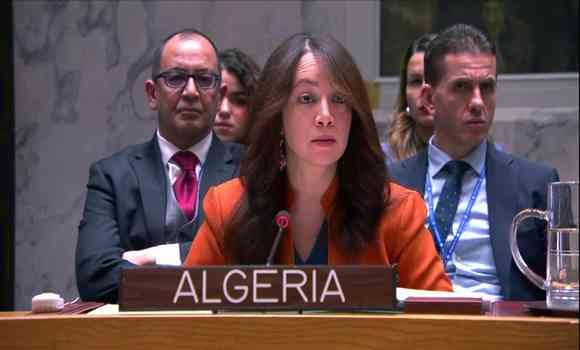
NEW YORK (United Nations) – Secretary of State to the Algerian Minister of Foreign Affairs, in charge of African Affairs, Bakhta Selma Mansouri, said on Tuesday in New York that the comprehensive, just, and balanced reform of the multilateral system is now an urgent necessity that cannot be postponed.
In a speech during a Security Council briefing session on improving global governance, Mansouri noted that today’s meeting “takes place in an extremely complex international context, marked by a worrying escalation of geopolitical tensions and political and security crises, including armed conflicts, humanitarian disasters, economic challenges, the scourge of terrorism, and transnational crime, thereby threatening international peace and security and undermining the effectiveness of our multilateral system.”
“These challenges are accompanied by increasing violations of the rules of international law and the UN Charter, the marginalization of the role of continental organizations, particularly the African Union (AU), as well as attempts to impose double standards in managing current conflicts,” added the Secretary of State during the high-level debate.
“Algeria is deeply convinced that adherence to the multilateral system is the best way to address these common challenges. However, this system is going through an unprecedented phase of turbulence due to the intensification of international polarization and the erosion of trust in UN institutions,” said Mansouri, for whom the reform of the multilateral system is now “an urgent necessity that cannot be postponed, to ensure that this reform is comprehensive, just, and balanced.”
She emphasized that Algeria wishes to highlight five fundamental and indispensable points to guide the reform process of the UN system and strengthen the effectiveness of the multilateral system. First, she cited “the need to preserve the central role of the United Nations, emphasizing the enhancement of fair and balanced representation within its principal organs, particularly the Security Council.”
“It is unacceptable that the historical injustice inflicted on Africa persists, with the continent representing more than a quarter of UN member states, yet remaining deprived of any permanent representation on the Council, and even its non-permanent representation remains limited,” she said.
She further stressed the need to activate the role of the UN General Assembly (GA), as the most representative and inclusive body, by granting it “broader prerogatives” in addressing major international issues, thereby strengthening democracy within the UN organization.
In this regard, Mansouri praised “the key role of the International Court of Justice (ICJ), as the principal judicial organ of the UN in preventing the outbreak of international conflicts and ensuring their peaceful resolution.”
The speaker commended “the preeminent role” of the ICJ in guaranteeing justice and strengthening the rule of law, ensuring justice for the Palestinian people and amplifying the voice of truth. She urged the Court “to persevere on this path, particularly regarding the persistent threats of forced displacement faced by the population of Gaza.”
She affirmed the importance of “improving the working methods of the Security Council to enhance transparency and ensure equal opportunities for all its members.”
Algeria recalled the initiative it launched during its current mandate on the Security Council, which culminated in the adoption of the updated Note 507 last December, aimed at ensuring fairness in the consultation of Council documents between permanent and elected members. She emphasized that “this initiative was highly appreciated and serves as a clear example of the possibility of achieving consensus with political will and a constructive spirit.”
Mansouri also highlighted “the need to establish an institutional methodology to activate cooperation between the UN and regional organizations, particularly the AU, in accordance with Chapter 8 of the UN Charter, to ensure the regular and sustainable functioning of early warning and rapid response mechanisms, especially in addressing African issues.” She noted that Algeria “affirms that the positions and resolutions of the AU and African regional organizations regarding countries facing crises must receive the full support of the Security Council and the international community, to complement international efforts with African visions, free from any interference or pressure dictated by the considerations and interests of foreign parties.”
Regarding the strengthening of multilateral cooperation, Mansouri called for “the need to revise the way sanctions regimes are designed and implemented, with an emphasis on prevention.”
As for comprehensive reforms, she emphasized the necessity “to highlight the international financial and economic system, including the Bretton Woods institutions, to ensure broader participation of developing countries, particularly African ones, in economic decision-making that impacts their future.”
The AU’s accession to the Group of Twenty (G20), with South Africa holding the presidency this year, represents “another opportunity for countries in the Global South in general, and Africa in particular, to play a significant role in multilateral political and economic governance,” added Mansouri