Algeria Calls for Creation of a Nuclear Weapons-Free Zone in the Middle East

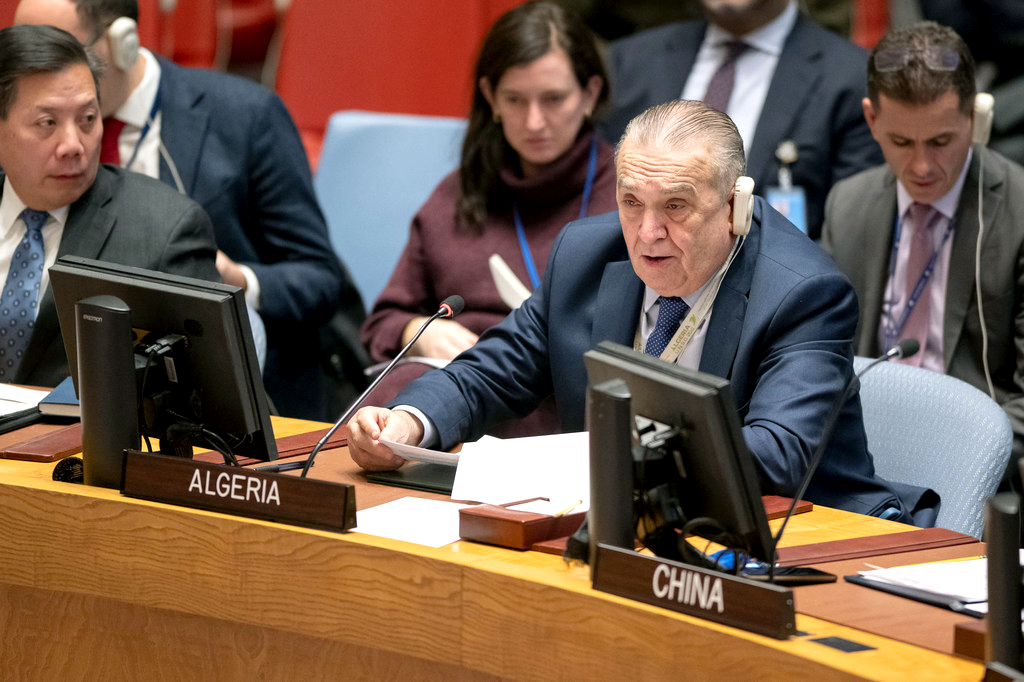
NEW YORK – Algeria on Tuesday called for the establishment of a nuclear weapons-free zone and a zone free of all weapons of mass destruction in the Middle East, through the statement of its Permanent Representative to the United Nations, Ambassador Amar Bendjama, at a UN Security Council session.
In a speech delivered during a Security Council meeting on non-proliferation, which focused on the implementation of Resolution 2231 (2015) endorsing the Joint Comprehensive Plan of Action (JCPOA) on Iran’s nuclear program, Bendjama reiterated “the urgent need to establish a zone free of nuclear weapons and all forms of weapons of mass destruction in the Middle East,” stating that such a step “would be essential for achieving regional and international peace and security.”
Referring to this Security Council briefing as the final one before the resolution expires on October 18, Bendjama noted, “This session comes at a critical time.” He expressed cautious optimism following the recently announced ceasefire between Iran and the Zionist entity, mediated by the United States and Qatar, which ended 12 days of dangerous escalation.
Algeria welcomed what it called an “important diplomatic achievement” that provides an opportunity for de-escalation, dialogue, and diplomacy. Bendjama also warned that recent developments have shown the fragility of collective security and the risks posed by attacks on nuclear facilities, particularly those under the safeguards of the International Atomic Energy Agency (IAEA).
In this context, he recalled UN Security Council Resolution 487, which called on the Zionist entity to place its nuclear facilities under IAEA safeguards—a demand ignored for more than four decades.
Bendjama emphasized that the ceasefire presents a valuable opportunity to strengthen the global nuclear non-proliferation regime, stressing the need to move away from the double standards that have undermined trust. He affirmed Algeria’s readiness to work with all partners to uphold international law and reinforce the integrity of the non-proliferation framework, which he said is the foundation of global security.
He added that the ceasefire serves as a reminder of the importance of respecting international legal norms, particularly those within the IAEA’s safeguards system, which are essential to ensure that nuclear energy is used solely for peaceful purposes.
In this regard, he reiterated the need for full and balanced implementation by all parties of the Joint Comprehensive Plan of Action, including the lifting of sanctions, describing the JCPOA as a key instrument providing a practical framework for addressing concerns related to Iran’s nuclear program through dialogue and transparency.
Bendjama concluded by recalling UN Secretary-General António Guterres’s statement in his report, affirming that “diplomacy remains the best and only way” to address issues related to Iran’s nuclear program and regional security.