Nuclear talks between US and Iran set to continue amid heightened regional tensions

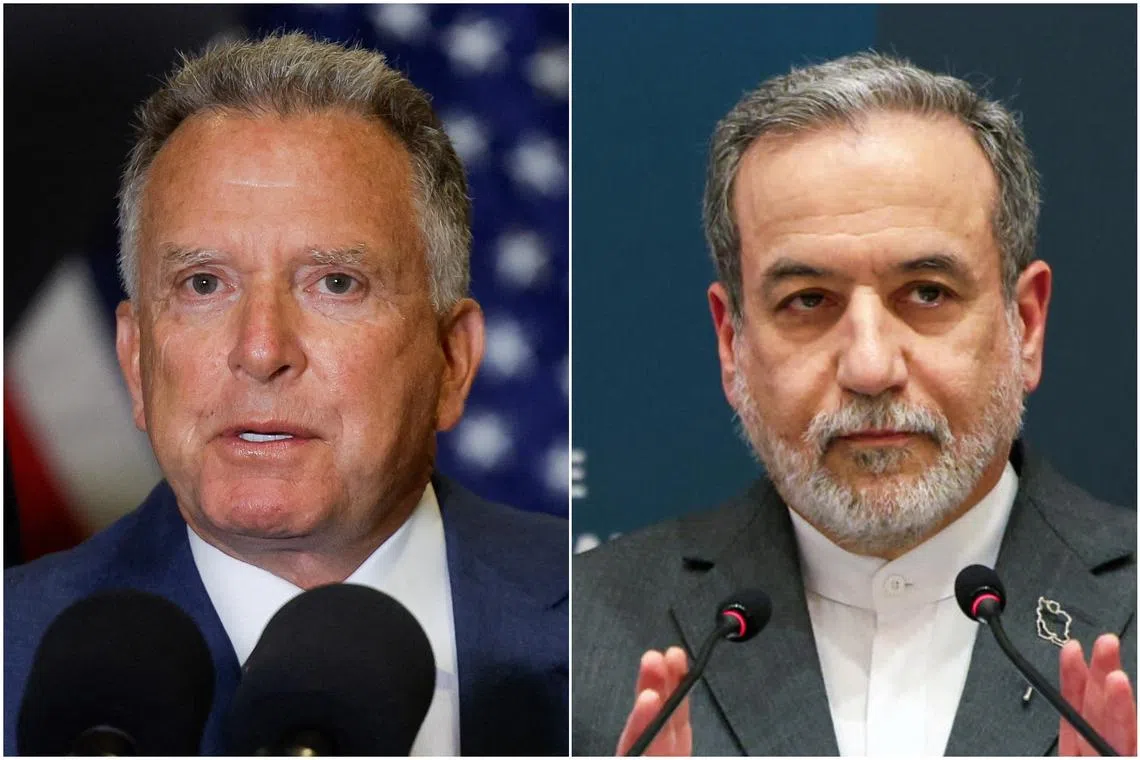
Iran and the United States held indirect talks in Oman on Friday, negotiations that appeared to return to the starting point on how to approach discussions over Tehran’s nuclear program.
Iran’s top diplomat said that nuclear talks with the U.S. were off to a “good start” and set to continue, in remarks that could help allay concern that failure to reach a deal might nudge the Middle East closer to war.
But Foreign Minister Abbas Araqchi said after the talks in the capital Muscat, which involved him, U.S. special envoy Steve Witkoff and U.S. President Donald Trump’s son-in-law Jared Kushner, that “any dialogue requires refraining from threats and pressure. (Tehran) only discusses its nuclear issue … We do not discuss any other issue with the U.S.”
While both sides have indicated readiness to revive diplomacy over Tehran’s nuclear dispute with the West, Washington wanted to expand the talks to cover Iran’s ballistic missiles, “support for armed groups” around the region and “treatment of their own people,” U.S. Secretary of State Marco Rubio said on Wednesday.
Mediator Badr al-Busaidi, Oman’s foreign minister, said the talks had been “very serious,” with results to be considered carefully in Tehran and Washington. The goal was to reconvene in due course.
Force on Display
Against the backdrop of diplomacy, world powers and regional states fear a breakdown in the negotiations would ignite another conflict between the U.S. and Iran that could spill over to the rest of the oil-producing region.
During the talks, America brought its top military commander in the Middle East to the table in an unprecedented move.
The presence of U.S. Navy Adm. Brad Cooper, head of the military’s Central Command, in his dress uniform at the talks in the Omani capital served as a reminder that the aircraft carrier USS Abraham Lincoln and other warships were now off the coast of Iran in the Arabian Sea.
President Donald Trump said the United States had “very good” talks on Iran and said more were planned for early next week. But he kept up the pressure, warning that if the country didn’t make a deal over its nuclear program, “the consequences are very steep.”
“Iran looks like they want to make a deal very badly — as they should,” Trump told reporters aboard Air Force One as he headed to his Florida golf club late Friday. He suggested Iran was willing to “do more” than in previous talks but did not give details.
Asked how long he was willing to wait for a deal, Trump said: “We have plenty of time. If you remember Venezuela, we waited around for a while. We’re in no rush.” The Trump administration built up a huge military presence in the Caribbean Sea in the months before a U.S. raid captured then-Venezuelan President Nicolás Maduro in January.
Meanwhile, Iran has vowed a harsh response to any strike and has cautioned neighboring Gulf Arab countries that host U.S. bases that they could be in the firing line if they were involved in an attack.
Hours before the talks, Iranian state TV said that “one of the country’s most advanced long-range ballistic missiles, the Khorramshahr-4,” had been deployed at one of the Revolutionary Guard’s underground “missile cities.”
Energy Sanctions Hit Iran
Shortly after Friday’s talks, the U.S. Treasury and the U.S. State Department announced a new round of sanctions on Iran targeting its energy sector, imposing penalties, including freezes on assets in U.S. jurisdictions, on 14 oil tankers in a so-called “shadow fleet” that the U.S. says are used to try to evade sanctions, as well as on 15 trading firms and two business executives.
Trump also signed an executive order that says an import tax of potentially 25% “may” be imposed on goods from countries that buy oil from Iran. The order does not specifically impose tariffs so much as give the president the legal basis for levying them starting Saturday, according to The Associated Press.
It says the potential tariffs can be removed if Iran or the foreign buyers of its oil align themselves with U.S. interests on national security, foreign policy and economic issues.