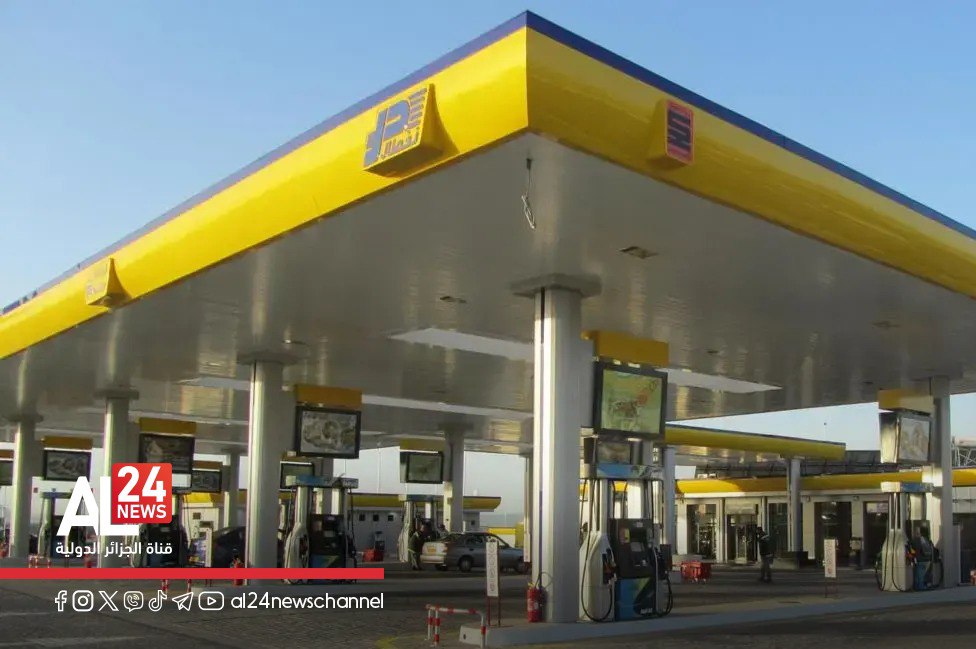
Algeria ranks among the countries with the lowest fuel prices in the world, even compared to some major oil-producing nations, due to significant annual state subsidies, according to updated global fuel price data.
Fuel prices in Algeria are highly competitive, with a liter of gasoline selling for 47 DA (approximately 0.36 USD), diesel at 31 DA (0.25 USD), and liquefied petroleum gas (LPG) at 12 DA (0.09 USD). Gasoline in Algeria costs roughly half the price in some oil-producing countries such as Saudi Arabia, which produces 10 million barrels per day, where the liter sells for 0.621 USD (79.80 DA), and Russia, producing 9 million barrels per day, where it sells for 0.834 USD (107.10 DA). In the United States, which produces 14 million barrels daily, gasoline is priced at 0.835 USD per liter (107.30 DA), while in Iraq (3.86 million barrels/day), it costs 0.649 USD (83.40 DA per liter).
Diesel prices are roughly four times higher in several oil-producing countries compared to Algeria, including the United States at 0.925 USD per liter (118.87 DA) and Russia at 0.951 USD per liter (122.21 DA). Algerian diesel also remains significantly cheaper than in Arab oil-producing nations, such as Saudi Arabia at 0.443 USD per liter (56.93 DA) and Kuwait, producing 2.5 million barrels per day, where it is 0.374 USD per liter (48.06 DA). For LPG, prices in Algeria are four times lower than in Saudi Arabia (0.291 USD per liter, 37.40 DA) and Russia (0.366 USD per liter, 47.03 DA).
At the start of this year, fuel prices in Algeria were adjusted: gasoline rose from 45.62 DA/liter to 47 DA/liter (+1.38 DA), diesel from 29.01 DA/liter to 31 DA/liter (+1.99 DA), and LPG from 9 DA/liter to 12 DA/liter (+3 DA). The Ministry of Hydrocarbons and Mines stated that the adjustment “falls within the application of current legislative and regulatory texts” and aims to “ensure continuous national market supply and cover rising production and distribution costs.”
The ministry emphasized that the new prices do not reflect the true cost of fuel production, refining, transport, and distribution, noting that the public treasury continues to bear most of the final price to preserve purchasing power and support economic activity. The 2026 finance law allocates 657 billion DA to subsidies for widely consumed products in Algeria, including fuels.