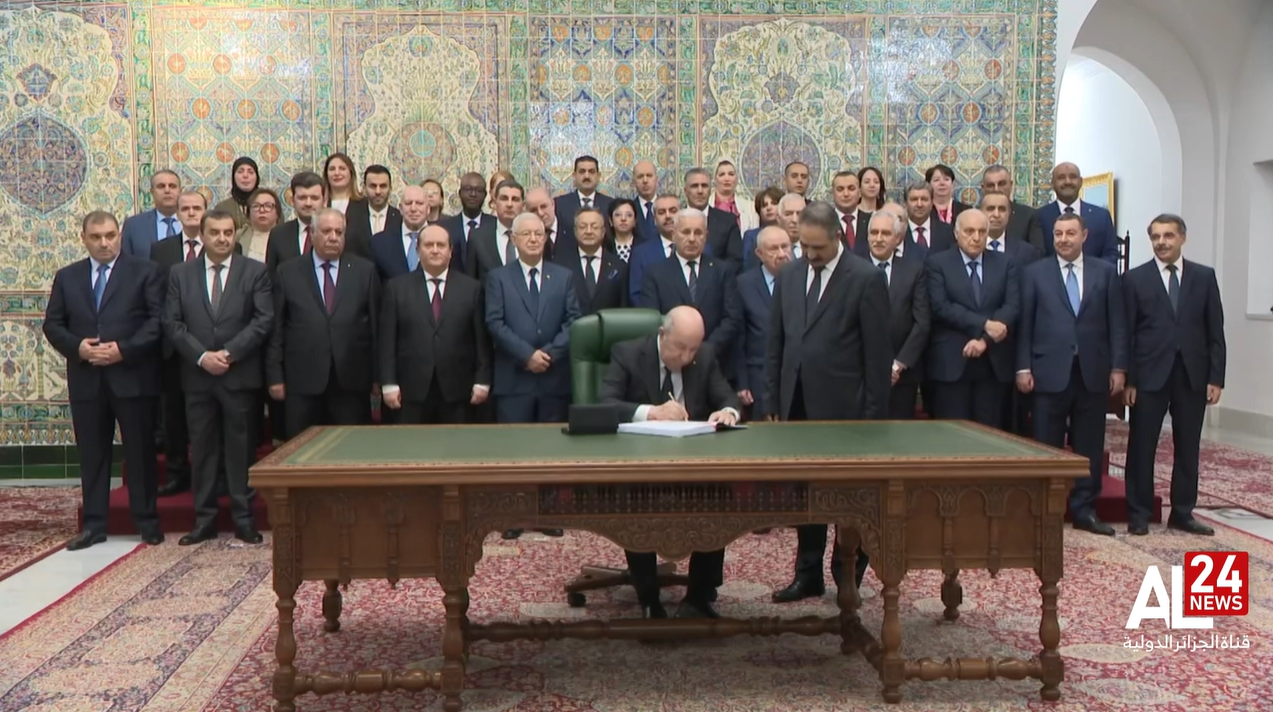
The 2026 Finance Act, signed on Sunday by the Algerian President, Abdelmadjid Tebboune, shortly before the Council of Ministers meeting, introduces a series of measures aimed at fostering investment and boosting economic activity, notably by simplifying tax procedures, encouraging start-ups, and supporting exports.
The Act extends the tax exemption period for start-ups from one year to two years upon label renewal, and renews the tax benefits for business incubators with each label renewal. This measure aims to introduce significant changes in the tax system of support organizations assisting the certified “incubators.” The income tax or corporate tax benefit is also renewed with each label renewal. This measure also addresses two major challenges in the entrepreneurial ecosystem: ensuring the sustainability of support organizations and maintaining the quality of their services.
In addition to supporting businesses and exports to attend specialized international business events, the Act introduces full coverage instead of partial (between 50% and 80%) of their participation fees, which are covered through the special export promotion fund. This measure is part of the efforts to multiply incentives and strengthen the government’s support for exporters, with a view to promoting Algerian products and increasing exports apart from hydrocarbons.
Furthermore, the Act establishes an exceptional voluntary tax regularization system, with a declaration deadline set for December 31, 2026. The regularization is carried out through a one-time 8% tax with no penalties applied.
The 2026 Finance Act also includes customs provisions related to micro-importation, allowing citizens engaged in this activity to benefit from the self-entrepreneur status. In addition, imports concluded under this framework are subject to a reduced customs duty rate of 5% and are exempt from VAT, customs duties, and other taxes and fees applied on imports. Customs clearance is implemented through a simplified declaration before customs.
Taxpayers engaged in micro-importation activities are subject to a 0.5% tax per import transaction; this rate is calculated on the customs value, augmented by customs duties and a fixed margin of 30%.
The Act also provides incentives for businesses wishing to invest in green hydrogen development, afforestation and reforestation projects, as well as the production and use of renewable energy. These expenses are deductible from taxed income, provided that the total amount of this deduction does not exceed 5% of the taxable income. Through these measures, the State aims to achieve several objectives, notably accelerating the energy transition, creating wealth and sustainable jobs, and boosting clean energy exports.