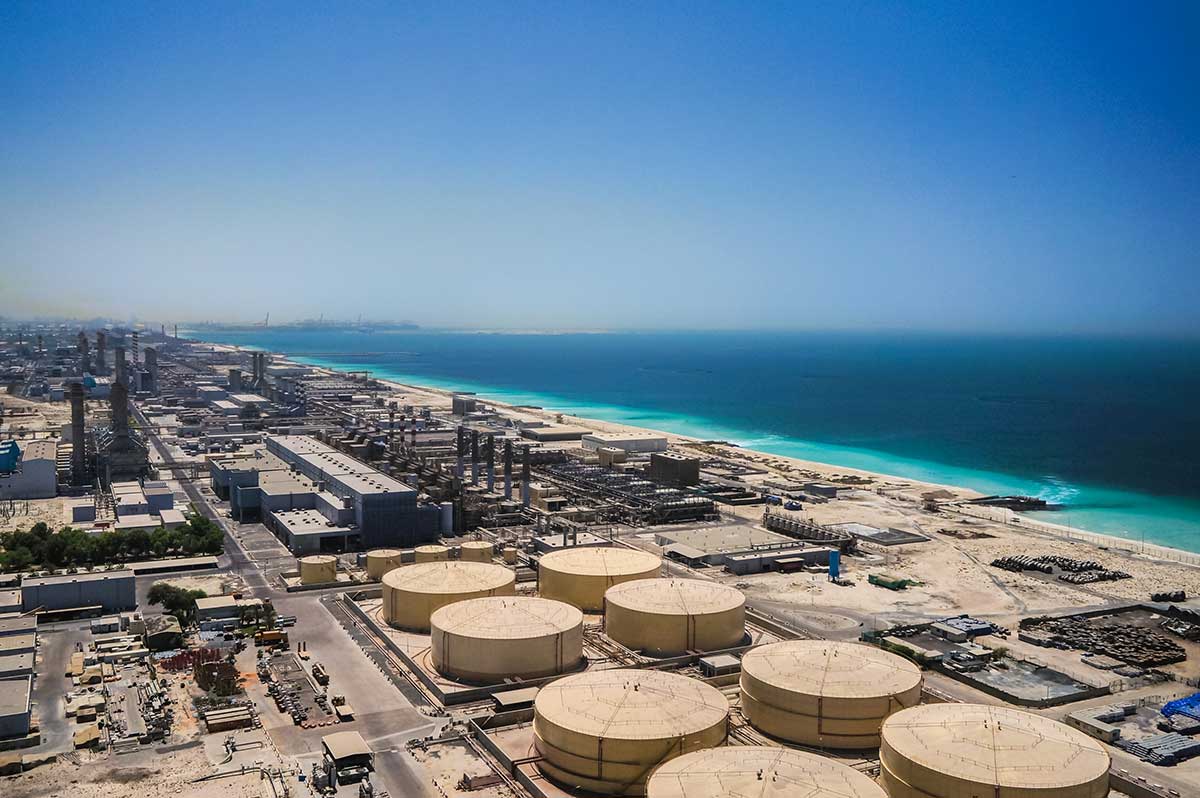
ALGIERS – Algeria marked the 63rd anniversary of independence on Saturday amid significant progress in the hydraulic sector, highlighted by the completion of five seawater desalination plants that have substantially strengthened the country’s water security at a time of mounting pressure on water resources caused by climate change.
These five plants, of which four have been inaugurated this year by the President of the Republic, Abdelmadjid Tebboune, namely El Tarf (Koudiet Draouche), Boumerdès (Cap Djenet), Tipaza (Fouka) and Oran (Cap Blanc), while that of Béjaïa (Tighremt-Toudja) will be inaugurated soon, each have a capacity of 300,000 m³/day.
They will cover 42% of the national needs for desalinated drinking water, which previously reached 18%.
Realized in less than 26 months as part of an emergency plan, these infrastructures have brought to 19 the total number of desalination stations in activity across the country. Thanks to these efforts, the national capacity for desalinated water production has increased from 2.2 to 3.7 million m³/day, allowing to satisfy the drinking water needs of approximately 15 million citizens.
Algeria now ranks first in Africa and second in the Arab world in terms of desalinated water production capacity. A key feature of these new plants is that they are 100% Algerian made, by national enterprises affiliated to Sonatrach and Cosider groups, a first in the history of the country.
Parallel to desalination, Algeria has invested massively in the construction of dams and hydraulic interconnection networks. The country currently counts more than 80 dams, with a total storage capacity of 8.3 billion m³, with ongoing projects that should bring this capacity to 12 billion m³ by 2030.
Hydraulic transfer networks (South-South and South-North) have also been implemented, ensuring a solidary distribution of water between regions. The connection rate to drinking water reaches today 98% at the national level, placing Algeria among the most advanced countries in this field.
To go even further, six new desalination stations, with a capacity of 300,000 m³/day each, will be launched from 2026 in the provinces of Skikda, Jijel, Tizi Ouzou, Chlef, Mostaganem and Tlemcen, with the goal of reaching a coverage rate superior to 60%, without resorting to groundwater.