Gaza voices alarm over GHF amid escalating starvation and occupation attacks

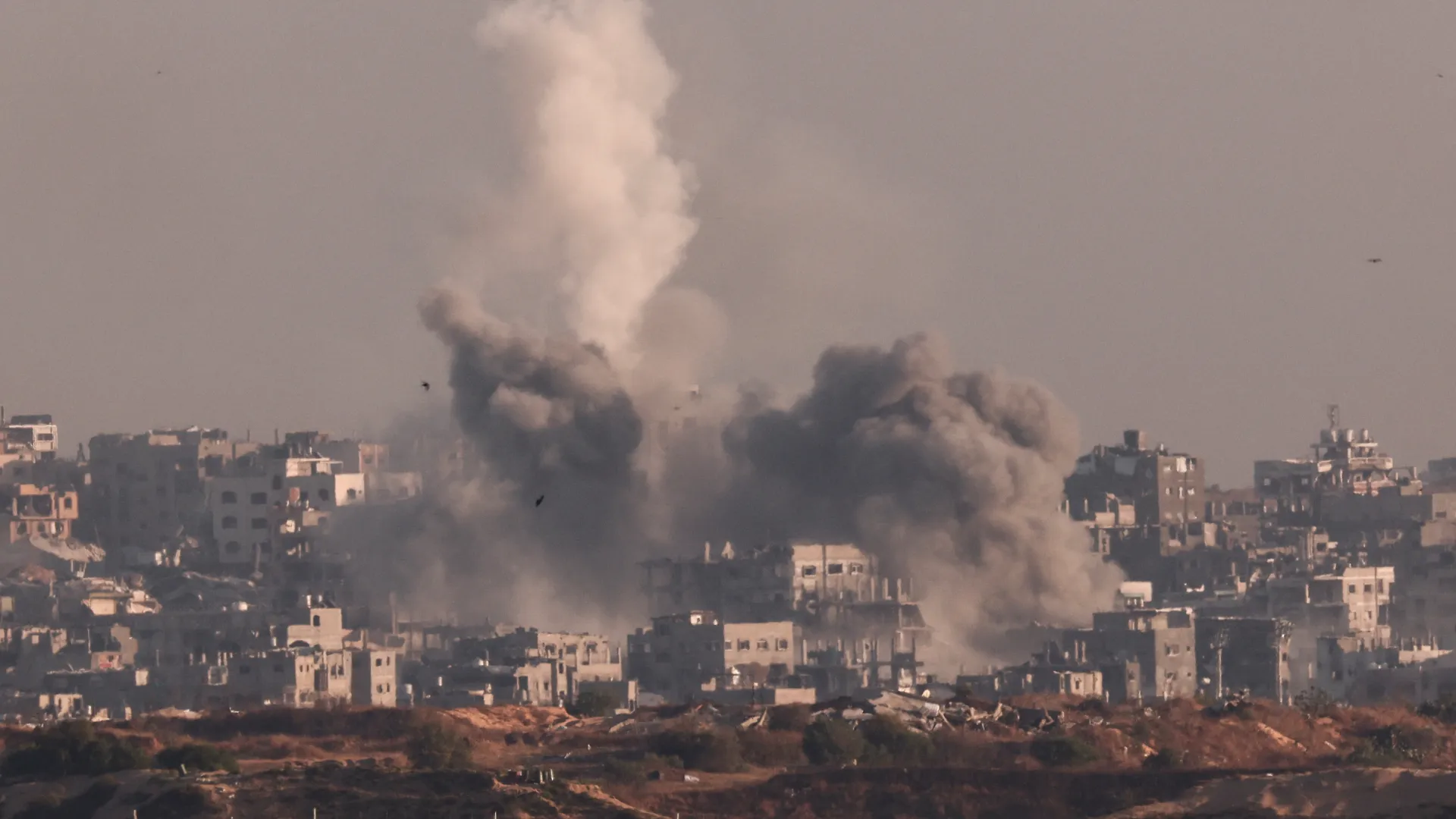
Gaza’s Interior Ministry said on Monday that it is following with deep concern the developments around the Gaza Humanitarian Foundation (GHF), which has been propped up by the US and the Zionist occupation to take over aid distribution in the besieged enclave.
The circumvention of international aid organisations is “intended to replace order with chaos, adopt a policy of engineering the starvation of Palestinian civilians, and use food as a weapon in times of war,” the ministry said in a statement, adding that by controlling aid through GHF, the occupation “seeks to achieve its malicious goals of implementing displacement plans.”
Jake Wood, executive director of the Gaza Humanitarian Foundation for the past two months, unexpectedly resigned on Sunday, citing violations of humanitarian principles of “neutrality, impartiality, and independence,” while urging “Israel” to allow more aid into besieged Gaza, according to a statement on Monday.
The Switzerland-registered foundation has been heavily criticised by the United Nations, whose officials have said the private company’s aid distribution plans are insufficient for reaching the more than two million Gazans.
The UN and major humanitarian organisations have raised concerns that the GHF’s operations could undermine existing relief efforts, as well as restrict food access to limited areas of Gaza, which would force civilians to walk long distances to access aid and cross occupation military lines.
UN World Food Programme (WFP) Executive Director Cindy McCain warned on Sunday that half a million people in Gaza are “extremely food insecure” and at risk of famine, urging the international community to step up efforts to deliver humanitarian aid on a large scale.
McCain, speaking on CBS’s Face the Nation, described the situation as a “catastrophe”, criticizing “Israel” for allowing very limited aid entry between March and mid-May. “They have let a few trucks in. This is a drop in the bucket as to what’s needed,” she said.
“We can’t be allowed to sit back and watch these people starve to death with no outside diplomatic influence to help us. These poor souls are really, really, really desperate,” she added.
Besides the blockade, a United Nations assessment has found that less than 5% of Gaza’s agricultural land remains cultivable, due to widespread destruction and stringent movement restrictions.
“This level of destruction is not just a loss of infrastructure – it is a collapse of Gaza’s agrifood system and of lifelines,” said Beth Bechdol, Deputy Director-General of the Food and Agriculture Organization which produced the assessment alongside the U.N. Satellite Centre.
In total, just 688 hectares, or 4.6% of the total, is available for cultivation. Meanwhile, more than 80% of Gaza’s cropland had been damaged in the war, and a total of 77.8% is not accessible, the U.N. assessment said, describing the situation as “particularly critical” in the southern area of Rafah and in the northern areas where nearly all cropland is inaccessible.
“What once provided food, income, and stability for hundreds of thousands is now in ruins. With cropland, greenhouses, and wells destroyed, local food production has ground to a halt. Rebuilding will require massive investment – and a sustained commitment to restore both livelihoods and hope,” Bechdol said.
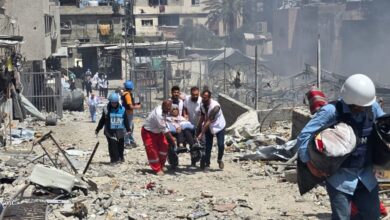
Meanwhile, the Zionist occupation’s strikes continue, killing 52 people on Monday, including 36 in a school-turned-shelter that was struck as people were sleeping.
A fire swept through the tents following the bombing, said Al-Aqsa TV and other local sources.
Eyewitness videos circulated online, showing burnt bodies, many of them children, and others crying out as flames consumed their surroundings.
“Charred corpses and the screams of displaced people engulfed in flames were seen and heard from the site,” one report said.
German Chancellor Friedrich Merz said that “Israel’s” recent attacks on Gaza are taking a humanitarian toll on civilians that can no longer be justified.
“When boundaries are crossed, where international humanitarian law is truly violated, Germany and the German chancellor must also say something about it,” Merz told broadcaster WDR in a televised interview.
According to media reports, a group of EU officials renewed criticism of EU leadership on Monday, accusing the bloc of failing to take meaningful action to address the worsening humanitarian crisis in Gaza.
“The EU institutions have failed to bring the European Union’s political, diplomatic and economic influence to bear in order to ameliorate the situation in Gaza,” the group wrote in a fresh letter addressed to the presidents of the European Commission, European Council, and European Parliament, The Guardian reported.
Calling itself the EU Staff for Peace, the group said more than 2,000 EU officials have now signed a letter drafted in May 2024, accusing the EU of apathy toward the suffering of Palestinians.
The new letter, sent one year after the first, warned that the bloc’s “inaction” has “contributed to the environment of unaccountability that resulted in the full-scale invasion of the Gaza Strip.”
At a Madrid meeting of European and Arab nations on Sunday, Spain’s foreign minister said the international community should look to impose sanctions on “Israel” to stop its war in Gaza.
The Zionist occupation’s genocidal war on Gaza has killed at least 53,977 Palestinians and wounded 122,966, according to Gaza’s Health Ministry. The Government Media Office updated its death toll to more than 61,700, saying thousands of people missing under the rubble are presumed dead.