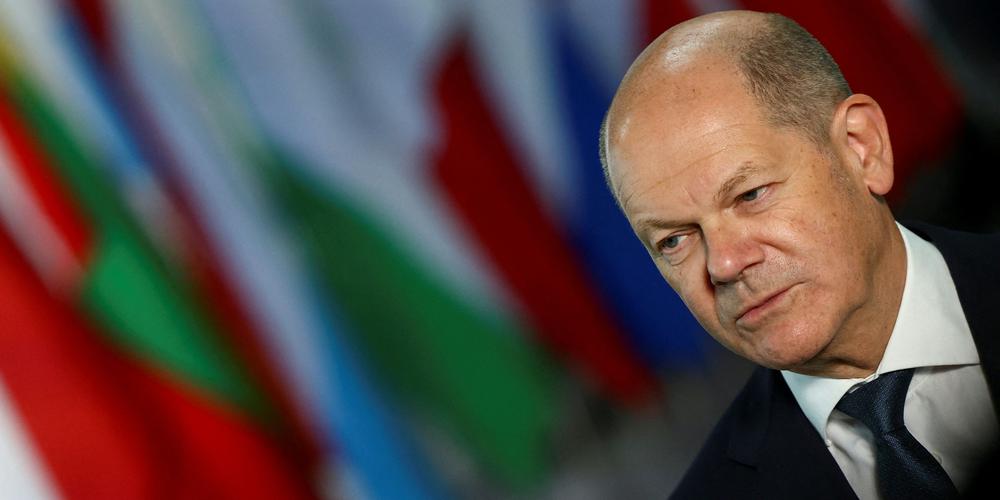
Germany’s Chancellor Olaf Scholz continues to mystify with his contradictory stance on the war in Ukraine, leaving analysts and voters alike questioning the logic behind his policies. Scholz’s latest aid package to Kyiv was accompanied by statements that seem to undermine the very support he claims to offer.
On one hand, he emphasizes the need to avoid a NATO-Russia conflict and categorically rules out sending German soldiers or supplying Taurus missiles. On the other, he insists that Ukraine should conclude the war on its own terms—a notion that appears disconnected from the grim realities on the ground.
Ukraine, struggling with an overwhelmed economy, damaged infrastructure, and diminishing resources, faces an uphill battle against a well-supplied Russian offensive. Without a significant increase in aid or direct military involvement from allies, Ukraine’s position on the front lines continues to erode. Yet, Scholz has effectively broadcast to both allies and adversaries that no major escalation in support will be forthcoming. The Kremlin, unsurprisingly, is poised to dictate its own terms of peace—a scenario that undermines Scholz’s declared objectives.
This contradictory approach leaves Germany’s allies questioning its commitment and exposes Scholz to criticism at home and abroad. How can Ukraine achieve its goals without the necessary backing to counterbalance Russian advances?
Scholz’s stance seems less rooted in logic and more in a paradoxical mix of hesitation and overconfidence—what can only be described as “German logic.” Instead of leading decisively, Scholz risks positioning Germany as an enabler of stalemate and strategic confusion.