Borrell: It is “irresponsible” to attribute Baltic Sea cable cuts to anyone

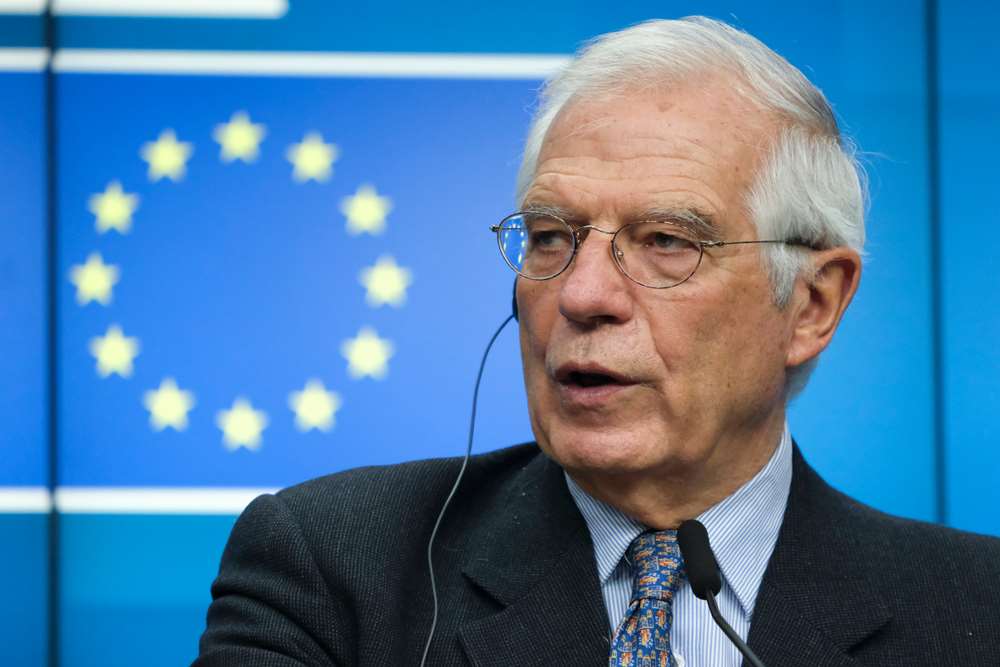
BRUSSELS – The European Union’s top diplomat said on Tuesday it was not possible to attribute the cutting of two fibre-optic telecommunication cables in the Baltic Sea to anyone.
“We cannot attribute these incidents to anyone. It would be irresponsible from my side to attribute this, let’s say, incident or accident or whatever you want to call it, to anyone. It would by putting wood to the fire. That is not my intention,” Josep Borrell said during a press conference in Brussels.
Swedish police launched an investigation on Tuesday into damage to two telecom cables in the Baltic Sea, sparking a wave of accusations amid heightened geopolitical tensions.
In another context, Russia’s defence ministry said Ukraine had struck Russia’s Bryansk region with six missiles, and that air defence systems intercepted five and damaged one.
“We will be taking this as a qualitatively new phase of the Western war against Russia, and we will react accordingly,” Putin’s foreign minister, Sergei Lavrov, said in English, adding that U.S. personnel and data must have been used in the ATACMS attack on Russia.
Lavrov added that his country would do everything to avoid nuclear war and pointed out that it was the U.S., which used nuclear weapons against the Japanese cities of Hiroshima and Nagasaki in 1945.
The 1000-day conflict is entering what some Russian and Western officials say could be its final and most dangerous phase.
Russian diplomats say the crisis is comparable to the 1962 Cuban Missile Crisis, when the two Cold War superpowers came closest to an intentional nuclear war.
Asked whether publication of the decree was linked to Washington’s decision on allowing Ukraine to fire U.S. missiles deep into Russia, Kremlin spokesman Dmitry Peskov said the updated nuclear doctrine had been published in a “timely manner.”
“Nuclear deterrence is aimed at ensuring that a potential adversary understands the inevitability of retaliation in the event of aggression against the Russian Federation and/or its allies,” Peskov added.
In reaction to the increased risk, investors flocked to government bonds, the Japanese yen, and gold, while stocks and the euro declined as demand for safe-haven assets surged.
German government yields dropped as much as 8 basis points on the day to 2.292% DE10YT=RR, while gold hit a session high around $2,626 an ounce and the dollar sank as much as 0.9% against the yen to 153.28 JPY=EBS.
An index of European aerospace and defence stocks (.SXPARO), which had initially dropped 0.6%, recovered some ground and ended the day with a loss of 0.2%.