Punjab, which is home to over half of Pakistan’s 240 million residents, announced on Friday the closure of public spaces including parks, zoos, playgrounds, and historical monuments in most major cities currently grappling with unprecedented pollution levels.
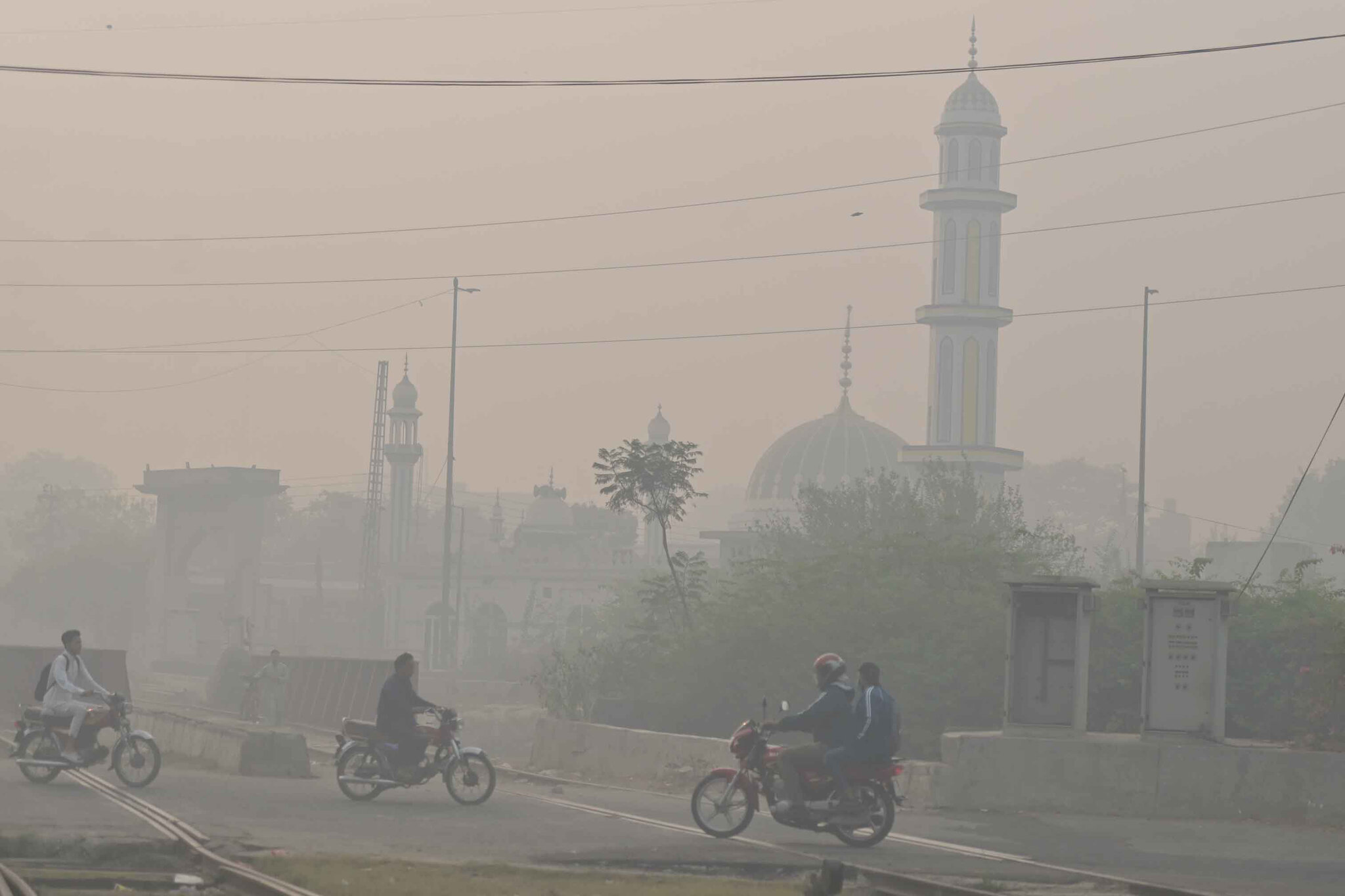
For the past week, residents of this border province with India have been enveloped in a cloud of dense smog, a combination of fog and harmful emissions intensified by low-quality diesel fumes, seasonal agricultural burning, and winter weather conditions.
In response to the “poor air quality,” local authorities have restricted access to “parks, zoos, playgrounds, historical monuments, museums, and recreational areas” until November 17, as stated in a recent announcement.
Earlier this week, Punjab had already closed schools in major cities and prohibited polluting tuk-tuks, barbecues, and certain construction activities in its provincial capital, Lahore, as part of efforts to mitigate the smog.
The air quality index in Lahore, a city of 14 million people, has consistently exceeded 1,000 over the past week. For context, an air quality index reading of 180 is considered “bad,” while readings above 300 are classified as “hazardous.”
On Friday, the concentration of PM2.5 pollutants in Lahore’s air was more than 20 times higher than what is deemed acceptable by the World Health Organization (WHO); in Multan, further south, it reached up to 48 times the acceptable level.
Punjab authorities have advised residents, particularly “the elderly and those suffering from respiratory, pulmonary, and cardiac conditions,” to “remain indoors.” If they must venture outside, it is recommended that they “wear masks.”
The risks associated with smog are well-documented, as the WHO emphasizes, especially for children, with nearly 600 million of them exposed to high pollution levels across South Asia, according to UNICEF.