UN: A3+ Group Calls for an End to Political Deadlock in Syria

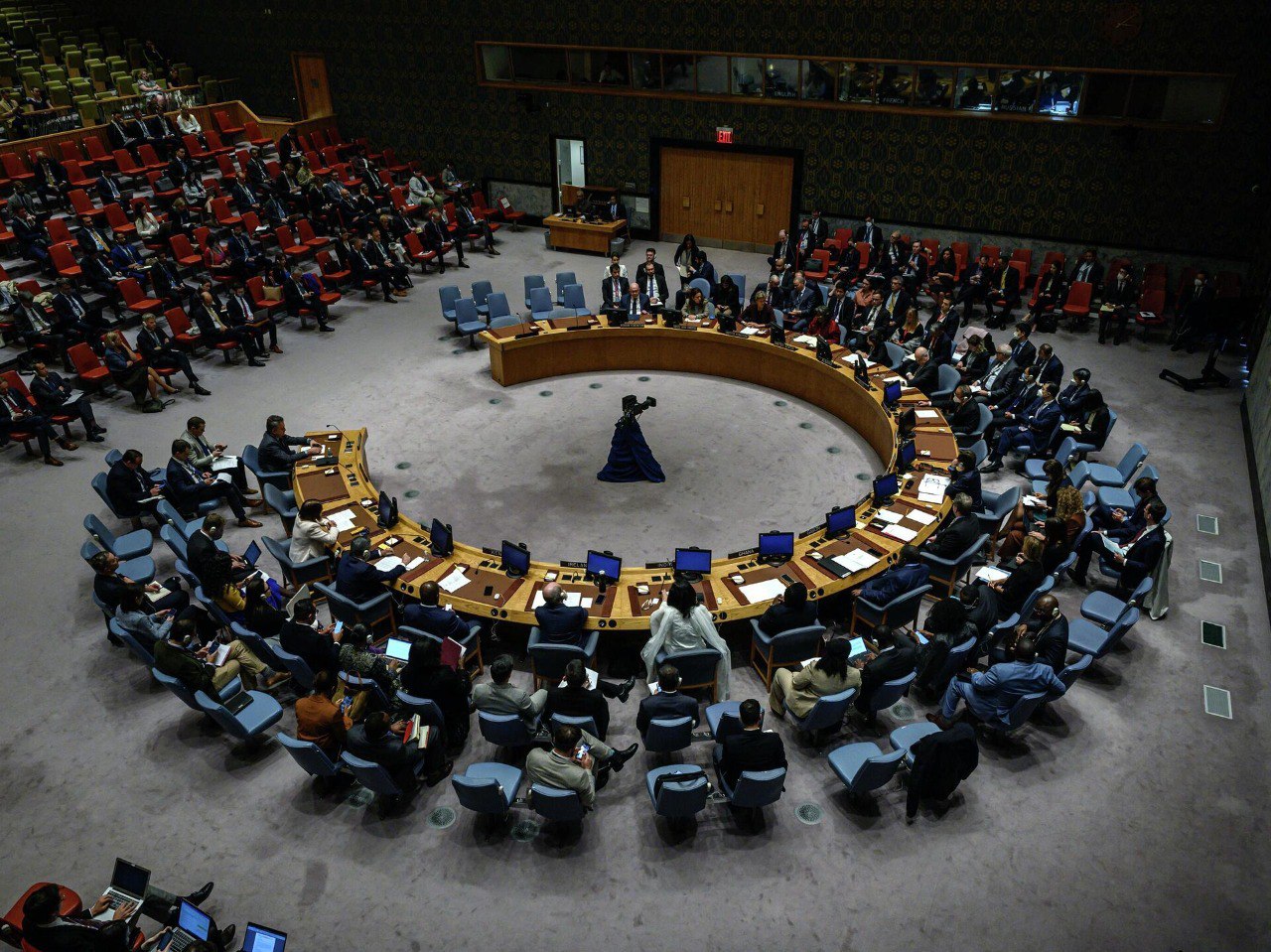
The A3+ group called on Wednesday evening in New York for the resolution of the political deadlock in Syria and urged for a solution that guarantees the country’s unity, sovereignty, independence, and territorial integrity. They appealed to the Security Council to assist Syrians in resolving the conflict that has afflicted their nation for the past 13 years.
This statement from the A3+ group, which consists of three non-permanent African members of the UN Security Council (Algeria, Sierra Leone, and Mozambique) along with the Republic of Guyana from the Caribbean, was delivered by Algeria’s Permanent Representative to the United Nations, Ambassador Amar Bendjama, during a briefing on the political and humanitarian developments in Syria.
“The A3+ group firmly believes that a resolution to the Syrian crisis must be political and determined by the Syrian people,” he asserted, urging the Security Council to support the efforts of Syrians to address the conflict tearing apart their country.
The diplomat emphasized “the A3+ group’s commitment to a Syrian-led political process,” clarifying that “this is the only viable path towards a desired solution, as outlined in Resolution 2254.” He underscored the importance of convening meetings for the constitutional committee.
The A3+ group expressed its support for the endeavors of the UN Special Envoy for Syria, Geir Pedersen, calling upon all relevant parties to cooperate constructively with him to advance the political process.
Highlighting the worsening situation in the Middle East, Bendjama pointed out that aggression against Gaza and Lebanon, coupled with growing instability in the Syrian Golan, significantly impacts Syria, expressing the A3+ group’s deep concern regarding this situation.
“The already fragile humanitarian and security landscape could easily thrust Syria back into a cycle of violence—a scenario we all strive to prevent,” he cautioned.
The group voiced its serious concern over reports related to demining activities within the operational area of the United Nations Disengagement Observer Force (UNDOF), condemning any violations of Syrian sovereignty. They also advocated for de-escalation and a ceasefire in Syria and the surrounding region, particularly in Gaza and Lebanon.
In its statement, the group “called upon all involved parties to exercise utmost restraint and prevent further military confrontations in Syria,” asserting that recent developments reported over the past weeks, including the resurgence of terrorist threats, necessitate a political resolution to the crisis that preserves Syria’s unity, sovereignty, independence, and territorial integrity.
In this context, the group emphasized the critical need to ensure the protection of the UN force (UNDOF) in the Golan Heights and respect the 1974 disengagement agreement, which has been a cornerstone of regional stability for decades.
Regarding the humanitarian situation in Syria, Bendjama referenced briefings from the UN Office for the Coordination of Humanitarian Affairs in Syria, which have consistently highlighted alarming humanitarian conditions in the country. He noted that the humanitarian response plan is only 27% funded, while 70% of the population is in need of humanitarian assistance.
“The situation has deteriorated due to the significant influx of Syrians returning to their homeland,” stated the Algerian diplomat, specifying that estimates from the UNHCR indicate that over 400,000 Syrians have returned to Syria to escape violence in Lebanon.
He also emphasized that addressing this urgent situation necessitates ongoing efforts, along with support from the international community to mobilize maximum resources, as Syria was unprepared for this crisis and cannot manage it independently.
In this context, the group expressed deep concern about the humanitarian crisis’s impact on children, particularly regarding their education and mental health, especially given reports indicating that one-third of children are experiencing psychological trauma.
The A3+ Group considers it crucial to rehabilitate the healthcare system in Syria, aiming to initiate an early recovery strategy that places particular emphasis on healthcare and nutrition.