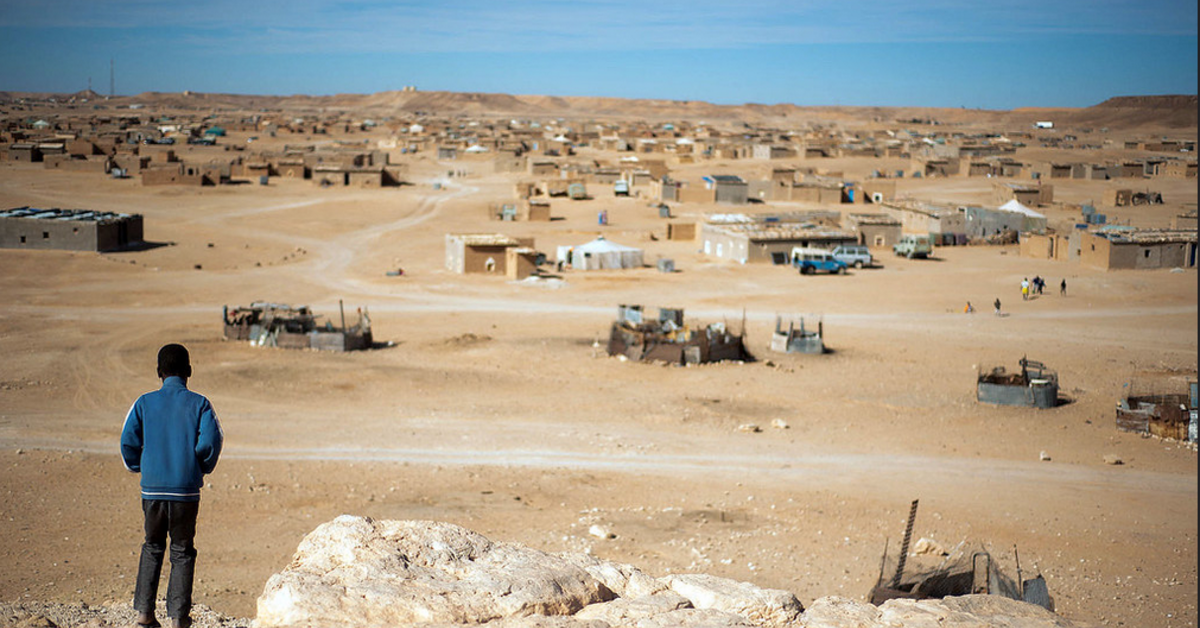
Algeria is urging international humanitarian agencies and donors to significantly contribute to the implementation of a support plan for the 173,600 Sahrawi refugees in need. This appeal was made by Rachid Bladehane, Algeria’s Permanent Representative to the United Nations Office at Geneva and other international organizations in Switzerland.
“Algeria calls upon humanitarian agencies and donors to assist in executing the support plan for the 173,600 Sahrawi refugees, as outlined in the document developed in 2023 by UN agencies, including UNHCR, and various organizations operating on the ground,” Bladehane noted during his address at the 75th session of the Executive Committee of the United Nations High Commissioner for Refugees (UNHCR), which is taking place in Geneva from October 14 to 18.
Reaffirming its commitment to international organizations and donors, Algeria “continues to fulfill its humanitarian duty toward these refugees,” he emphasized. “In line with its international obligations, my country continues to provide essential assistance to the refugees residing within our territory. This includes Sahrawi refugees who were forced to flee their homeland in 1975 and now live in camps near Tindouf,” he added. “In addition to aid from humanitarian agencies, primarily UNHCR, Algeria provides these displaced individuals with healthcare and educational services,” stated the Algerian representative.
“This prolonged situation must not be overlooked. It is our collective responsibility to ensure that these refugees receive the necessary protection while rejecting any attempts to politicize what is fundamentally a humanitarian issue,” he advocated.
“My delegation believes this forum is not the appropriate setting to discuss the political dimensions of Western Sahara, which falls under the jurisdiction of the UN’s Fourth Committee on Decolonization. It is paradoxical that the very nation responsible for the suffering of Sahrawi refugees urges Algeria to uphold its international commitments while lacking the legitimacy to represent these populations, having neither hosted them nor acted as a donor,” he pointed out.
Additionally, Bladehane condemned, on behalf of Algeria, the atrocities committed by the Zionist entity against Palestinians and Lebanese citizens. “While this issue does not fall within UNHCR’s mandate, the catastrophic humanitarian consequences resulting from the aggression of occupying forces in Gaza and the West Bank are of significant concern to my country. We firmly condemn the atrocities committed against civilians and humanitarian workers, calling on the international community to exert all its efforts to hold the colonizer accountable,” he declared.
“This same aggressor continues to ignore fundamental principles of international law and humanitarian law, perpetrating violations by invading the territory of a sovereign nation, namely Lebanon,” he reminded attendees.
“While we condemn these violations, we urge UNHCR to maintain its role in providing humanitarian assistance to the thousands displaced by the aggressor’s attacks,” Bladehane pleaded.
More broadly, he asserted that “the root causes of forced displacement remain persistent, primarily due to ongoing colonialism in various parts of the world, persecution, wars, and the increasingly apparent effects of climate change.”
He noted that “Africa remains the continent most affected by this phenomenon. Already grappling with development challenges, African countries hosting refugees and displaced persons are compelled to make greater efforts to ensure the protection of these populations despite their limited resources. This situation underscores the international community’s obligation to provide necessary assistance as part of a fair distribution of burdens and responsibilities.”
“The 2nd Global Refugee Forum, held last December, generated unprecedented enthusiasm among various stakeholders, who committed to intensifying efforts to improve protections for those forced to flee through a series of encouraging pledges,” he stated. “While we welcome this enthusiasm, my country believes it is essential to translate these promises into action to alleviate the suffering of refugees and the significant burden on host countries,” he emphasized.
“My country wishes to reiterate the importance of sustainable solutions to the issue of displacement, particularly voluntary return, which cannot occur without an adequate response to the underlying reasons that compel people to flee,” the diplomat indicated.
“Staying true to its tradition of hospitality and unwavering support for the refugee cause, Algeria made three commitments during this 2nd forum concerning priority sectors such as education and health, as well as advocacy for this cause at the Security Council. The third commitment involves the adoption of an asylum law, which is currently in an advanced stage of development. This document outlines the establishment of an autonomous body dedicated to addressing refugee issues,” he concluded.