Morocco Grapples with Multiple Crises: Corruption, Unemployment, and Growing Social Unrest

The Makhzen regime in Morocco is facing a range of significant challenges, including widespread corruption, social unrest, energy and water crises, persistent unemployment, and a pension system nearing collapse. The government led by Aziz Akhanouch is struggling to implement effective solutions to regain the trust of citizens, as reported by a Moroccan organization.
As the political season unfolds in Morocco, the Government Work Observatory (OTRAGO) has published a policy paper detailing the major issues confronting the Akhanouch administration. Key concerns include corruption, social crises, energy shortages, water scarcity, and an impending pension crisis.
The report underscores the worsening situation in the water sector, which is being aggravated by climate change and dwindling resources. Predictions suggest that water demand in Morocco could rise by 30% by 2030, exerting further pressure on already strained supplies.
Unemployment remains a critical issue, with the national rate exceeding 13.7%. OTRAGO has raised alarms about the increasing number of NEETs (youth not in employment, education, or training), affecting over 1.5 million young Moroccans. The agricultural sector has been hit hard, losing more than 160,000 jobs due to drought and economic downturns, a number that could rise without decisive government action.
Corruption is described as a devastating “hungry ogre,” costing the state over 50 billion dirhams each year. This pervasive issue not only undermines the economy but also erodes public confidence in governmental institutions. Over the past five years, Morocco’s ranking has fallen from 73rd to 97th on the Corruption Perception Index. Despite a national strategy aimed at combating corruption, actual involvement from institutions remains limited, leading to minimal results.
The pension reform issue is also a pressing concern, with OTRAGO warning that the civil pension system could face bankruptcy by 2028 without urgent intervention. Proposed government measures—such as increasing contributions, raising the retirement age, and cutting pensions—are viewed as inadequate by unions, which contend that workers will shoulder most of the burden without guarantees of improved benefits.
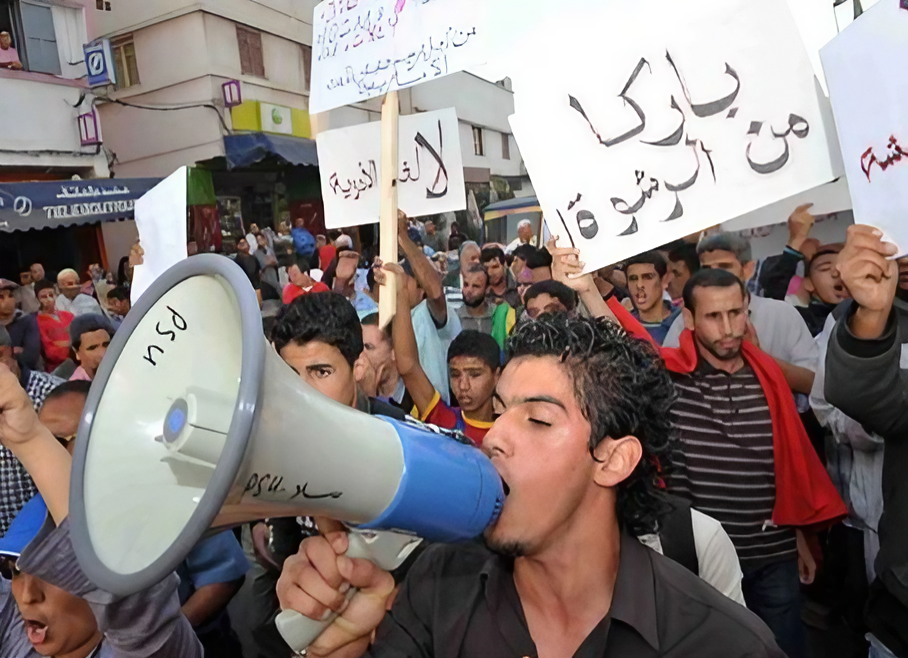
Compounding these issues is a rising tide of social discontent driven by inflation and increasing prices, which poses a serious threat to national stability. The Observatory highlights that citizens’ purchasing power, already strained by soaring food and energy costs, is at risk, leading to mounting demands for salary increases and better living conditions. The overall situation in Morocco is described as “alarming,” with the government under constant pressure to address these critical challenges.