UN Fourth Committee: Advocates Call for the Sahrawi People’s Right to Self-Determination

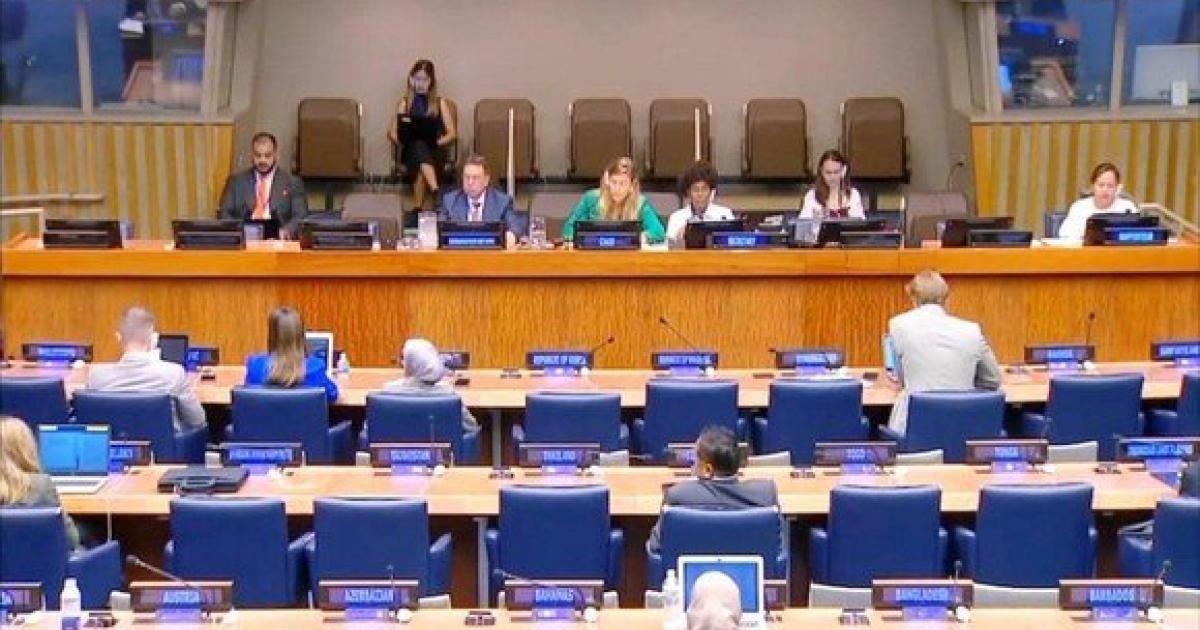
The general debate of the UN’s Fourth Committee, which focuses on special political issues and decolonization, commenced on Tuesday in New York. A substantial number of petitioners from around the world championed the Sahrawi people’s legitimate right to self-determination and demanded an end to Morocco’s prolonged occupation of Western Sahara.
On the first day of the debate, several prominent figures participated, including Sidi Mohamed Omar, the representative of the Polisario Front at the UN, along with representatives from the Communist Party of the United States, the Colombian Foundation for Friendship with the Sahrawi People, the Ecuadorian Association for Friendship with the Sahrawi People, the International League of Lawyers for Western Sahara, the Algerian Academy of Youth, the Italian Sahrawi Solidarity Network, and Santo Tomas University.
Speakers reaffirmed the Sahrawi people’s rightful claim to self-determination and underscored the legal status of Western Sahara, which remains a case of decolonization listed among the Non-Self-Governing Territories of the United Nations. They referenced various pertinent resolutions from the UN General Assembly and Security Council, as well as those from international judicial institutions.
In this context, many speakers expressed grave concern over the ongoing violations of the Sahrawi people’s rights and the continuous exploitation of their resources, urging the international community to monitor human rights conditions in the occupied Sahrawi territories until the conclusion of Africa’s last colonial occupation, allowing Western Sahara—a founding member of the African Union—to assert its sovereignty over its entire territory.
During his address at the debate, Sidi Mohamed Omar highlighted the recent rulings issued by the European Court of Justice (ECJ), which “confirmed the illegality of agreements between the EU and the occupying power, Morocco, due to violations of the Sahrawi people’s right to self-determination and permanent sovereignty over their natural resources.”
For the Sahrawi diplomat, this ruling signifies “a historic victory for the Sahrawi people and their legitimate struggle for self-determination and independence.” He emphasized that it is also “a triumph of justice and the rule of law over injustice and power politics.”
He further urged EU member states and its institutions to “fully respect the ECJ’s ruling” and to refrain from any actions that could bolster Morocco’s illegal occupation of Western Sahara. He stated, “The time has come to acknowledge the positive trajectory of history; countries in Europe and beyond that value ethical principles cannot accept or tolerate the continuation of Morocco’s illegal occupation of Western Sahara…”
Additionally, the Polisario Front’s representative to the UN and coordinator with MINURSO referenced the recent visit to the Sahrawi territories by the UN Secretary-General’s Personal Envoy for Western Sahara, Mr. Staffan de Mistura, as part of his ongoing engagements with the conflicting parties, namely the Polisario Front and the Moroccan occupying authority.
He underscored that the message from the Sahrawi people to the United Nations envoy was unequivocal: “Our people, who have done everything possible to attain a just and lasting peace, will persist in their liberation struggle by all legitimate means to defend their inalienable right to self-determination and independence.”
The UN’s Fourth Committee, which addresses special political issues and decolonization, will continue its work until next Monday. On that day, the Committee is scheduled to hear petitions concerning the decolonization of Western Sahara and other territories on its agenda.