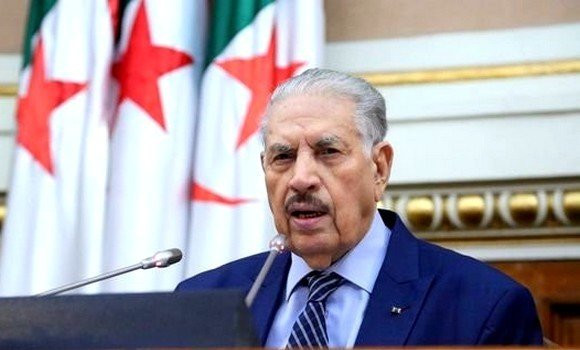
ALGIERS – The Algerian mujaheed Salah Goudjil, Speaker of the Algerian Council of the Nation (Parliament’s upper house), affirmed that the responsible account of Algeria’s history stands as “an unequivocal rejection of all forms and manifestations of susceptibility to colonization” and provides a “reference for present and future generations.”
In a contribution published on Wednesday in several national newspapers titled “On Colonialism and Anti-Colonialism: Dotting the I’s and Crossing the T’s,” Goudjil stressed that “the responsible account of Algeria’s contemporary and ancient history stands as an unequivocal rejection of all forms and manifestations of susceptibility to colonization that affect those who long for the colonial era, here and elsewhere.”
He said that this step also provides “a reference for present and future generations in terms of patriotism, sacrifice and loyalty to the legacy of our martyrs.”
Goudjil pointed out that the clarifications in his contribution were “in response to a specific article recently published in a national newspaper,” and also serve “as a response to Francophile supporters of yesterday and today.”
Goudjil noted that “the national renewal process undertaken since 2019, as part of building the New Algeria, has enabled the country to bolster democratic practice and launch the dynamics of development and diversification of the national economy while reestablishing the country’s diplomatic standing through a proactive approach.”
He further highlighted key events that Algeria witnessed following the 2019 presidential election, particularly “the referendum on the constitutional amendment held on 1 November 2020, chosen for its symbolic significance to the Algerian people.”
He said this date “was not chosen randomly, but stemmed from the President of the Republic’s firm conviction that the Algerian people have a strong historical and national connection to November, given its historical importance and profound symbolism.”